
Have you ever clicked on an ad or a link, only to find yourself on a page that instantly grabs your attention? That page is likely a landing page.
But what exactly is a landing page, and why does it matter to you? Understanding landing pages can be a game-changer for your online presence and marketing efforts. Imagine creating a powerful first impression that not only captures your audience’s interest but also guides them toward taking action.
Whether you’re looking to boost sales, grow your email list, or promote a new product, landing pages are an essential tool in your digital toolbox. You’ll discover what makes a landing page effective and see some real-life examples that illustrate their impact. Stick around, and you’ll find out how to harness the power of landing pages to achieve your goals.
Purpose Of A Landing Page
A landing page is very important. It helps in capturing leads. It also boosts sales. Many businesses use it for advertising campaigns. Visitors come to this page first. They learn about a product or service. A landing page has clear call-to-action buttons. These buttons guide visitors. They might ask to sign up or buy a product. This page is usually different from the main website. It has a specific goal. Companies can track how well it works. This helps in improving their strategies. Clear messages on the page keep visitors engaged. Simple design is very important too. It should load fast. This keeps people from leaving. A good landing page is easy to read. It has concise information. This helps visitors make quick decisions.
Key Components
The headline is the first thing people see. It should be clear and catchy. A good headline tells what the page is about. It grabs attention and makes people want to read more.
The call to action is important. It tells people what to do next. This can be a button or a link. Words like “Buy Now” or “Sign Up” work well. Make sure it’s easy to find.
Visual elements make the page look nice. Images and videos help people understand better. They should be related to the content. Bright and clear pictures work best.
Form fields are where people enter their info. Keep them short and simple. Ask for only what you need. Too many fields can scare people away.
Trust signals show the page is safe. They include badges or reviews. People feel better when they see these. They help build confidence.
Types Of Landing Pages
A landing page is a web page designed for a specific purpose, often linked to marketing. It focuses on a single call to action, like signing up or buying a product. An example is a sign-up page for a newsletter, where users enter their email to subscribe.
Click-through Pages
Click-Through Pages are simple. They lead visitors to another page. This type is often used for e-commerce. It gives a clear call to action. Visitors usually see product details or offers. A button guides them to the next step.
Lead Generation Pages
Lead Generation Pages aim to collect visitor information. They often have forms. These forms ask for names and emails. Incentives like free ebooks or discounts are offered. This encourages visitors to share their details. Businesses use this data for marketing.
Sales Pages
Sales Pages focus on selling. They provide detailed product information. Testimonials and reviews are often included. The goal is to persuade visitors to buy. Clear calls to action guide the buying process. These pages often highlight special offers or discounts.

Credit: unbounce.com
Design Best Practices
A landing page should be simple. Clutter confuses visitors. Use clear words. Tell visitors what they need to do. Too many words can be distracting. Keep it short. Use a big, clear button for actions.
Many people use phones to visit websites. Your page must fit all screens. Responsive design makes this happen. It adjusts to phones, tablets, and computers. This keeps your page easy to read. No need to zoom in and out.
Colors speak a language. They tell visitors how to feel. Use colors that match your brand. Avoid too many colors. This keeps the page neat. Highlight important actions with bright colors. It draws attention.
Test different page versions. This is called A/B Testing. Change one thing at a time. See which version works best. This helps you understand what visitors like. Use the winning design to get more results.
Seo Considerations
Landing pages need keywords. They help search engines understand the page. Use keywords in titles and headings. Sprinkle them in the text. Avoid keyword stuffing. This can hurt your page. Focus on relevant keywords. Ensure they match the page content. This helps users find what they need.
Meta tags are important. They describe your page. Include meta descriptions. They help search engines rank your page. Use keywords in meta tags. This boosts visibility. Keep meta descriptions short and clear. This attracts more clicks. They should be under 160 characters.
Fast pages are better. Loading speed affects user experience. Slow pages turn users away. Keep images small. Use simple code. Optimize images for quick loading. Remove unused scripts. This speeds up the page. Users like fast pages. They stay longer on them.
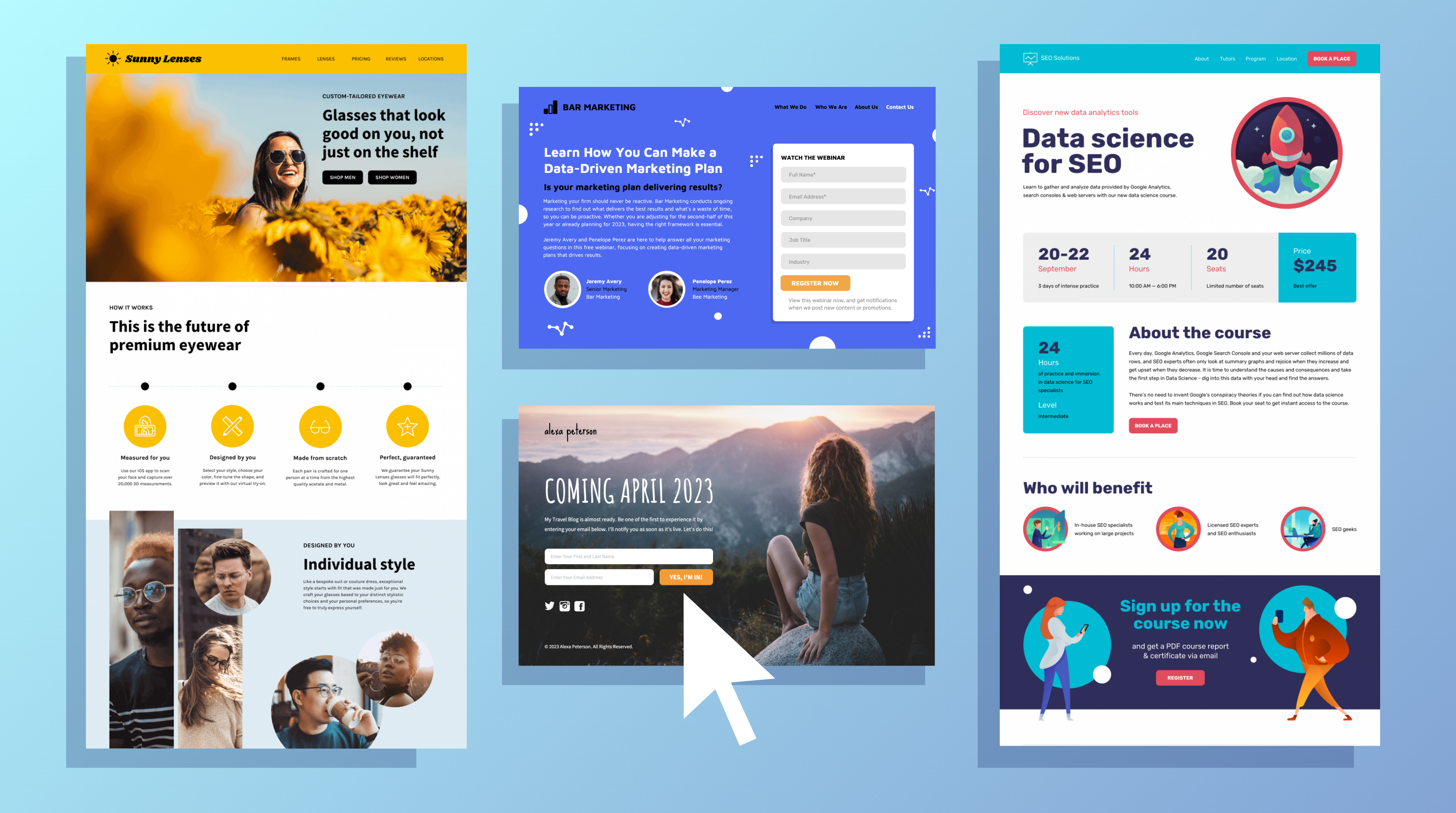
Credit: venngage.com
Analyzing Performance
Landing pages capture visitor interest and drive conversions. For example, a product page on an e-commerce site focuses on clear calls to action, urging visitors to buy. They are tailored to specific marketing campaigns, making them powerful tools for analyzing performance and optimizing user engagement.
Conversion Rate Tracking
Tracking the conversion rate helps see how a landing page works. It tells how many visitors become buyers or sign up. More conversions mean the page is doing well. Fewer conversions suggest changes might be needed.
User Behavior Analysis
Understanding user behavior is crucial. It shows what users do on the page. Do they scroll down? Do they click on links? Knowing this helps improve the page. Happy users stay longer and may convert.
Adjustments For Improvement
Improvements make the landing page better. Small changes can help a lot. Change the button color or text. Add or remove images. See what works best. Keep testing and adjusting for better results.
Real-world Examples
Many companies find success with landing pages. They use clear calls to action. Also, they offer limited-time offers. This catches people’s attention quickly. One example is a shoe brand. They share a special discount. People hurry to buy shoes. Results show high sales. Also, customers feel happy. Another example is a food delivery service. They offer free first delivery. Many people sign up. The service grows fast.
Creative designs make landing pages stand out. Using bright colors helps. Also, simple layouts matter. Imagine a page with bold images. They attract visitors. One tech company uses animated graphics. It keeps people interested. Another uses interactive features. Users click and explore. These designs boost engagement. People stay longer on the page.
Listening to feedback is key. It helps improve landing pages. Companies learn from user behavior. They notice what works. Also, what doesn’t work. One lesson is using short text. It is easier to read. Another is fast loading times. Slow pages lose visitors. Making changes helps. Companies see better results.
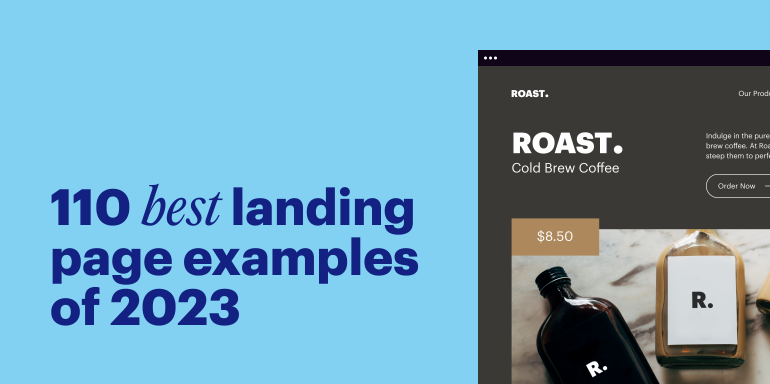
Credit: instapage.com
Frequently Asked Questions
What’s The Difference Between A Website And A Landing Page?
A website is a collection of interconnected pages offering information or services. A landing page is a single webpage focused on a specific goal, often used for marketing campaigns to capture leads or conversions. Websites provide broader navigation, while landing pages are designed for targeted actions.
What Are The Three Types Of Landing Pages?
There are three types of landing pages: click-through, lead generation, and sales pages. Click-through pages guide users to another page. Lead generation pages capture user data through forms. Sales pages aim to convert visitors into customers by showcasing products or services directly.
What Should A Landing Page Look Like?
A landing page should be clear and concise, featuring a compelling headline, engaging visuals, and a strong call-to-action. Include relevant keywords, brief benefits, and testimonials to build trust. Ensure a mobile-friendly design and fast loading speed to enhance user experience and improve conversions.
How Do I Create A Landing Page?
Start by choosing a landing page builder or CMS platform. Use a compelling headline and engaging visuals. Include a clear call-to-action, concise text, and testimonials. Optimize for mobile and SEO. Test and analyze performance for improvements.
Conclusion
Landing pages simplify customer journeys. They focus on specific goals. Clarity is key. Effective pages convert visitors into leads. Keep design clean and relevant. Include call-to-action buttons. Test different versions for best results. Look at successful examples for inspiration. Simple language works best.
Engage visitors with concise content. Landing pages can boost online success. They bridge the gap between interest and action. Tailor them to your audience’s needs. Make the experience seamless and valuable. Ready to create your own? Start crafting your perfect landing page today.


