The rapid advancement of Artificial Intelligence (AI) has moved beyond the realm of science fiction and into practical applications that are transforming industries and creating new avenues for income. For individuals and businesses alike, understanding how to leverage AI effectively can unlock significant earning potential.
From automating mundane tasks to generating creative content and offering specialized services, AI tools are becoming indispensable assets for anyone looking to monetize their skills or build innovative ventures.
The accessibility of AI technologies has democratized innovation, allowing individuals with varying technical backgrounds to participate. Whether you’re a seasoned entrepreneur, a freelancer, a student, or simply someone looking for supplementary income, there are numerous ways to harness the power of AI.
This article will explore a comprehensive range of methods, from building AI-powered products to offering AI-driven services, providing actionable insights and real-world examples to guide you on your journey to making money with AI.
Key Takeaways
- AI-driven Content Creation: Utilize AI tools to generate articles, marketing copy, social media posts, scripts, and even creative writing, saving time and increasing output.
- AI-Powered Services: Offer specialized services such as AI consulting, prompt engineering, AI model training, and data analysis to businesses.
- Build AI-Powered Products: Develop SaaS solutions, AI chatbots, or AI-integrated applications that solve specific problems for users.
- Automate and Optimize: Employ AI to automate business processes, improve efficiency, and reduce operational costs, thereby increasing profitability.
- AI-Enhanced Freelancing: Integrate AI tools into existing freelance work (writing, design, coding) to enhance quality and speed.
- AI Education and Training: Create courses, workshops, or tutorials to teach others how to use AI tools and concepts.
- AI Art and Design: Generate unique digital art, graphic designs, or illustrations using AI image generators for sale or commercial use.
- AI for Data Analysis and Insights: Offer services that use AI to analyze data, identify trends, and provide actionable business insights.
- AI-Powered Marketing and Sales: Leverage AI for personalized marketing campaigns, lead generation, and sales process optimization.
- Develop AI Automation Services: Create and offer bespoke automation solutions for businesses using AI, focusing on specific workflows.

Credit: www.wix.com
1. Build And Monetize Ai-powered Software (saas)
One of the most lucrative ways to make money with AI is by developing and selling Software as a Service (SaaS) solutions that are powered by artificial intelligence. This approach involves identifying a specific problem or need that can be addressed with AI and then building a scalable software product around it.
The SaaS model typically involves recurring revenue through subscriptions, offering a stable and predictable income stream.
Identifying A Niche And Problem
The first step is to pinpoint a market gap or an inefficient process that AI can significantly improve. This requires market research, understanding user pain points, and assessing the feasibility of an AI-driven solution. For example, many small businesses struggle with customer support, content creation, or data analysis.
An AI SaaS tool that automates customer inquiries, generates marketing copy, or provides predictive analytics could be highly valuable.
Developing The Ai Solution
This stage involves either building AI models from scratch or integrating existing AI APIs and frameworks. Companies like OpenAI, Google Cloud AI, and AWS offer powerful pre-trained models and tools that can accelerate development. The focus should be on creating a user-friendly interface and ensuring the AI provides tangible value, such as increased efficiency, cost savings, or enhanced decision-making.
For instance, a SaaS product could use natural language processing (NLP) to summarize lengthy documents, saving professionals hours of reading time.
Monetization Strategies
SaaS products can be monetized through various subscription tiers, offering different levels of access, features, or usage limits. Freemium models, where a basic version is free and premium features require payment, can also attract a large user base. Another strategy is usage-based pricing, where customers pay based on their consumption of AI resources. Customer retention is key in SaaS, so continuous improvement, excellent customer support, and regular updates are crucial.
Example: Ai-powered Marketing Copy Generator
Consider a SaaS application that uses AI to generate marketing copy for social media, email campaigns, and advertisements. Businesses could subscribe to this service, inputting basic product details and target audience information, and the AI would produce multiple compelling copy variations.
This saves marketing teams time and resources while potentially improving campaign effectiveness through AI-optimized messaging.
2. Offer Ai Consulting And Strategy Services
As businesses increasingly recognize the potential of AI, many lack the in-house expertise to implement it effectively. This creates a significant demand for AI consultants who can guide organizations through the process of adopting and integrating AI technologies. This role requires a deep understanding of AI capabilities, business processes, and strategic planning.
Assessing Business Needs
AI consultants work with clients to understand their business objectives, operational challenges, and data infrastructure. They then identify opportunities where AI can provide the most significant impact, whether it’s improving customer experience, optimizing supply chains, or enhancing product development. This diagnostic phase is critical for tailoring AI solutions to specific organizational needs.
Developing Ai Roadmaps
Once opportunities are identified, consultants help create a strategic roadmap for AI implementation. This includes selecting appropriate AI technologies, outlining data requirements, defining project milestones, and estimating costs and potential ROI. They may also advise on ethical considerations and data privacy regulations related to AI deployment.
Implementation And Integration Support
Beyond strategy, consultants often assist with the practical aspects of AI implementation. This can involve overseeing the development of AI models, integrating AI solutions with existing systems, and training staff to use the new technologies. The goal is to ensure a smooth transition and maximize the adoption and effectiveness of AI within the client’s organization.
Example: Ai Strategy For Retail
An AI consultant might work with a retail company to develop a strategy for using AI to personalize customer experiences. This could involve recommending AI tools for analyzing customer purchase history, predicting future buying behavior, and optimizing product placement both online and in-store.
The consultant would guide the retailer on data collection, AI model selection, and the integration of these tools into their existing CRM and e-commerce platforms.

Credit: blog.mindvalley.com
3. Leverage Ai For Content Creation And Monetization
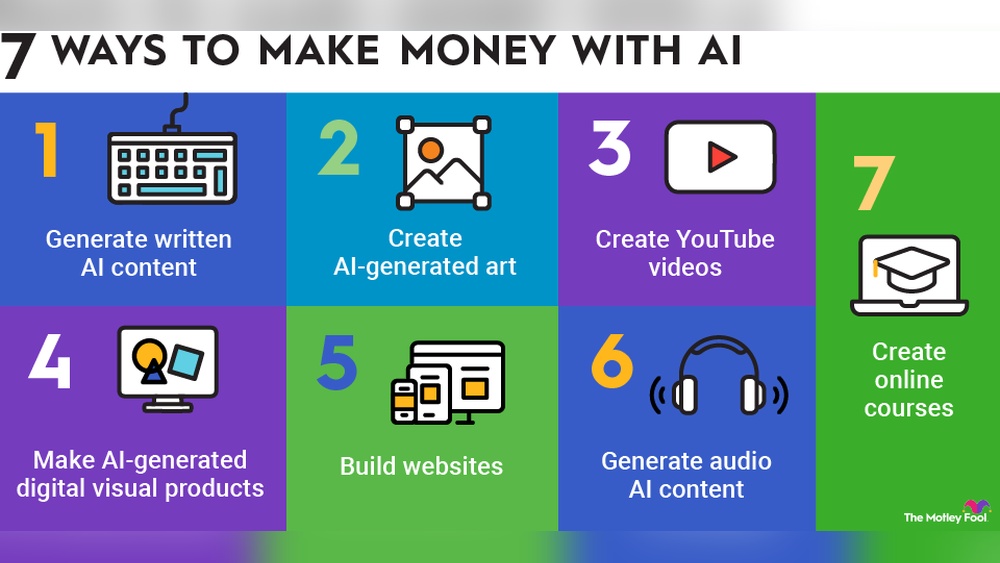
AI has revolutionized content creation, making it faster, more efficient, and accessible to a wider audience. From writing articles and blog posts to generating scripts, social media updates, and even music, AI tools can significantly augment human creativity and productivity.
Ai-assisted Writing
Tools like GPT-3 and its successors can generate human-quality text on a vast range of topics. Freelance writers, bloggers, and marketers can use these tools to overcome writer’s block, produce content outlines, draft initial versions, or even generate entire articles.
The key is to use AI as an assistant, refining and editing the output to ensure accuracy, tone, and originality.
Ai For Video And Audio Production
AI can also be used to generate video scripts, create voiceovers, and even produce background music. Tools that automate video editing, add subtitles, or generate animated explainer videos can help creators produce more content with less effort. This is particularly valuable for businesses and individuals looking to leverage video marketing.
Monetizing Ai-generated Content
- Blogging and Affiliate Marketing: Create niche blogs with AI-assisted content and monetize through affiliate marketing or advertising.
- Ebooks and Digital Products: Use AI to write ebooks on various topics and sell them on platforms like Amazon Kindle Direct Publishing.
- Freelance Content Services: Offer AI-enhanced writing, editing, or content creation services on platforms like Upwork or Fiverr.
- Social Media Management: Provide social media content creation and scheduling services for businesses, using AI to generate posts and analyze engagement.
Example: Ai-powered Niche Blog
A blogger could use AI to research trending topics in a specific niche (e. g. , sustainable living). The AI could help generate article ideas, draft outlines, and even write initial sections. The blogger would then fact-check, add personal insights, and optimize the content for SEO before publishing.
Monetization could come from affiliate links to eco-friendly products or through targeted advertising.

Credit: www.wix.com
4. Become An Ai Prompt Engineer
Prompt engineering is a relatively new but rapidly growing field focused on designing and refining the input (prompts) given to AI models, particularly large language models (LLMs) and image generators, to achieve desired outputs. As AI tools become more sophisticated, the ability to communicate effectively with them becomes a valuable skill.
Understanding Ai Model Capabilities
A prompt engineer needs to understand how different AI models work, their strengths, weaknesses, and the nuances of their response to various prompts. This involves experimentation and a deep dive into the documentation and best practices for specific AI platforms.
Crafting Effective Prompts
The core of prompt engineering lies in crafting clear, concise, and specific instructions. This might involve defining the desired output format, tone, style, and constraints. For example, when using an AI image generator, a prompt engineer would specify the subject, artistic style, lighting, and composition to achieve a precise visual outcome.
For LLMs, it might involve setting the persona, context, and desired length of the response.
Offering Prompt Engineering Services
Individuals and businesses can hire prompt engineers to optimize their use of AI tools. This could involve:
- Developing custom prompt libraries for specific tasks.
- Training internal teams on effective prompt writing.
- Troubleshooting AI outputs that are not meeting expectations.
- Creating prompts for marketing campaigns, creative writing, or code generation.
Example: Prompt Engineer For Marketing Teams
A marketing agency might hire a prompt engineer to develop a set of standardized prompts for their AI content generation tools. These prompts would be designed to consistently produce on-brand marketing copy, social media updates, and ad creatives, ensuring quality and efficiency across all client projects.
5. Develop And Sell Ai Art And Designs
AI image generation tools, such as Midjourney, DALL-E 2, and Stable Diffusion, have opened up new creative avenues for artists and designers. These tools can produce stunning visuals from simple text descriptions, allowing users to create unique artwork, illustrations, and graphic designs.
Mastering Ai Art Generation Tools
Becoming proficient with these tools requires understanding how to write effective prompts that translate conceptual ideas into visual outputs. Experimentation with different styles, parameters, and artistic influences is key to producing high-quality, original work.
Creating And Curating Ai Art
Artists can generate a portfolio of AI-created art, focusing on specific themes, styles, or aesthetics. This curated collection can then be offered for sale through various channels.
Monetization Channels For Ai Art
- Online Marketplaces: Sell AI-generated art as digital downloads or prints on platforms like Etsy, Redbubble, or Society6.
- Stock Photo/Illustration Sites: Contribute AI-generated images to stock photo websites, earning royalties on downloads.
- Custom Commissions: Offer personalized AI art creation services for clients looking for unique visuals for their projects.
- NFTs: Mint and sell AI-generated art as Non-Fungible Tokens (NFTs) on blockchain marketplaces.
- Licensing: License AI-generated designs for commercial use in products, marketing materials, or publications.
Example: Ai Artist Specializing In Fantasy Landscapes
An AI artist could specialize in creating breathtaking fantasy landscapes using tools like Midjourney. They would develop a unique style by carefully crafting prompts and iterating on the results. This portfolio could then be sold as prints, used as book cover art, or licensed for use in video games.
6. Offer Ai-powered Data Analysis And Insights
Businesses are awash in data, but extracting meaningful insights can be challenging and time-consuming. AI excels at processing vast datasets, identifying patterns, and making predictions, making AI-driven data analysis a highly valuable service.
Data Cleaning And Preparation
Before AI can be applied, data often needs to be cleaned, structured, and prepared. AI tools can assist in automating parts of this process, identifying anomalies, and ensuring data quality.
Ai For Predictive Analytics
Machine learning algorithms can analyze historical data to forecast future trends, customer behavior, or market fluctuations. Consultants can offer services to build and deploy these predictive models for businesses. This could involve forecasting sales, predicting customer churn, or identifying potential fraud.
Business Intelligence And Reporting
AI can enhance business intelligence (BI) platforms by automating report generation, identifying key performance indicators (KPIs), and providing natural language summaries of complex data. Services can include setting up AI-powered BI dashboards or offering ongoing analysis and interpretation.
Example: Ai For E-commerce Sales Forecasting
An e-commerce business might hire an AI data analyst to build a predictive model for sales. By analyzing past sales data, website traffic, marketing campaign performance, and even external factors like seasonality or economic indicators, the AI can forecast future sales with a higher degree of accuracy.
This allows the business to optimize inventory management, marketing spend, and staffing.
7. Ai-enhanced Freelancing And Gig Work
Freelancers across various domains can significantly boost their productivity, the quality of their work, and their earning potential by integrating AI tools into their existing workflows.
Ai For Writers And Editors
As mentioned in content creation, AI writing assistants can help generate drafts, summarize research, and improve grammar and style. Freelance writers can use these tools to take on more projects, deliver faster, and improve the overall quality of their output.
AI-powered editing tools can also catch errors that human eyes might miss.
Ai For Coders And Developers
AI coding assistants, like GitHub Copilot, can suggest code snippets, complete lines of code, and even help debug. This significantly speeds up the development process, allowing freelance developers to work more efficiently and take on more complex projects. AI can also assist in testing and documentation.
Ai For Designers And Artists
Beyond generating art, AI tools can assist graphic designers with tasks like background removal, image upscaling, color correction, and generating design variations. This frees up designers to focus on the more creative and strategic aspects of their work.
Ai For Marketers
AI can automate tasks like social media scheduling, email campaign personalization, ad copy generation, and performance analysis. Freelance marketers can use these tools to offer more comprehensive and effective services to their clients.
Example: Ai-augmented Freelance Copywriter
A freelance copywriter uses an AI writing assistant to generate initial drafts for blog posts and website copy. They then spend their time refining the AI’s output, adding unique insights, ensuring brand voice consistency, and performing SEO optimization. This allows them to complete projects faster and accept more clients, increasing their overall income.
8. Create And Sell Ai-generated Stock Assets
Similar to AI art, AI can be used to generate a wide range of stock assets, including images, music, sound effects, and even video clips. These assets are in high demand for use in marketing, content creation, and product development.
Generating Ai Stock Images
AI image generators can create diverse visuals for virtually any theme or concept. Photographers and designers can leverage these tools to produce unique stock photos that might be difficult or expensive to capture with traditional methods. Focus on specific niches or styles that are underserved in the current stock market.
Producing Ai Music And Sound Effects
AI music generation platforms can create royalty-free background music for videos, podcasts, or games. Similarly, AI can generate sound effects for various applications. Creating a library of these assets can provide a passive income stream.
Monetization Platforms
- Stock Asset Marketplaces: Upload AI-generated images, music tracks, and sound effects to platforms like Adobe Stock, Shutterstock, Getty Images, or specialized AI asset platforms.
- Direct Licensing: License assets directly to businesses for their specific projects.
- Subscription Services: Create a subscription service offering access to a curated library of AI-generated assets.
Example: Ai Music Composer For Youtubers
An individual could use an AI music generator to create a library of royalty-free background music tracks categorized by mood and genre (e. g. , upbeat electronic for tech reviews, calming ambient for meditation videos). These tracks can be uploaded to stock music sites, earning royalties every time a YouTuber or content creator licenses them for their videos.
9. Build And Train Ai Models For Specific Tasks
For those with a deeper technical background in AI and machine learning, building and training custom AI models can be a highly specialized and profitable service. Businesses often need bespoke AI solutions tailored to their unique data and operational requirements.
Custom Model Development
This involves understanding the client’s problem, gathering and preparing relevant data, selecting appropriate algorithms, training the model, and fine-tuning its performance. This requires expertise in programming languages like Python, along with frameworks such as TensorFlow or PyTorch.
Model Optimization And Deployment
Once a model is trained, it needs to be optimized for efficiency and deployed into the client’s existing infrastructure. This could involve integrating the model into a web application, a mobile app, or a larger enterprise system.
Offering Specialized Ai Services
- Computer Vision: Develop models for image recognition, object detection, or facial recognition.
- Natural Language Processing (NLP): Create models for sentiment analysis, text summarization, translation, or chatbot development.
- Predictive Maintenance: Build models to predict equipment failures in industrial settings.
- Recommendation Engines: Develop personalized recommendation systems for e-commerce or content platforms.
Example: Ai Model For Medical Image Analysis
A healthcare startup might require an AI model capable of detecting anomalies in medical scans (e. g. , X-rays, MRIs). A specialized AI developer could be hired to build, train, and validate such a model using anonymized patient data, ensuring it meets regulatory standards and provides accurate diagnostic support.
This service would command a premium due to the specialized knowledge and critical nature of the application.
10. Provide Ai Automation Services
Many businesses struggle with repetitive, manual tasks that consume valuable time and resources. AI-powered automation can streamline these processes, leading to significant cost savings and efficiency gains. Offering services focused on implementing these AI automation solutions is a growing market.
Identifying Automation Opportunities
This involves analyzing a business’s workflows to pinpoint tasks that are suitable for AI automation. This could include data entry, report generation, customer service responses, scheduling, invoice processing, and more.
Implementing Ai Automation Tools
This can involve using Robotic Process Automation (RPA) tools enhanced with AI capabilities, or developing custom scripts and workflows using AI APIs. The goal is to create seamless automated processes that reduce human intervention.
Workflow Optimization And Integration
Beyond simple task automation, AI automation services can focus on optimizing entire business workflows. This might involve integrating AI into CRM systems, ERP systems, or other business software to automate complex sequences of operations.
Types Of Ai Automation Services
- Intelligent Document Processing (IDP): Automate the extraction of data from unstructured documents like invoices, contracts, and forms.
- Customer Service Automation: Implement AI chatbots and virtual assistants to handle customer inquiries, resolve issues, and route complex cases to human agents.
- Marketing Automation: Automate personalized email campaigns, social media posting, and lead nurturing processes.
- HR Automation: Automate aspects of recruitment, onboarding, and employee data management.
Example: Ai Automation For Invoice Processing
A company might hire an AI automation specialist to streamline its accounts payable process. The specialist would implement an IDP solution that uses AI to automatically read, extract key information (vendor, amount, date), and categorize invoices received via email or scanned documents.
This data can then be automatically entered into the accounting software, significantly reducing manual data entry time and errors.
11. Develop And Sell Ai Prompts And Templates
As AI content generation tools become mainstream, the demand for high-quality, pre-written prompts and templates is surging. These resources help users achieve specific results with AI tools more quickly and effectively, saving them time and effort.
Curating And Creating Prompt Packs
Individuals with a knack for prompt engineering can create and sell bundles of prompts designed for specific AI tools (e. g. , ChatGPT, Midjourney) and use cases (e. g. , marketing copy, blog post ideas, social media captions, realistic image generation).
Designing Ai Templates
Templates can include pre-formatted structures for AI-generated content, such as email sequences, article outlines, or character backstories for creative writing. These templates provide a framework that users can easily adapt using AI.
Platforms For Selling Prompts And Templates
- Marketplaces: Sell on platforms like Etsy, Gumroad, or specialized AI prompt marketplaces.
- Own Website: Create a personal website or online store to sell directly to customers.
- Content Platforms: Offer prompts as part of a subscription service on platforms like Patreon.
Example: Prompt Pack For Social Media Managers
A prompt engineer could create a comprehensive “Social Media AI Prompt Pack” for platforms like Instagram, LinkedIn, and Twitter. This pack might include prompts for generating engaging captions, relevant hashtags, content ideas, ad copy variations, and even visual concepts for posts, all tailored to different industries and objectives.
12. Offer Ai-powered Educational Content And Courses
The rapid evolution of AI has created a knowledge gap, leading to a high demand for educational resources. Creating and selling courses, workshops, or tutorials about AI tools and concepts can be a very profitable venture.
Identifying Educational Needs
Research what aspects of AI are most in demand. This could range from beginner guides on using specific AI tools (like ChatGPT or AI art generators) to more advanced courses on machine learning concepts or AI ethics.
Developing Course Content
Create engaging and informative content, including video lectures, written materials, practical exercises, and quizzes. Focus on providing actionable knowledge that learners can immediately apply.
Monetization Strategies
- Online Course Platforms: Host courses on platforms like Udemy, Coursera, Teachable, or Skillshare.
- Webinars and Workshops: Offer live online sessions or in-person workshops for a more interactive learning experience.
- Ebooks and Guides: Create and sell downloadable guides or ebooks on specific AI topics.
- Membership Sites: Build a community around AI education, offering exclusive content and support for a recurring fee.
Example: Course On “mastering Ai For Small Business Marketing”
An AI educator could develop an online course aimed at small business owners. The course would cover how to use AI tools for content creation, social media marketing, customer