Imagine having a powerful tool at your fingertips that can boost your marketing efforts and capture your audience’s attention. That’s exactly what a microsite landing page offers.
If you’ve ever wondered how to make your online campaigns more effective or how to engage your audience in a more personalized way, you’re in the right place. This article will unravel the secrets of microsite landing pages, showing you how they can transform your marketing strategy.
You’ll discover why they are different from regular landing pages and how they can be a game-changer for your brand. Ready to take your digital presence to the next level? Let’s dive into the fascinating world of microsite landing pages and uncover how they can work wonders for you.
Microsite Vs. Traditional Website
Microsites serve a specific purpose. They focus on a single topic or campaign. Traditional websites cover broad topics. They include many pages and sections. Microsites are small and easy to navigate. They offer quick information. Traditional websites are larger. They provide detailed content.
Microsites often have a unique design. They stand out from the main site. Traditional websites keep a consistent design. This helps with branding. Microsites are good for short-term goals. They support events or product launches. Traditional websites aim for long-term engagement. They provide ongoing information and services.
Benefits Of Microsite Landing Pages
Microsites have one main goal. They focus on a specific topic. This helps users stay on track. Distractions are less likely. The focus is clear and strong.
Microsites are easy to use. Navigation is simple. This makes users happy. They find what they want quickly. Load times are fast too.
Content is tailored for a specific audience. This means information is relevant. Users get what they need. The message is clear and direct.
Designing Effective Microsite Landing Pages
A microsite landing page must be visually attractive. Bright colors and clear images help. Use a clean design. Avoid too much text. Make it simple yet eye-catching. It should grab attention quickly. Proper spacing is key. It makes content easy to read.
A strong call to action is crucial. Use clear words. Make it easy to understand. Buttons should be big and easy to find. Use action words. For example, “Buy Now” or “Learn More”. The message should be direct and simple. It helps users decide fast.
Most people use phones to browse. Your page must be mobile-friendly. It should load fast on phones. Text should be easy to read. Buttons must be touch-friendly. Keep the design simple. It should fit small screens well. Good mobile design keeps users happy.
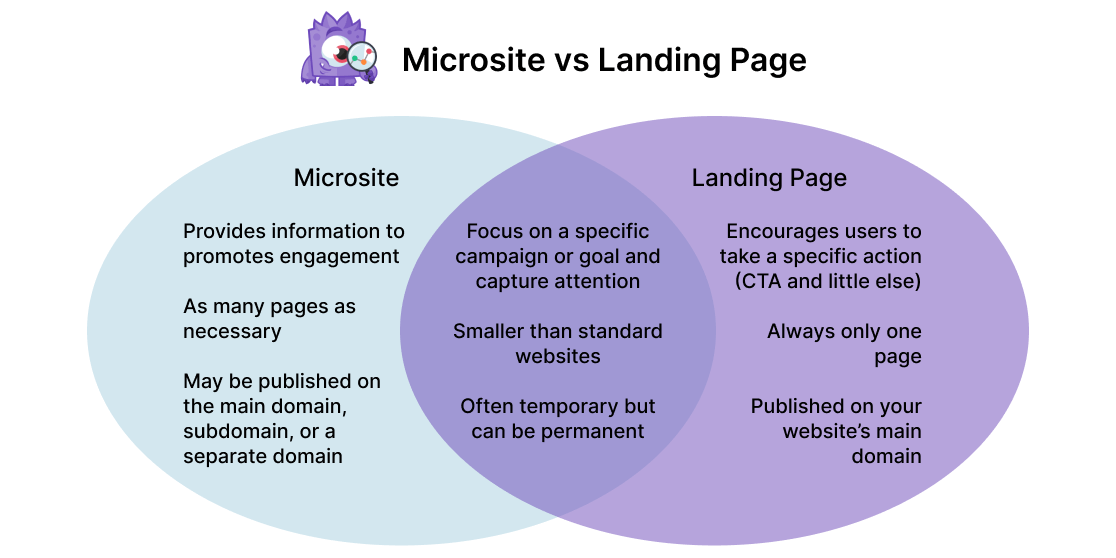
Credit: www.monsterinsights.com
Content Strategy For Microsites
Stories grab attention. They keep people interested. Create a story that is easy to follow. Make it fun and simple. Use short sentences. Add details that spark curiosity. Characters are important too. They connect with readers. Keep the story related to your topic. This helps people understand your message better.
Keywords are like signposts. They guide search engines. Use them wisely. Put them in titles and headers. Don’t overuse keywords. Too many can confuse readers. Links are helpful too. They connect your page with others. Make sure links are relevant. They should add value to your content.
Personal touch makes content special. Use names if you can. Show content that fits each reader. This makes them feel important. Images can be personalized too. Add user-specific images if possible. This keeps them engaged. Make each visit unique. It leaves a lasting impression.
Measuring Success Of Microsite Landing Pages
Key Performance Indicators help measure success. They show if goals are met. Traffic is important. More visitors mean more interest. Bounce rate tells if visitors stay or leave. Lower bounce rate is better. Time on site shows how long visitors stay. Longer time means more engagement.
Analytics Tools track visitor data. Google Analytics is a popular choice. It shows how visitors find the site. Heatmaps display where visitors click most. This helps understand visitor behavior. Demographics show who visits. Age, gender, and location can be tracked.
Conversion Tracking shows if visitors take action. Actions like signing up or buying. Tracking pixels are small codes on pages. They help track conversions. Goals in analytics show specific actions. Track if visitors complete these goals. Forms collect visitor info. Check how many fill out forms.
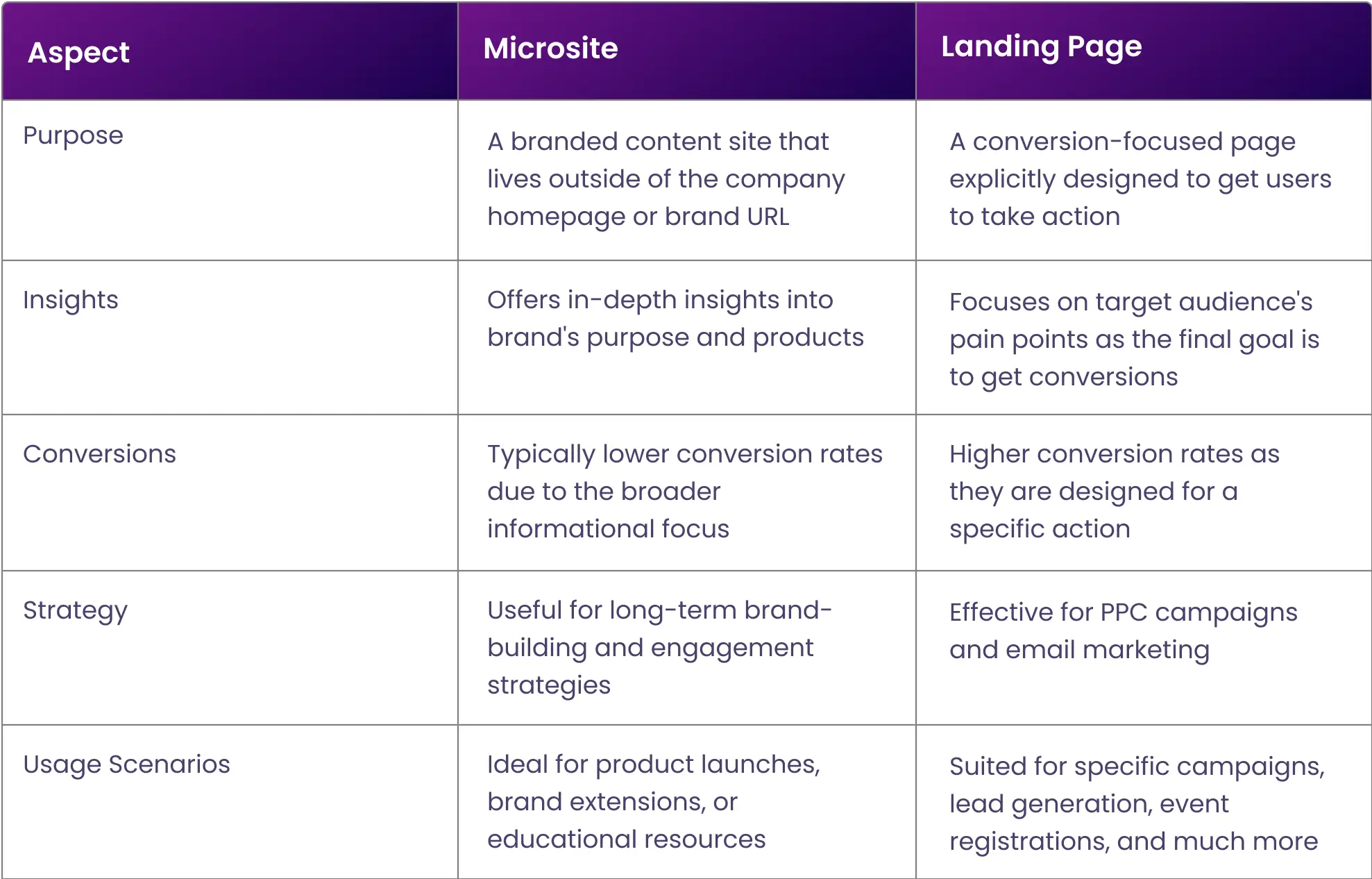
Credit: www.apexure.com
Examples Of Successful Microsite Landing Pages
Brand campaigns often use microsites. These sites focus on one idea. Nike launched a microsite for a shoe campaign. It showed the shoe’s features. Visitors learned about the shoe quickly. Coca-Cola had a microsite for a holiday campaign. The site was colorful and engaging. It shared holiday joy with visitors. Microsites make brand messages clear. They keep things simple. They focus on what matters most. Visitors stay interested longer. They want to explore more. Successful microsites leave a strong impression. They help brands stand out.
Product launches need special attention. Apple used a microsite for a new iPhone. The site showed only iPhone features. It made the product shine. Tesla created a microsite for its car launch. It highlighted the car’s speed and design. Microsites can tell stories. They make products exciting. They give details that matter. They attract curious visitors. They keep focus on the product. Successful microsites make launches memorable. They help products gain interest fast.
Events need good promotion. Comic-Con had a microsite for ticket sales. It showed event highlights. Visitors saw what to expect. Olympics used a microsite for sports schedules. It helped fans plan their visit. Microsites show event details clearly. They make information easy to find. They get people excited. Successful microsites increase event attendance. They connect visitors to the event. They make planning easy. They keep the excitement alive.
Common Mistakes To Avoid
Avoid cluttering with excessive text or images on a microsite landing page. Keep content focused and concise. Ensure navigation is clear to enhance user experience and engagement.
Overloading With Information
Too much information can confuse visitors. Simple and clear messages work better. Focus on what really matters. Avoid cluttering the page with too many details. Highlight key points only. Use short sentences to keep it easy. Visitors should find answers quickly. Clear navigation helps users stay engaged.
Neglecting User Experience
User experience is very important. Simple design keeps users happy. Avoid complicated layouts. Make sure buttons and links are clear. Fast loading pages are crucial. Slow pages frustrate users. Use colors and fonts that are easy to see. Good user experience keeps people on your site longer.
Ignoring Mobile Users
Many people use phones to browse. Mobile-friendly design is essential. Pages must look good on small screens. Ensure buttons are big enough to click. Responsive design adjusts to different devices. Avoid tiny text that is hard to read. Mobile users should have a smooth experience. Test pages on various devices.
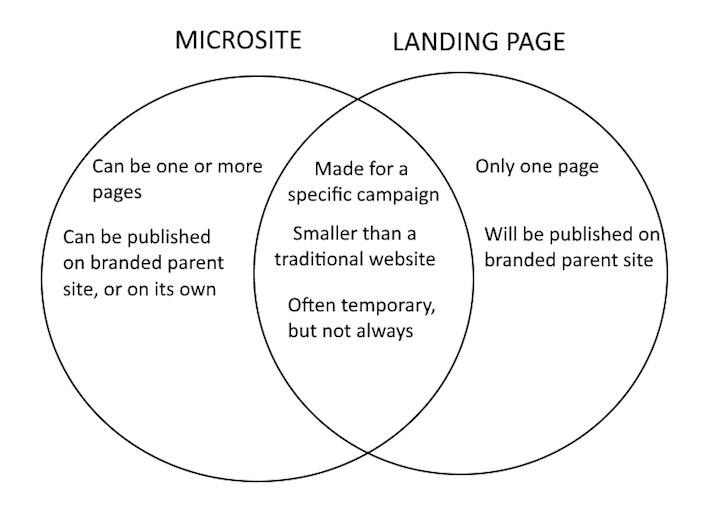
Credit: instapage.com
Frequently Asked Questions
What Is The Difference Between A Microsite And A Landing Page?
A microsite is a small, separate website focused on a specific campaign or theme. A landing page is a single web page designed to capture leads or convert visitors, usually part of a larger website. Microsites offer broader content, while landing pages focus on immediate action and conversion.
What Is The Purpose Of A Microsite?
A microsite focuses on specific campaigns or topics. It enhances engagement by targeting niche audiences and driving conversions. These sites offer specialized content, improve SEO, and support brand goals. Microsites are effective for launching new products, promoting events, or highlighting unique aspects of a business.
They create immersive user experiences.
What Is The Difference Between A Webpage And A Microsite?
A webpage is a single page on the internet, part of a website. A microsite is a small, focused website, separate from the main site, often created for specific campaigns or topics. Microsites have unique URLs and limited content compared to full websites.
What Are The Three Types Of Landing Pages?
The three types of landing pages are click-through, lead generation, and sales pages. Click-through pages drive traffic to another page. Lead generation pages capture user information through forms. Sales pages persuade visitors to make a purchase. Each type serves a unique marketing purpose and targets specific user actions.
Conclusion
Microsite landing pages offer focused content. They enhance user experience effectively. Businesses use them to target specific audiences. These pages help in generating leads. They simplify information for visitors. Users find them easy to navigate. Microsites increase engagement with clear, concise messages.
They often drive better conversion rates. Simple design aids quick understanding. Microsites cater to unique marketing goals. They are a valuable tool for companies. Understanding their benefits can boost your strategy. Consider incorporating them in your plans. They make a difference in online presence.
Start exploring their potential today.