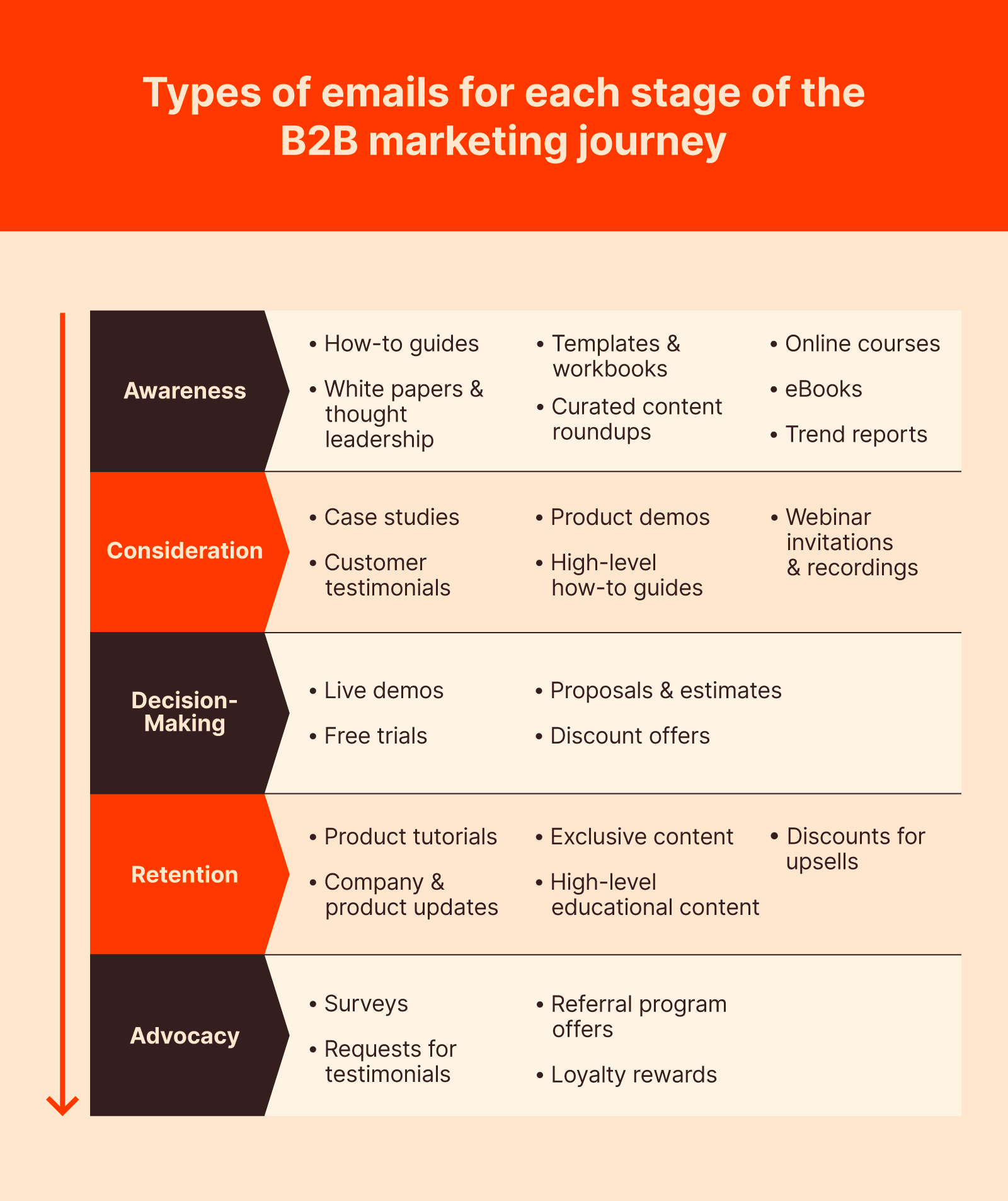
Personalize your emails and segment your audience for better engagement. Use clear subject lines to grab attention.
B2B email marketing is a powerful tool for businesses aiming to build relationships and drive sales. In today’s competitive market, reaching the right audience with the right message is crucial. Personalization and segmentation help tailor your content to meet specific needs, increasing the chances of engagement.
Clear and compelling subject lines can make your emails stand out in crowded inboxes. By leveraging these strategies, you can improve open rates, boost conversions, and foster long-term business relationships. Consistent and relevant communication builds trust and keeps your brand top-of-mind for potential clients. Effective B2B email marketing can significantly impact your business growth and success.
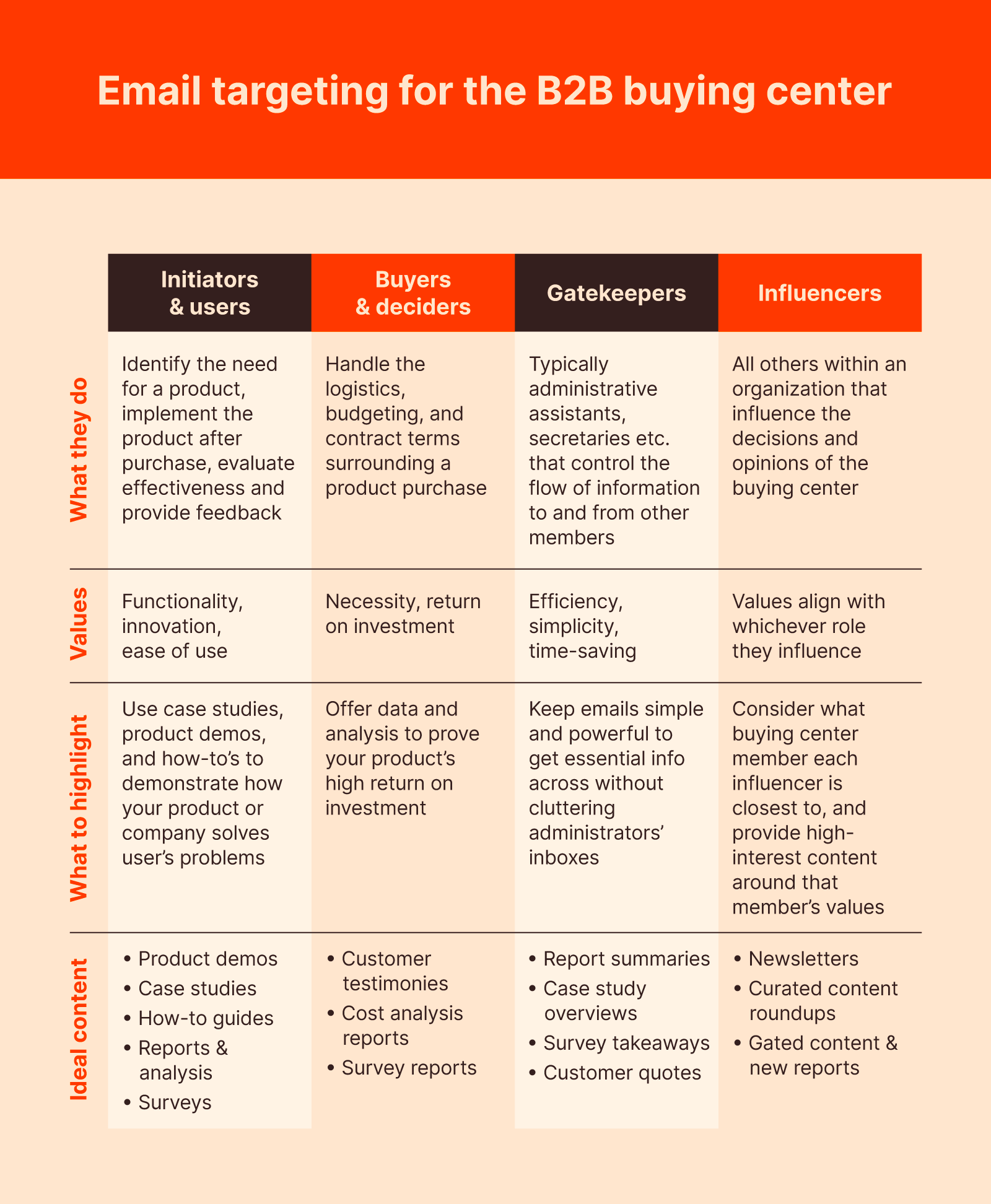
Credit: zapier.com
The Importance Of Email In B2b Marketing
Email marketing is a powerful tool in the B2B space. It allows businesses to reach their target audience directly. With email, companies can share valuable content, build relationships, and drive conversions. The importance of email in B2B marketing cannot be overstated. It remains one of the most cost-effective strategies.
Why Email Reigns Supreme In B2b
Emails allow personalized communication. This personal touch helps build trust. Businesses can segment their audience and tailor messages. This ensures the content is relevant. Relevant content leads to higher engagement rates. Emails are also easily measurable. Marketers can track open rates, clicks, and conversions.
Email marketing offers high ROI. For every dollar spent, businesses can see significant returns. It’s cost-effective and scalable. Marketers can reach thousands with a single campaign. This scalability is crucial for growing businesses.
Comparing B2b And B2c Email Marketing
| Aspect | B2B | B2C |
|---|---|---|
| Audience | Businesses | Consumers |
| Content | Informative and Educational | Promotional and Entertaining |
| Decision-Making Process | Longer and Involves Multiple Stakeholders | Quicker and Individual-based |
| Campaign Frequency | Less Frequent, More Detailed | More Frequent, Less Detailed |
B2B emails focus on building relationships. They provide valuable information. B2C emails focus on quick sales. They use flashy visuals and offers. The B2B decision-making process is longer. It involves multiple stakeholders. B2C decisions are quicker and individual-based.
B2B emails are less frequent. They contain detailed information. B2C emails are more frequent. They are short and to the point.
Crafting A Winning B2b Email Strategy
Creating a successful B2B email marketing strategy involves careful planning. This strategy helps you connect with your audience. It drives engagement and boosts conversions. Here, we will discuss key elements to achieve this.
Setting Clear Goals
Set specific goals for your email campaigns. Goals should be measurable and realistic. Examples include increasing leads by 20% or boosting click-through rates by 15%. Use these goals to guide your strategy and measure success.
| Goal | Measurement |
|---|---|
| Increase Leads | By 20% |
| Boost Click-through Rates | By 15% |
Understanding Your Audience
Knowing your audience is crucial. Understand their needs and preferences. Conduct surveys or use analytics tools. This helps tailor your messages effectively.
- Conduct surveys.
- Use analytics tools.
- Understand their needs.
- Identify preferences.
Segmentation For Personalization
Segment your email list for better personalization. Group your audience based on demographics, behavior, or purchase history. Send personalized content to each segment. This increases engagement and conversion rates.
- Segment by demographics.
- Segment by behavior.
- Segment by purchase history.
Segmentation allows you to address specific needs. This makes your emails more relevant and effective.
Creating Compelling Content
Creating compelling content in B2B email marketing is crucial. It keeps your audience engaged and drives conversions. Here are three key elements to focus on: subject lines, email body content, and calls-to-action.
The Art Of Subject Lines
Your subject line is the first thing your recipient sees. Make it count!
- Keep it short and clear, ideally under 50 characters.
- Use action words to entice readers.
- Personalize it with the recipient’s name or company.
- Avoid spammy words like “Free” or “Urgent”.
Email Body Content That Delivers Value
The body content should be informative and relevant. Focus on the reader’s needs.
- Introduction: Start with a friendly greeting.
- Main Content: Provide valuable information or solutions.
- Conclusion: Summarize the key points.
Use bullet points or tables to make the content scannable. Always include visuals to enhance understanding.
| Feature | Benefit |
|---|---|
| Automation | Saves time and increases efficiency. |
| Analytics | Provides insights for better decisions. |
Strong Calls-to-action
Your call-to-action (CTA) should be clear and compelling. It should guide the reader on what to do next.
- Use strong action verbs like “Download”, “Register”, or “Get Started”.
- Place the CTA button where it’s easily visible.
- Ensure the CTA aligns with the email’s goal.
A well-crafted CTA increases click-through rates and boosts engagement.
Timing And Frequency Matters
Timing and frequency are crucial in B2B email marketing. Sending emails at the right time and frequency can significantly impact your engagement rates. This section will cover the best practices for scheduling and how often you should send emails to your B2B audience.
Best Practices For Scheduling
Knowing the best times to send your emails is key. Here are some tips:
- Weekdays: Most B2B emails perform better during weekdays, especially on Tuesdays and Thursdays.
- Mid-Morning: Aim to send emails between 10 AM and 11 AM. This is when most people check their emails.
- Avoid Mondays and Fridays: People are either catching up or winding down.
Use these tips to plan your email schedule effectively. A well-timed email is more likely to be read and acted upon.
How Often Should You Send Emails
Frequency is just as important as timing. Sending too many emails can annoy your audience. Here are some guidelines:
| Email Type | Recommended Frequency |
|---|---|
| Newsletters | Once a week |
| Promotional Emails | Twice a month |
| Product Updates | Once a month |
These frequencies help keep your audience engaged without overwhelming them. Always monitor your open rates and adjust accordingly.
Leveraging Automation And Ai
Leveraging Automation and AI in B2B email marketing can transform your strategy. Automation streamlines repetitive tasks. AI enhances personalization. Together, they create a powerful marketing approach.
Benefits Of Email Automation
Email automation saves time. It schedules emails and sends them automatically. This ensures timely communication with your audience. It also nurtures leads effectively. Automating your emails keeps your team focused on strategic tasks.
- Consistency in communication
- Increased efficiency
- Better lead nurturing
- Improved customer engagement
Automated emails can include welcome messages, follow-ups, and promotions. These emails maintain consistent touchpoints with your customers. They also help in segmenting your audience. This ensures the right message reaches the right person.
Ai For Advanced Personalization
AI takes personalization to a new level. It analyzes customer data and predicts behavior. This helps in crafting highly targeted emails. Personalized emails improve open rates and click-through rates.
AI can recommend products based on past purchases. It can also tailor content to individual preferences. This makes your emails more relevant and engaging.
AI-driven personalization can include:
- Dynamic content
- Personalized subject lines
- Behavioral triggers
Dynamic content changes based on user data. Personalized subject lines capture attention. Behavioral triggers send emails based on actions taken by the user. These techniques ensure your emails resonate with the recipient.
Optimizing For Deliverability And Open Rates
Email marketing is crucial for B2B success. Optimizing for deliverability and open rates ensures your message gets noticed. Effective strategies can help your emails reach the right inboxes and capture attention.
Ensuring Your Emails Reach The Inbox
Getting your emails to land in the inbox is essential. Follow these tips for better deliverability:
- Authenticate Your Emails: Use SPF, DKIM, and DMARC protocols.
- Clean Your Email List: Remove inactive or invalid addresses.
- Use a Reputable Email Service Provider: Choose a provider with a good reputation.
- Monitor Bounce Rates: Regularly check and address high bounce rates.
- Segment Your Audience: Send relevant content to targeted groups.
Techniques To Improve Open Rates
Boosting open rates is key to successful email marketing. Implement these techniques to see better results:
- Craft Compelling Subject Lines: Keep them short, clear, and engaging.
- Personalize Your Emails: Use the recipient’s name and tailor content.
- Send at Optimal Times: Test and find the best times for your audience.
- Use Preheader Text: Provide a preview of your email content.
- A/B Test Your Emails: Test different elements to see what works best.
Following these tips will help you improve your B2B email marketing efforts. Focus on both deliverability and open rates to maximize your reach and engagement.
Analyzing And Measuring Success
Analyzing and measuring success in B2B email marketing is crucial. It helps understand what works and what doesn’t. This process ensures your campaigns are effective and yield the best results. Let’s delve into key metrics and how to use analytics to refine your campaigns.
Key Metrics To Track
Tracking key metrics is essential for any B2B email marketing campaign. Here are some important metrics:
- Open Rate: This indicates the percentage of recipients who open your email. A higher open rate means your subject line and sender name are engaging.
- Click-Through Rate (CTR): This shows the percentage of recipients who clicked on links within your email. A high CTR means your content is engaging and relevant.
- Bounce Rate: This measures the percentage of emails that were not delivered. A high bounce rate can indicate problems with your email list quality.
- Conversion Rate: This tracks the percentage of recipients who completed a desired action, like filling out a form or making a purchase.
- Unsubscribe Rate: This indicates the percentage of recipients who opted out of your email list. Monitoring this helps understand how your content is received.
Using Analytics To Refine Campaigns
Using analytics helps refine and improve your email campaigns. Here’s how:
- Analyze Open Rates: Look at which subject lines have the highest open rates. Use similar styles in future campaigns.
- Examine Click-Through Rates: Identify which links or CTAs receive the most clicks. This can guide your content strategy.
- Monitor Bounce Rates: Regularly clean your email list to reduce bounce rates. Remove invalid or inactive email addresses.
- Track Conversion Rates: Determine which emails lead to the highest conversions. Focus on replicating successful elements in future emails.
- Review Unsubscribe Rates: Identify patterns in emails with high unsubscribe rates. Avoid similar content or strategies in the future.
Using these metrics and analytics tools can significantly enhance your B2B email marketing success. Regular analysis and adjustments ensure your campaigns are always optimized.

Credit: www.mailmunch.com
Adhering To Legal And Ethical Standards
Adhering to legal and ethical standards in B2B email marketing is crucial. Businesses must follow regulations to avoid penalties and build trust. Understanding these standards helps create successful and compliant campaigns.
Understanding Gdpr And Can-spam
GDPR and CAN-SPAM are two essential regulations in email marketing. GDPR applies to businesses operating in the EU or dealing with EU citizens. It mandates clear consent from recipients before sending emails. CAN-SPAM applies to US-based businesses. It requires accurate subject lines and the option to unsubscribe.
| Regulation | Region | Key Requirements |
|---|---|---|
| GDPR | European Union |
|
| CAN-SPAM | United States |
|
Building Trust With Transparency
Transparency is key to building trust in email marketing. Always use clear and honest subject lines. Avoid misleading your recipients. Clearly state who you are and why you are emailing them.
Provide a simple way for recipients to unsubscribe. This shows respect for their preferences. Make sure your contact information is visible and up-to-date. Include a valid physical address in your emails.
Transparency also involves being upfront about data usage. Inform recipients how you will use their data. Ensure they understand their rights regarding their personal information. This builds a strong foundation of trust and compliance.
Case Studies: B2b Email Marketing Successes
B2B email marketing can drive incredible results. Many companies have achieved significant success. Their stories offer valuable lessons for other businesses.
Lessons From Leading Brands
HubSpot used personalized email campaigns effectively. They segmented their audience based on behavior. This approach led to a 16% increase in open rates.
Adobe focused on educational content. Their emails provided valuable insights to customers. This strategy boosted their click-through rates by 10%.
LinkedIn used a data-driven approach. They analyzed user behavior to tailor their emails. This method improved their engagement rates significantly.
| Brand | Strategy | Result |
|---|---|---|
| HubSpot | Personalization | 16% increase in open rates |
| Adobe | Educational Content | 10% boost in click-through rates |
| Data-Driven | Improved engagement rates |
Innovative Email Campaigns
IBM launched an AI-driven email campaign. They used predictive analytics to personalize emails. Their open rates soared by 20%.
Salesforce created a series of interactive emails. These emails included surveys and quizzes. This approach increased their engagement rates by 15%.
Slack used storytelling in their email campaigns. They shared customer success stories. This method resulted in a 25% increase in click-through rates.
- IBM: AI-driven campaign, 20% increase in open rates.
- Salesforce: Interactive emails, 15% boost in engagement rates.
- Slack: Storytelling, 25% rise in click-through rates.
These cases highlight successful B2B email strategies. They show the power of personalization, education, data, AI, interactivity, and storytelling.
Future Trends In B2b Email Marketing
The future of B2B email marketing is exciting. New technologies and trends are shaping how businesses communicate. Staying ahead will ensure your emails stay effective and engaging.
Emerging Technologies
Artificial Intelligence (AI) is revolutionizing email marketing. AI can help create personalized content. It can also predict the best times to send emails.
Machine Learning helps in analyzing customer behavior. This means you can send more relevant emails. Your open rates and click-through rates will improve.
Interactive Emails are becoming popular. They allow users to interact with content without leaving the email. This leads to higher engagement and better user experience.
Predictions For The Coming Years
Automation will become more advanced. Businesses will use it to create complex email sequences. This will save time and increase efficiency.
Personalization will go beyond using names. Emails will be tailored based on user behavior and preferences. This will make the content more relevant and engaging.
Data Privacy will be a major concern. Businesses will need to comply with strict regulations. Ensuring data security will be crucial.
Mobile Optimization will be essential. More people are checking emails on their phones. Emails must be mobile-friendly to ensure readability.
| Trend | Impact |
|---|---|
| AI and Machine Learning | Improved personalization and timing |
| Interactive Emails | Higher engagement rates |
| Advanced Automation | Increased efficiency and time-saving |
| Enhanced Personalization | More relevant content |
| Data Privacy | Compliance with regulations |
| Mobile Optimization | Better readability on phones |
By embracing these trends, businesses can stay ahead. The future of B2B email marketing looks bright with these advancements.

Credit: www.mailmunch.com
Frequently Asked Questions
How To Do Effective B2b Email Marketing?
Segment your audience for personalized content. Craft compelling subject lines. Provide valuable and relevant information. Use clear calls to action. Analyze and optimize campaign performance regularly.
Does Email Marketing Work In B2b?
Yes, email marketing works effectively in B2B. It builds relationships, nurtures leads, and drives conversions. Personalization and targeted content enhance engagement.
What Are The 7 Email Marketing Strategies?
1. Personalize your emails. 2. Segment your audience. 3. Use compelling subject lines. 4. Optimize for mobile. 5. Automate email campaigns. 6. Test and analyze performance. 7. Include clear calls-to-action.
How Do You Generate B2b Leads Through Email Marketing?
Generate B2B leads through email marketing by crafting targeted campaigns, personalizing content, and using compelling subject lines. Offer valuable resources, use clear CTAs, and segment your audience. Track performance metrics to optimize results.
Conclusion
Implement these B2B email marketing tips to boost your campaign’s success. Focus on personalization, segmentation, and clear calls-to-action. Consistently analyze your results and adjust strategies. Engaging content and a well-targeted approach can drive higher conversions. Stay committed to refining your tactics for optimal outcomes.