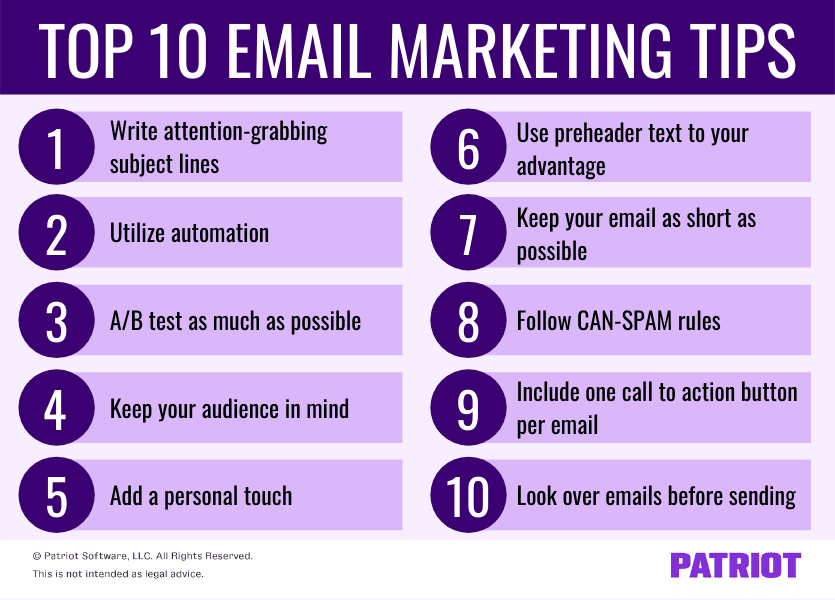
Segment your email list and personalize your messages. Use compelling subject lines and clear calls to action.
Email marketing remains a powerful tool for reaching and engaging your audience. To maximize its potential, focus on segmenting your email list to target specific groups with personalized content. Craft compelling subject lines to grab attention and entice recipients to open your emails.
Include clear and concise calls to action that guide your audience towards the desired outcome, whether it’s making a purchase, signing up for a newsletter, or downloading a resource. Regularly analyze your email campaigns to understand what works and make data-driven adjustments. By implementing these strategies, you can enhance your email marketing efforts and achieve better results.
Introduction To Email Marketing
Email marketing is a direct digital marketing approach. It involves sending emails to potential or current customers. These emails can contain promotions, news, updates, or valuable content. The goal is to build relationships and drive sales. Email marketing is a powerful tool in today’s business world.
Importance In The Digital Age
In the digital age, email marketing is crucial. It allows businesses to reach a global audience. Emails are accessible on smartphones, tablets, and computers. This ensures your message reaches people wherever they are. Email marketing also provides a personal touch. You can tailor messages to individual preferences.
Emails are cost-effective compared to traditional marketing methods. They deliver a high return on investment (ROI). This makes them ideal for small and large businesses alike. Email marketing also helps build brand awareness. Regular emails keep your brand in the minds of your audience.
Key Statistics
Several statistics highlight the effectiveness of email marketing:
- ROI: Email marketing has an average ROI of $42 for every $1 spent.
- Open Rates: The average open rate for email campaigns is 21.33%.
- Conversion Rates: Email marketing boasts an average conversion rate of 2.3%.
- Active Users: There are over 4 billion email users worldwide.
- Engagement: Emails with personalized subject lines generate 50% higher open rates.
These statistics prove the power of email marketing. It’s a tool every marketer should use.
Crafting Compelling Subject Lines
Subject lines are the first impression your email makes. A compelling subject line can significantly increase open rates. Here are some tips to craft irresistible subject lines.
Utilizing Power Words
Power words evoke emotion and action. Use words like “exclusive,” “limited,” and “urgent.” These words create a sense of urgency and importance. For example:
- “Exclusive Offer Just for You!”
- “Limited Time Deal!”
- “Urgent: Don’t Miss Out!”
Power words make your subject lines stand out. They grab attention quickly and encourage users to open the email.
Personalization Techniques
Personalization makes your email feel unique. Use the recipient’s name in the subject line. Here’s how:
- “Hey John, Check Out Our Latest Updates!”
- “Sarah, Your Exclusive Offer Awaits!”
Personalized subject lines can increase open rates. They make the reader feel special and valued.
Designing Responsive Email Layouts
Creating responsive email layouts is essential in today’s digital world. With many users checking emails on mobile devices, the need for mobile-friendly designs has never been greater. Let’s explore some of the best practices for designing emails that look great on any device.
Mobile-friendly Designs
Mobile-friendly designs ensure your emails look good on small screens. Start by using a single-column layout. This makes your content easy to read on mobile devices.
Use a font size of at least 14px for body text. Larger fonts are easier to read on small screens. Avoid using tiny buttons or links. Make sure buttons are at least 44×44 pixels for easy tapping.
| Element | Recommendation |
|---|---|
| Font Size | 14px or larger |
| Button Size | 44×44 pixels |
| Layout | Single-column |
Visual Hierarchy Principles
Visual hierarchy helps guide the reader’s eye through your email. Start with a clear and bold headline. This draws attention and sets the tone for the email.
Use subheadings to break up sections of text. This makes the email easier to scan. Highlight important information using bold or different colors. This helps key points stand out.
Images should support your message but not overwhelm it. Ensure images are optimized for fast loading. Use alt text for all images. This ensures accessibility for all readers.
- Start with a clear headline.
- Use subheadings to break up text.
- Highlight key points with bold or colors.
- Optimize images for fast loading.
- Include alt text for all images.
Segmenting Your Email List
Segmenting your email list is essential for effective email marketing. It allows you to tailor your messages to specific groups of subscribers. This increases engagement and conversion rates.
Criteria For Segmentation
Dividing your email list can be done using various criteria. The main goal is to ensure that each segment receives content relevant to them.
- Demographics: Age, gender, income level, and education.
- Geographic Location: Country, city, or zip code.
- Behavior: Purchase history, email engagement, and website activity.
- Interests: Preferences, hobbies, and past interactions.
Benefits Of Targeted Campaigns
Creating targeted campaigns for segmented lists brings numerous advantages.
| Benefit | Description |
|---|---|
| Higher Open Rates | Relevant content encourages subscribers to open your emails. |
| Improved Click-Through Rates | Targeted messages lead to more clicks on your links. |
| Increased Conversions | Personalized offers boost the likelihood of purchases. |
| Reduced Unsubscribe Rates | Engaging content keeps your subscribers interested. |
By using segmentation, you can send the right message to the right audience. This not only improves your campaign performance but also strengthens customer relationships.
Timing And Frequency Of Emails
Email marketing is an art and science. One critical aspect is the timing and frequency of emails. Sending emails at the right time and with the right frequency can significantly improve open rates and engagement. Knowing when and how often to send emails can make all the difference in your campaigns.
Best Times To Send Emails
Sending emails at the right time increases the chances of them being opened. Research shows that the best times to send emails are:
| Day | Time |
|---|---|
| Tuesday | 10 AM – 11 AM |
| Thursday | 2 PM – 3 PM |
| Wednesday | 8 AM – 9 AM |
These times are found to be the most effective. People are more likely to check their inboxes during these periods. Always consider your target audience’s time zones.
Managing Email Cadence
Managing email cadence is crucial to avoid overwhelming your subscribers. Here are some tips:
- Weekly emails: Ideal for newsletters and regular updates.
- Bi-weekly emails: Great for in-depth content and special offers.
- Monthly emails: Suitable for long-form content and major announcements.
Balance is key. Too many emails can lead to unsubscribes. Too few emails can make your audience forget about you. Test different cadences to find what works best for your audience.
Use A/B testing to refine your email frequency. Track open rates and engagement metrics. This helps in understanding what resonates with your audience.
Credit: alidropship.com
Writing Engaging Email Content
Writing engaging email content is essential for successful email marketing. It grabs attention, encourages clicks, and fosters customer loyalty. Here are some tips and tricks to make your emails stand out.
Storytelling In Emails
People love stories. A good story can captivate your audience. Use storytelling in your emails to build an emotional connection. Share customer success stories or personal anecdotes. This makes your content relatable and memorable.
Consider structuring your email like this:
| Section | Content |
|---|---|
| Introduction | Introduce the main idea or subject. |
| Body | Tell a story to illustrate your point. |
| Conclusion | Summarize the key message. |
Clear Call-to-actions
A clear call-to-action (CTA) is vital. It guides your audience on what to do next. Ensure your CTA stands out. Use action-oriented language like “Buy Now” or “Learn More”.
Here are some tips for effective CTAs:
- Use contrasting colors to make your CTA button pop.
- Place your CTA where it’s easily noticeable.
- Keep it short and clear; avoid long phrases.
Examples of effective CTAs:
- Sign Up Today
- Get Your Free Guide
- Start Your Free Trial
Incorporate these strategies to enhance your email content. Engaging content can significantly improve your email marketing results.
Optimizing For Higher Open Rates
Email marketing is powerful. It connects you directly with your audience. But getting your emails opened is crucial. Higher open rates mean more engagement. Let’s dive into the best tips to achieve this.
A/b Testing Strategies
A/B testing is essential for email success. You test two versions of an email. This helps you see which one performs better. Here are some key elements to test:
- Subject Lines: Try different phrases. Use emojis in one, and none in another.
- Send Times: Send one email in the morning, another in the evening.
- Email Content: Test different styles. Use long content in one and short in another.
Track the results. Use the winning version for future emails. This boosts your open rates.
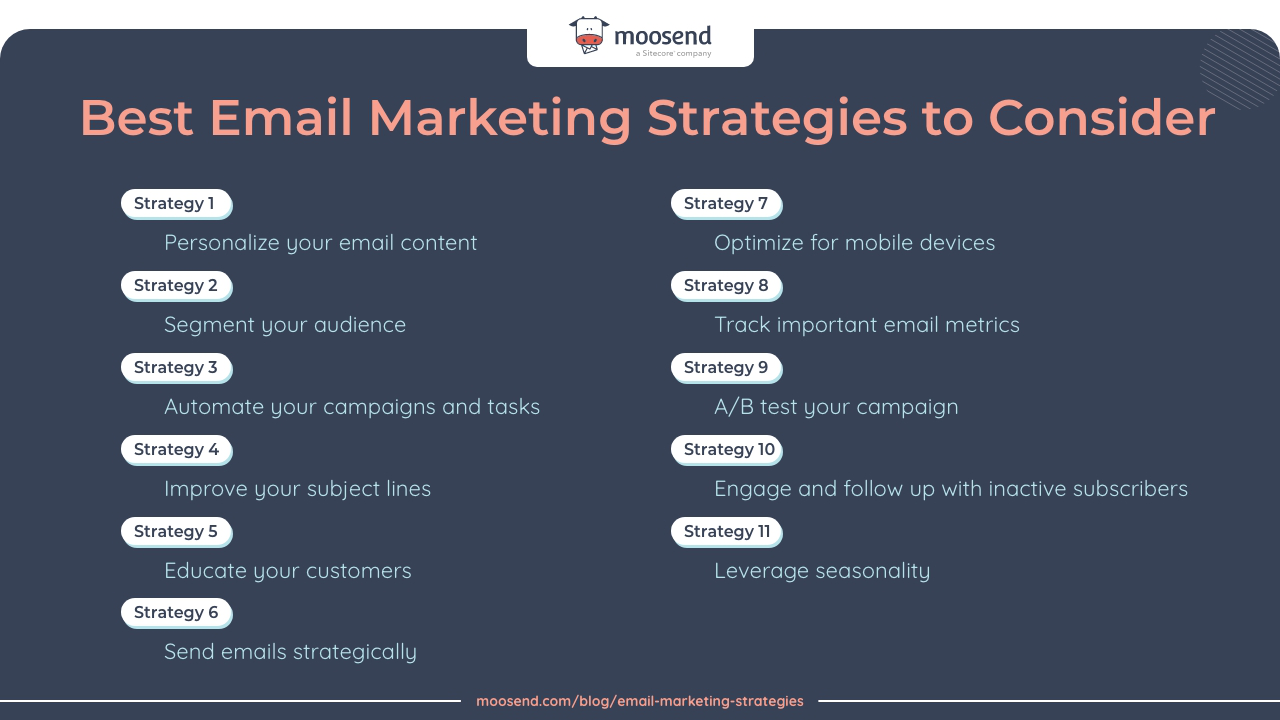
Analyzing Email Metrics
Analyzing email metrics helps improve your strategies. Key metrics to focus on include:
| Metric | Description |
|---|---|
| Open Rate | The percentage of opened emails. |
| Click-Through Rate (CTR) | The percentage of clicks on links within the email. |
| Bounce Rate | The percentage of emails that couldn’t be delivered. |
| Unsubscribe Rate | The percentage of users who unsubscribed. |
Regularly check these metrics. They guide your future campaigns. Improving these metrics increases your open rates.
Credit: moosend.com
Avoiding Spam Filters
Email marketing is a powerful tool for reaching your audience. But, many emails get caught in spam filters. This can reduce your campaign’s effectiveness. Here are some tips to help you avoid spam filters and ensure your emails reach their intended recipients.
Best Practices
- Use a Recognizable Sender Name: Your sender name should be familiar to your audience. This increases the likelihood that your email will be opened.
- Get Permission: Always send emails to people who have opted in. This ensures you are not marked as spam.
- Personalize Your Emails: Include the recipient’s name and other personalized details. This makes your email feel more personal and less like spam.
- Maintain a Clean Email List: Regularly remove inactive subscribers from your list. This keeps your list healthy and improves deliverability.
- Use a Reputable Email Service Provider: Choose a provider with good deliverability rates. They often have measures in place to help you avoid spam filters.
Common Triggers To Avoid
Spam filters look for certain triggers in emails. Avoid these to keep your emails out of the spam folder:
- Excessive Use of Capital Letters: Avoid using all caps in your subject lines and email content. It can be seen as shouting and spammy.
- Too Many Exclamation Marks: Limit your use of exclamation marks. Using too many can trigger spam filters.
- Spammy Words and Phrases: Words like “Free,” “Buy Now,” and “Limited Time Offer” can be flagged. Use them sparingly and in context.
- Overuse of Images: Emails with a high image-to-text ratio can be marked as spam. Balance your use of images and text.
- Poor HTML Coding: Ensure your email’s HTML code is clean and well-structured. Bad coding can trigger spam filters.
| Trigger | Reason | Solution |
|---|---|---|
| All Caps | Considered shouting | Use normal case text |
| Too Many Exclamation Marks | Seen as spammy | Limit to one or two |
| Spammy Words | Common in spam emails | Use sparingly |
| High Image-to-Text Ratio | Harder for filters to scan | Balance text and images |
| Bad HTML Coding | Triggers filters | Use clean code |
Using Automation To Your Advantage
Email marketing can be a powerful tool for growing your business. Using automation to your advantage can save time and boost efficiency. Automation allows you to send personalized emails at the right time. This makes your messages more relevant to your audience.
Setting Up Drip Campaigns
Drip campaigns send pre-written emails on a schedule. They keep your audience engaged over time. Use a drip campaign to welcome new subscribers. You can also use it to nurture leads into customers.
- Create a series of emails with valuable content.
- Set a schedule for when each email will be sent.
- Personalize the emails to match your audience’s interests.
A drip campaign can include:
- Welcome Email
- Product Information
- Customer Testimonials
- Promotional Offers
Using drip campaigns ensures your audience receives consistent communication. This helps build trust and keeps your brand top of mind.
Behavioral Trigger Emails
Behavioral trigger emails are sent based on user actions. These actions can include website visits, abandoned carts, or email opens.
| Action | Email Trigger |
|---|---|
| Visited Product Page | Send Product Information |
| Abandoned Cart | Send Reminder Email |
| Opened Previous Email | Send Follow-Up Email |
Behavioral trigger emails are highly personalized. They respond to your audience’s specific actions. This makes them more effective than generic emails.
To set up behavioral trigger emails:
- Identify key actions that indicate interest.
- Create targeted emails for each action.
- Use automation software to track actions and send emails.
Behavioral trigger emails can increase engagement and drive conversions. They ensure your messages are timely and relevant.
Credit: rsmconnect.com
Measuring Email Marketing Success
Email marketing is a powerful tool for businesses. Measuring its success is crucial. Understanding the right metrics ensures your campaigns are effective. Let’s explore how to measure email marketing success.
Key Performance Indicators
Key performance indicators (KPIs) are vital. They help gauge the effectiveness of your email campaigns.
- Open Rate: Percentage of emails opened by recipients.
- Click-Through Rate (CTR): Percentage of recipients clicking on links.
- Conversion Rate: Percentage of recipients completing desired actions.
- Bounce Rate: Percentage of emails not delivered.
- Unsubscribe Rate: Percentage of recipients opting out.
These KPIs provide insights into your email performance. Always track them for each campaign.
Adjusting Strategies Based On Data
Data-driven strategies lead to better results. Use the data from your KPIs to adjust your email marketing strategies.
- Analyze Open Rates: Low open rates? Improve your subject lines. Make them more engaging.
- Improve CTR: High CTR means your content is engaging. Low CTR? Enhance your email content and design.
- Boost Conversion Rates: Use clear call-to-actions (CTAs). Make sure your emails are mobile-friendly.
- Reduce Bounce Rates: Clean your email list regularly. Remove invalid email addresses.
- Manage Unsubscribe Rates: Offer valuable content. Ensure you are not overwhelming your audience.
Regularly review your email data. Make necessary adjustments to optimize your campaigns.
Staying Compliant With Regulations
Staying compliant with email marketing regulations is essential. Non-compliance can lead to hefty fines and damage your brand’s reputation. This section will guide you through the key regulations to ensure your email marketing efforts are legally sound.
Understanding Gdpr
The General Data Protection Regulation (GDPR) is a law in the EU. It protects data privacy for individuals. Follow these steps to stay compliant:
- Obtain explicit consent: Always ask users for permission.
- Clear privacy policies: Explain how you will use their data.
- Right to access: Allow users to view their data.
- Right to be forgotten: Delete user data upon request.
Make sure to document all consents. Keep records of how and when you got them. This helps in case of audits.
Can-spam Act Compliance
The CAN-SPAM Act applies to all commercial emails in the U.S. It sets rules for email marketing. Here’s a checklist to follow:
- Accurate header information: Use correct “From,” “To,” and reply-to details.
- Subject lines: They must not be deceptive.
- Identify the message as an ad: Clearly state that your email is an advertisement.
- Include your physical address: Provide a valid postal address.
- Opt-out mechanism: Give recipients an easy way to unsubscribe.
- Honor opt-out requests promptly: Process these within 10 business days.
Maintaining compliance with these laws protects your business. It also builds trust with your audience.
Email Marketing Case Studies
Exploring Email Marketing Case Studies can provide invaluable insights. Real-world examples showcase effective tactics. They also reveal common pitfalls to avoid. This section dives into both successes and failures. These are drawn from various industries and campaigns.
Success Stories
Success stories in email marketing highlight strategies that worked. They show how companies achieved their goals. Here are some notable examples:
- Case Study 1: XYZ Clothing Brand
- Case Study 2: ABC Software Company
- Case Study 3: DEF Travel Agency
XYZ Clothing saw a 40% increase in sales. They personalized email recommendations based on past purchases.
ABC Software improved customer retention by 30%. They used segmented email lists to target users with specific needs.
DEF Travel boosted bookings by 25%. They sent timely promotional emails before holiday seasons.
Lessons Learned From Failures
Examining failures helps avoid common mistakes. Here are some lessons learned from less successful campaigns:
- Case Study 1: GHI Retailer
- Case Study 2: JKL Fitness App
- Case Study 3: MNO Tech Startup
GHI Retailer saw low engagement rates. They sent too many emails and annoyed subscribers.
JKL Fitness had high unsubscribe rates. Their emails were not mobile-friendly.
MNO Tech received poor open rates. They used generic subject lines that lacked appeal.
| Company | Success | Failure |
|---|---|---|
| XYZ Clothing | 40% sales increase | N/A |
| ABC Software | 30% retention improvement | N/A |
| DEF Travel | 25% booking boost | N/A |
| GHI Retailer | N/A | Low engagement due to email frequency |
| JKL Fitness | N/A | High unsubscribe rates |
| MNO Tech | N/A | Poor open rates |
Advanced Email Marketing Techniques
Email marketing has evolved significantly. Today, advanced techniques are essential for standing out. These techniques can enhance engagement, personalization, and conversion rates.
Leveraging Ai For Personalization
Artificial Intelligence (AI) can transform your email marketing strategy. AI helps in creating personalized content for each subscriber. Here’s how you can leverage AI:
- Content Recommendations: AI can suggest content based on user behavior.
- Send Time Optimization: AI determines the best time to send emails.
- Predictive Analytics: AI predicts future customer behavior.
Using AI ensures each subscriber gets a unique experience. Personalization increases open and click rates. AI tools like Machine Learning help in segmenting your audience effectively.
Interactive Email Elements
Interactive emails engage subscribers more effectively. These elements make your emails more engaging and fun:
- Surveys and Polls: Ask for feedback directly within the email.
- Carousel Images: Showcase multiple products in a single email.
- Animated GIFs: Add movement to capture attention.
Interactive elements reduce bounce rates and improve user experience. They encourage subscribers to spend more time on your emails. Here is a table showing the benefits of different interactive elements:
| Element | Benefit |
|---|---|
| Surveys and Polls | Gather user feedback quickly |
| Carousel Images | Display multiple products elegantly |
| Animated GIFs | Capture attention instantly |
Interactive emails lead to higher engagement rates. They provide a better user experience. These advanced techniques can significantly boost your email marketing success.
Frequently Asked Questions
What Are The 5 Ts Of Email Marketing?
The 5 Ts of email marketing are: Targeting, Timing, Testing, Tracking, and Transparency. These elements enhance engagement, optimize delivery, and build trust with your audience.
What Are The 7 Email Marketing Strategies?
1. Segment your audience. 2. Personalize your emails. 3. Craft compelling subject lines. 4. Use engaging content. 5. Optimize for mobile devices. 6. Test and analyze performance. 7. Automate email sequences.
How Do You Do Perfect Email Marketing?
To perfect email marketing, build a quality email list, craft engaging subject lines, personalize content, include clear calls-to-action, and analyze performance regularly.
How Can I Improve My Email Marketing Skills?
Improve your email marketing skills by segmenting your audience, personalizing messages, and using compelling subject lines. Monitor metrics and A/B test campaigns. Keep content concise and visually appealing.
Conclusion
Mastering email marketing can boost your business growth. Implement these tips for better engagement and higher conversions. Consistent optimization and understanding your audience are crucial. Keep refining your strategies to stay ahead. Happy emailing!