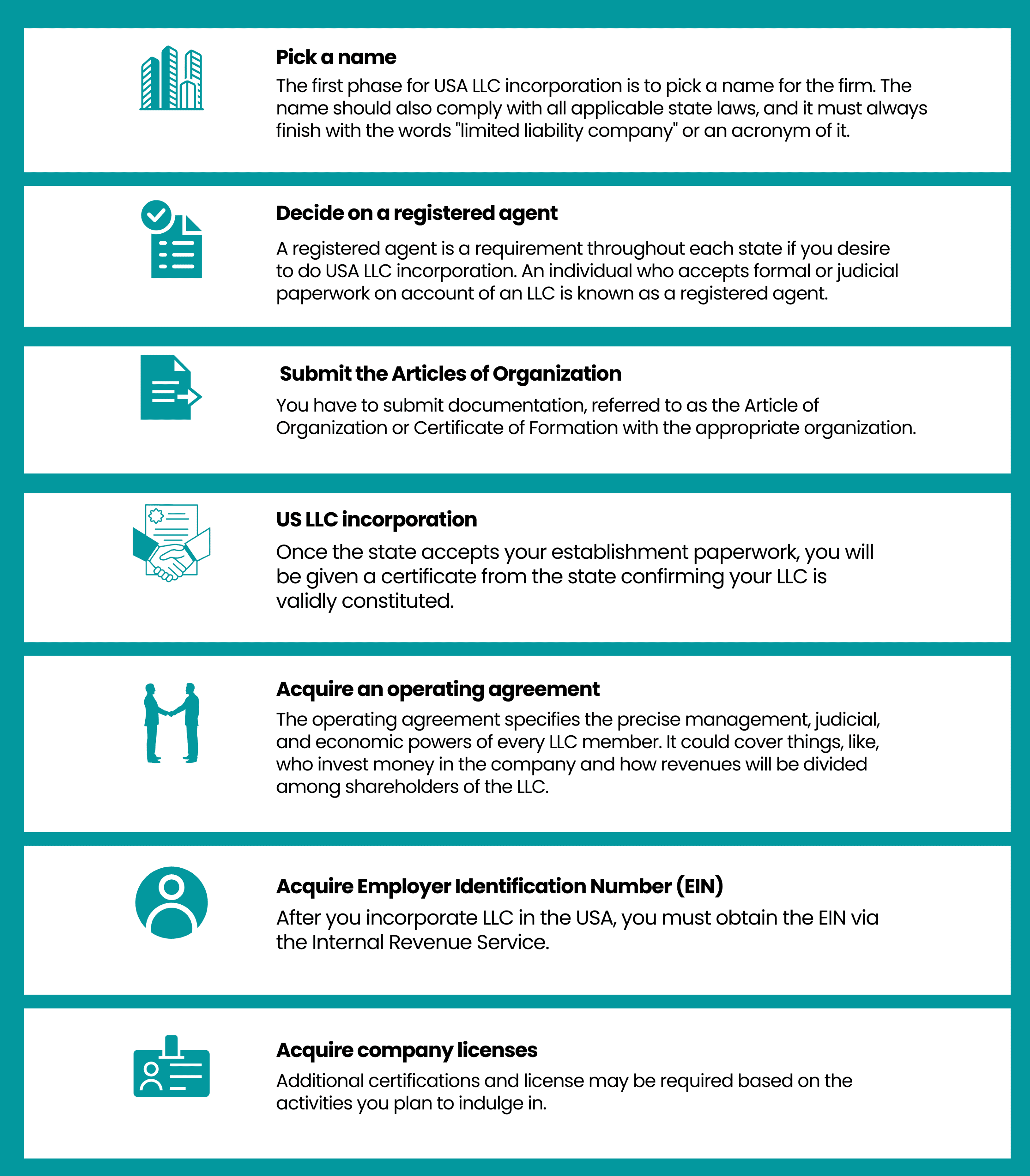
To incorporate an LLC company in the USA, select a state and file Articles of Organization. Choose a unique business name and appoint a registered agent.
Setting up an LLC (Limited Liability Company) is a popular choice for many entrepreneurs seeking to establish a presence in the United States. This business structure offers flexibility and limited liability protection for its owners, known as members. The incorporation process involves a few critical steps, which include choosing an appropriate name that complies with state regulations, and designating a registered agent who is authorized to receive legal documents on behalf of the company.
Each state has its own procedures and requirements, so it’s important to research or consult with a professional about the specifics in your chosen state. This venture can significantly benefit owners, offering personal asset protection, tax advantages, and enhanced credibility.
Entrepreneurship In The Usa
The United States presents a fertile ground for entrepreneurs dreaming of turning their ideas into reality. With a supportive economic environment and access to diverse markets, America stands as a beacon of entrepreneurial spirit. The process is straightforward but requires careful planning and decision-making. Entrepreneurs in the USA thrive by leveraging the legal structures available to protect and enhance their businesses.
The Boom Of Startups
Startup culture has exploded across the USA. Innovators and thinkers dive into their passions, seeking to make an impact. This surge is not just in tech-savvy Silicon Valley. Cities nationwide are becoming startup hubs. Below are key indicators of this boom:
- Rising number of new businesses
- Greater access to venture capital
- Increase in coworking spaces
- Entrepreneurial education programs
Benefits Of An Llc
Choosing the right business structure is crucial. An LLC, or Limited Liability Company, stands out for many entrepreneurs. Here’s why:
| Benefit | Description |
|---|---|
| Personal Asset Protection | Separates personal assets from business debts |
| Flexible Taxation | Choice of how the business is taxed |
| Easy Management | Simple and less paperwork than a corporation |
| Credibility | Enhances business reputation with LLC title |
Llc At A Glance
An LLC, or Limited Liability Company, is a popular business structure in the USA. It offers flexibility and protection for business owners. Understanding its basics helps when considering incorporation options.
Basic Concept Of An Llc
LLCs blend traits from corporations and partnerships. Owners, called members, have limited personal liability for business debts. This means personal assets stay safe from company losses. LLCs are also flexible with taxes. They can choose how the IRS taxes them.
- Owners not liable for company debt
- LLCs can have one or more members
- No limit to the number of owners
LLC vs. Corporation
Llc Vs. Corporation
Distinguishing an LLC from a corporation is key. Each has unique benefits and requirements.
| LLC | Corporation |
|---|---|
| Flexible management | Structured hierarchy |
| Less paperwork | More regulation |
| Profit-sharing freedom | Fixed profit distribution |
In a corporation, shareholders have stock. A corporation’s setup can attract investors. LLCs offer personal asset protection like a corporation. Yet, they provide more tax choices and management flexibility. The right choice depends on the individual business goals and needs.
- LLCs are suitable for small to medium-sized businesses
- Corporations fit well with businesses planning to issue stock
Initial Considerations
Setting up an LLC means making key decisions from the start. These initial steps lay the groundwork for your business’s legal structure and operations. They determine how smoothly your business can sail the corporate seas.
Choosing A State
Your choice of state affects fees, taxes, and regulations. Each state has unique perks and quirks. Consider:
- Home state advantage for local businesses
- Tax benefits in states like Delaware and Nevada
- Business laws that might favor your industry
Understanding Legalities
Getting to grips with the legal side is crucial. Comply with laws to avoid fines. Key points to cover:
| Legal Element | What It Means |
|---|---|
| Name registration | Must be unique and meet state rules |
| Registered Agent | A must-have for official documents |
| Licensing | Varies by state and business type |
| Operating Agreement | Outlines ownership and operation |
Credit: ondemandint.com
Naming Your Llc
Choosing an LLC name involves creativity and understanding legal requirements. Your LLC name represents your brand and must adhere to state rules. Let’s dig into the process.
Name Search And Requirements
Performing a name search is the first step.
- Check with your state’s LLC office or business entity database.
- Ensure your chosen name isn’t in use by another company.
- It must include “LLC,” “L.L.C.,” or “Limited Liability Company.”
- Avoid restricted words such as “Bank,” “Insurance,” or “Government” unless you have permission.
Most states offer online search tools. Use them to confirm your name’s availability.
Reserving The Name
Reserving your LLC name keeps it safe while you prepare for registration.
- Submit a name reservation application to your state’s LLC filing office.
- Pay the necessary fee, which varies by state.
- The reservation period typically lasts 30-90 days.
This period allows time to gather needed LLC formation documents without losing your perfect name.
The Paperwork
Starting an LLC in the USA involves important paperwork. It ensures the legal formation of the company. This paperwork includes specific documents filed with the state. Understanding what to prepare can save time and effort.
Preparing The Articles Of Organization
The first critical step in incorporation is preparing the Articles of Organization. This document outlines the LLC’s basic details. Here is what you need to include:
- Name of the LLC: Must be unique and follow state guidelines.
- Principal place of business: The LLC’s primary operating address.
- Registered agent: Person or service authorized to receive legal papers.
- Ownership structure: Details of the LLC’s members or managers.
- Duration of the LLC: Could be perpetual or for a specific term.
Each state might have additional requirements. Check with the state’s filing office for specifics.
Filing With The State
After preparing the Articles of Organization, the next step is filing it with the state government. You can usually do this online or by mail. Here is the general process:
- Visit the state’s Secretary of State website.
- Locate the LLC filing section.
- Upload or send the prepared Articles of Organization.
- Pay the filing fee. This fee varies by state.
Expect confirmation from the state. This can take a few days to a few weeks. Once approved, your LLC is legally established.
| Steps to File | Details |
|---|---|
| 1. Prepare Articles | Gather information and complete the form. |
| 2. State Website | Locate the filing section online. |
| 3. Submission | Upload or mail the documents. |
| 4. Fee Payment | Complete payment as instructed. |
| 5. Confirmation | Receive approval of LLC status. |
Once all forms are submitted and fees are paid, the incorporation process is well on its way. Properly filed paperwork forms the foundation of your LLC’s legal structure.

Credit: howtostartanllc.com
Ein And Taxation
Starting an LLC in the USA requires an understanding of essential tax identifiers and implications. Every business needs an Employer Identification Number (EIN) for tax purposes. Grasping the tax responsibilities ensures smooth operation and legal compliance.
Obtaining An Ein
Securing an EIN is a vital step for any new LLC. Think of it as a social security number for your company. It’s what the IRS uses to identify your business for tax purposes. Here’s a simple guide to acquire one:
- Complete the IRS Form SS-4.
- Apply online through the IRS website, by fax, or by mail.
- There’s no filing fee to obtain an EIN.
You’ll receive your EIN immediately online or within weeks if applying by fax or mail. Keep your EIN secure; it’s vital for your business operations.
Understanding Tax Implications
LLCs enjoy a flexible tax status. They can be taxed as sole proprietorships, partnerships, or corporations. Your choice affects your tax rates and filings. The following points highlight the tax implications:
- LLCs are not taxed at the federal level as entities. Profits and losses are passed through to owners.
- Members of an LLC file personal tax returns with business gains or losses.
- Choosing corporate taxation might benefit you under certain conditions.
Contact a tax professional to explore the best tax status for your LLC. This choice has lasting impacts on your financials. Make an informed decision to optimize your tax benefits.
Operating Agreements
An Operating Agreement lays the foundation for an LLC’s internal operations and protects the business structure. Whether you’re going solo or with partners, it’s a legal formality that defines everyone’s role and the company’s procedures.
Drafting The Document
Drafting the Operating Agreement should be meticulous. This document outlines the LLC’s framework. Precision and clarity are vital for avoiding future disputes.
- Begin with basic company details.
- Detail each member’s contribution.
- Clarify management structure.
- Decide on profit distribution early on.
Key Clauses To Include
Key clauses form the backbone of an Operating Agreement. They set clear expectations for all members.
Here are crucial sections:
- Duties and Powers: Defines member responsibilities.
- Voting Rights: Details the decision-making process.
- Capital Contributions: Records investments by members.
- Profit and Loss Distribution: Describes financial distributions.
- Membership Changes: Covers adding or removing members.
- Dissolution: Outlines steps to wind down the LLC.
Include clauses on meetings, buyout, and buy-sell rules. Protect your business with a robust Operating Agreement.
Compliance And Permits
Incorporating an LLC in the USA means navigating a web of compliance and permits. These rules vary by state and local jurisdictions. To keep your new company in good legal standing, make sure you meet all these obligations. From state-specific regulations to federal mandates, understanding these requirements is crucial.
State Compliance
Each state has unique rules for LLCs. You must follow these to avoid penalties. State compliance often includes:
- Annual Reports: Most states need regular updates on your business.
- Franchise Taxes: Some locations charge a fee just for operating there.
- Registered Agent: Your LLC must have a reliable point of contact in the state.
| Requirement | Details | Due Date |
|---|---|---|
| Annual Report | Update on company details | Varies by state |
| Franchise Tax | Fee for operating in state | Annual/Biennial |
Federal And Local Requirements
Beyond state rules, there are federal and local ones too. Make sure your LLC gets these right.
Federal: Obtain an Employer Identification Number (EIN) from the IRS for tax purposes. Comply with employment laws if you have staff.
Local: Zoning laws, health permits, and business licenses come into play here. Each city or county might need extra paperwork.
- EIN: Needed for all businesses with employees.
- Zoning Permits: Approval to operate in certain locations.
- Health Permits: If your business involves food or public health.
Ongoing Maintenance
Ongoing maintenance is crucial once you’ve incorporated your LLC in the USA. Regular tasks keep your company compliant with state laws. They ensure that your LLC remains in good standing. Let’s look at the key maintenance tasks.
Annual Reports
Most states require an annual report for your LLC. This report updates your company’s information. The updates are for the state’s records. They often include your business address and the names of members.
- Check your state’s filing deadlines
- Gather all necessary information early
- File the report online or by mail, as required
Filing fees vary by state. Missing deadlines can lead to fines.
Record Keeping
Good record keeping is a cornerstone for any LLC. It’s vital for tax purposes and legal protection.
| Record Type | Description | Examples |
|---|---|---|
| Legal Documents | Initial formation papers | Articles of Organization, Operating Agreements |
| Financial Records | Bank statements, receipts | Income, expenses, payroll |
| Meeting Minutes | Summary of decisions made | Annual meetings, special meetings |
Always store records securely. Make them easy to access when needed.

Credit: www.fiverr.com
Ready For Business
After successfully incorporating your LLC (Limited Liability Company) in the USA, it’s time to transition from the setup phase to operation. Taking your business from paper to reality involves a few critical steps. Set your company on the path to success by methodically opening a bank account and initiating operations.
Opening A Bank Account
Opening a bank account is a vital step for your new LLC. This account separates personal finances from business transactions. Here’s how to set up your LLC’s bank account:
- Gather necessary documents: These include your LLC’s EIN, Articles of Organization, and operating agreement.
- Choose the right bank: Consider fees, services, and convenience.
- Open your account: Visit the bank or start the process online. Complete the application and deposit funds.
A business bank account simplifies tax filing and enhances credibility with customers.
Launching Operations
With the bank account ready, launch your LLC’s operations. Focus on these key tasks:
- Set up accounting software: Manage finances and track expenses efficiently.
- Obtain necessary permits and licenses: Ensure your business complies with local, state, and federal regulations.
- Develop a marketing plan: Create strategies to reach your target audience and grow your customer base.
- Hire employees: If needed, recruit a team to help achieve your business goals.
Taking these steps diligently sets a strong foundation for your LLC’s future growth and profitability.
Frequently Asked Questions For How To Incorporate Llc Company In Usa
What Is An Llc In The Usa?
An LLC, or Limited Liability Company, is a business structure in the USA that combines the pass-through taxation of a partnership or sole proprietorship with the limited liability of a corporation. It’s a flexible option for many businesses.
How Do You Start An Llc In The Usa?
To start an LLC in the USA, choose a unique business name and a registered agent. File the Articles of Organization with the state agency, usually the Secretary of State. Pay the necessary filing fee, which varies by state.
What Are The Benefits Of Incorporating An Llc?
Incorporating an LLC offers liability protection for its owners, known as members. It separates personal assets from business debts. Additionally, LLCs enjoy flexibility in management and benefit from pass-through taxation, avoiding double taxation.
How Long Does It Take To Form An Llc?
The time to form an LLC varies by state, ranging from a few days to several weeks. Once the Articles of Organization are filed and all fees are paid, the state will process and approve the formation of the LLC.
Conclusion
Starting your own LLC in the USA sets a foundation for business success. By following the steps outlined, you can navigate the incorporation process smoothly. Remember to consult with legal experts if needed, ensuring compliance with all regulations. Embrace the entrepreneurial spirit and your venture will thrive.
Good luck on your business journey!