

Image processing and computer vision tools enable automated analysis and interpretation of visual data. They play crucial roles in fields like healthcare, security, and automotive.
Image processing involves techniques to enhance and manipulate digital images. Computer vision focuses on enabling machines to interpret and understand visual information. These tools are essential in various applications, such as facial recognition, medical imaging, and autonomous vehicles. OpenCV, MATLAB, and TensorFlow are popular platforms for developing image processing and computer vision solutions.
They offer libraries and frameworks that simplify complex tasks. Businesses leverage these tools to gain insights, improve efficiency, and innovate. Mastering these technologies opens up numerous opportunities in tech-driven industries.
The Evolution Of Image Processing
Image processing and computer vision have come a long way. These fields have evolved from simple techniques to complex algorithms. Their growth has transformed many industries. Let’s explore this fascinating journey.
From Analog To Digital
In the early days, image processing was analog. Scientists used film and photographic techniques. These methods were slow and less accurate.
With the advent of digital technology, everything changed. Digital images are made of pixels. Each pixel has a specific value. Computers process these values quickly and accurately.
Digital image processing allows for a wide range of techniques. These include filtering, enhancement, and compression. Digital methods are faster and more reliable.
| Aspect | Analog | Digital |
|---|---|---|
| Speed | Slow | Fast |
| Accuracy | Less accurate | Highly accurate |
| Techniques | Limited | Wide range |
Milestones In Computer Vision
Computer vision has achieved several important milestones. Here are some key moments:
- 1960s: Early computer vision experiments begin.
- 1980s: Introduction of machine learning in vision tasks.
- 2000s: Rise of deep learning and neural networks.
- 2010s: Real-time object detection and recognition.
Each milestone brought significant advancements. Early experiments were basic. Machine learning improved accuracy and efficiency. Deep learning revolutionized the field. Real-time capabilities transformed applications in many industries.
Core Concepts In Image Processing
Image processing is a crucial part of computer vision. It involves manipulating images to extract meaningful information. Understanding the core concepts helps in making better use of image processing tools.
Pixels And Color Models
Every digital image is made up of tiny elements called pixels. Pixels are the smallest units of an image. Each pixel holds color information that contributes to the overall image.
Color models are systems for describing colors. The most common color model is RGB (Red, Green, Blue). In this model, each color is represented by a combination of red, green, and blue values.
| Color Model | Description |
|---|---|
| RGB | Uses red, green, and blue components. |
| CMYK | Uses cyan, magenta, yellow, and black components. |
| Grayscale | Uses shades of gray, from black to white. |
Different color models are used for different purposes. For example, CMYK is often used in printing.
Image Enhancement Techniques
Image enhancement improves the visual quality of images. It makes images clearer and easier to analyze.
Common image enhancement techniques include:
- Contrast Adjustment: Enhances the difference between light and dark areas.
- Brightness Adjustment: Makes the image brighter or darker.
- Noise Reduction: Removes unwanted random variations in pixel values.
Enhancing images can help in tasks like medical imaging and face recognition. These techniques make hidden details visible.
Below is a simple example of code for contrast adjustment in Python:
import cv2

# Load image
image = cv2.imread('image.jpg')

# Apply contrast adjustment
adjusted = cv2.convertScaleAbs(image, alpha=1.5, beta=0)

# Save the enhanced image
cv2.imwrite('enhanced_image.jpg', adjusted)
Using these core concepts and techniques, you can significantly improve image quality and extract valuable information.
Computer Vision Fundamentals
Computer vision allows computers to interpret images and videos. It mimics human visual understanding. This field uses various algorithms and techniques. These help in recognizing patterns and extracting features from images.
Pattern Recognition Basics
Pattern recognition identifies patterns in data. It is essential in image processing. It involves matching information from images with stored patterns. This helps in identifying objects, faces, and other elements.
- Identifying shapes and objects
- Detecting and recognizing faces
- Classifying images based on patterns
Pattern recognition uses various techniques. These include statistical methods, neural networks, and machine learning. Each technique has its strengths. Combining them often yields the best results.
Understanding Feature Extraction
Feature extraction is a key step in computer vision. It involves identifying relevant information from images. This makes it easier for algorithms to process and analyze images.
Common features include edges, textures, and colors. These features help in identifying objects and patterns. For example, edge detection finds boundaries within an image. Texture analysis examines the surface quality of objects.
Here is a table of common feature extraction techniques:
| Technique | Description |
|---|---|
| Edge Detection | Identifies object boundaries |
| Texture Analysis | Examines surface quality |
| Color Histogram | Analyzes color distribution |
Combining various feature extraction techniques often yields the best results. This ensures a comprehensive analysis of images.
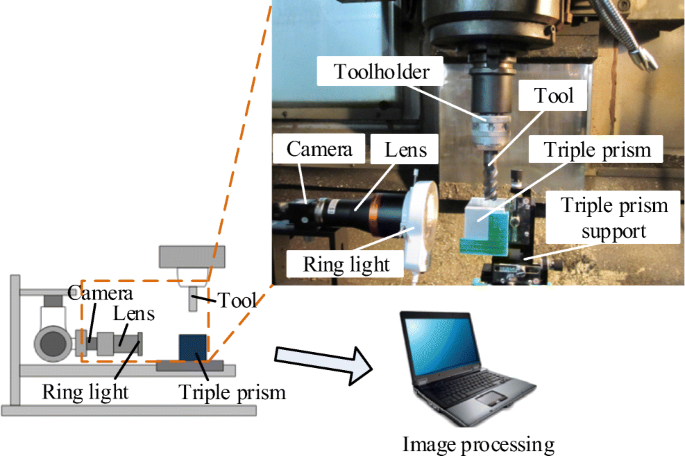
Credit: link.springer.com
Leading Image Processing Tools
Image processing and computer vision tools are essential for analyzing visual data. They help in recognizing patterns, detecting objects, and enhancing images. Two main types of tools exist: open-source software and proprietary platforms.
Open-source Software
Open-source software is freely available and customizable. It allows developers to modify the code according to their needs.
- OpenCV: OpenCV is a powerful tool for real-time image processing. It supports various programming languages like Python, C++, and Java.
- Scikit-Image: Scikit-Image is a Python library for image processing. It offers algorithms for segmentation, geometric transformations, and color space manipulation.
- ImageJ: ImageJ is widely used in scientific research. It provides tools for image analysis, processing, and visualization.
Proprietary Platforms
Proprietary platforms offer advanced features and professional support. They often come with a cost but provide robust and reliable tools.
- Adobe Photoshop: Adobe Photoshop is popular for photo editing. It offers a wide range of tools for image enhancement and manipulation.
- MATLAB: MATLAB is used in academic and industrial research. It provides advanced algorithms for image processing and analysis.
- CorelDRAW: CorelDRAW is known for vector graphics editing. It also offers tools for image enhancement and layout design.
Here is a comparison table for quick reference:
| Tool | Type | Key Features |
|---|---|---|
| OpenCV | Open-Source | Real-time processing, multi-language support |
| Scikit-Image | Open-Source | Segmentation, transformations, color space manipulation |
| ImageJ | Open-Source | Image analysis, processing, visualization |
| Adobe Photoshop | Proprietary | Photo editing, image enhancement, manipulation |
| MATLAB | Proprietary | Advanced algorithms, academic and industrial use |
| CorelDRAW | Proprietary | Vector graphics, image enhancement, layout design |
Computer Vision Libraries And Frameworks
Computer vision is a field that allows machines to interpret and understand the visual world. This is done using various libraries and frameworks. These tools help developers to create applications that can recognize objects, detect motion, and much more.
Popular Python Libraries
Python is the go-to language for computer vision. Its libraries are powerful and easy to use.
- OpenCV: This is the most popular library for computer vision. It has a wide range of functionalities. You can use it for image processing, object detection, and video analysis.
- TensorFlow: This library by Google is perfect for deep learning. It helps in building and training neural networks.
- Scikit-Image: This is a collection of algorithms for image processing. It is built on top of SciPy.
- PyTorch: This is another library for deep learning. It is known for its flexibility and ease of use.
Real-time Processing Frameworks
For real-time processing, you need frameworks that are fast and reliable. These frameworks ensure that your applications can process data quickly.
| Framework | Description |
|---|---|
| OpenCV | Supports real-time computer vision applications. It is highly optimized for performance. |
| GStreamer | It is a multimedia framework. It is used for video streaming and real-time processing. |
| YOLO (You Only Look Once) | This framework is used for real-time object detection. It is very fast and efficient. |
Choosing the right library or framework is crucial. It depends on your project needs and the type of application you are building.
Applications In Various Industries
Image processing and computer vision tools have revolutionized many industries. These technologies provide solutions to complex problems. They enhance efficiency and accuracy in various fields.
Healthcare Diagnostics
In healthcare, image processing tools aid in diagnostics. Medical imaging technologies like MRI and CT scans depend on these tools. They help in identifying abnormalities and diseases early.
Doctors use these tools to analyze medical images quickly. It reduces the time needed for diagnosis. It also improves the accuracy of disease detection.
| Tool | Application |
|---|---|
| MRI | Brain and spinal cord imaging |
| CT Scan | Detailed cross-sectional images |
| Ultrasound | Real-time imaging of organs |
These technologies also assist in surgical planning. Surgeons use them for precise operations. They help in visualizing the exact area to be operated on.
Automotive Safety Features
In the automotive industry, computer vision tools enhance safety features. They are essential in developing advanced driver-assistance systems (ADAS). These systems help in preventing accidents.
Some key applications include:
- Lane Departure Warning: Alerts the driver if the car drifts out of its lane.
- Automatic Emergency Braking: Detects obstacles and applies brakes automatically.
- Adaptive Cruise Control: Maintains a safe distance from the car ahead.
These features rely on cameras and sensors to function. They process real-time data to make quick decisions. This increases the safety of both drivers and pedestrians.
Challenges In Image Processing
Image processing involves complex tasks. These tasks need advanced tools and techniques. Despite advancements, many challenges persist. Addressing these challenges is crucial for accurate and efficient results. Below are some key challenges in image processing.
Dealing With Large Datasets
Large datasets are common in image processing. Handling these datasets is challenging. Storage and retrieval of images need vast resources.
- Storage: High-resolution images need more storage space.
- Processing Speed: Processing large datasets slows down tasks.
- Memory Usage: Large images consume more memory.
Efficient algorithms are necessary to manage these challenges. Optimized storage solutions can also help.
Ensuring Privacy And Security
Privacy and security are critical in image processing. Sensitive data must be protected from unauthorized access.
- Data Encryption: Encrypting data ensures its safety.
- Access Control: Restrict access to authorized users only.
- Anonymization: Anonymize sensitive information in images.
Implementing these measures safeguards user data. Ensuring privacy and security builds trust in image processing applications.

Credit: www.mathworks.com
Future Trends In Computer Vision
Computer vision has seen rapid growth in recent years. Future trends promise even more exciting advancements. Emerging technologies are transforming how machines understand visual data. These innovations will impact various industries.
Artificial Intelligence Integration
Artificial intelligence (AI) is becoming integral to computer vision. AI helps machines recognize patterns in images. This improves accuracy and efficiency. AI algorithms can learn from large datasets. This leads to better performance over time.
Deep learning is a subset of AI. It uses neural networks to analyze images. These networks mimic the human brain. This allows for more complex image analysis. Convolutional neural networks (CNNs) are especially useful. They excel at recognizing objects in pictures.
Machine learning (ML) models are also crucial. They allow systems to learn and adapt. ML algorithms can detect anomalies in images. This is useful in fields like medical imaging and security.
Advancements In 3d Imaging
3D imaging is another exciting trend in computer vision. It captures depth information from scenes. This provides more detailed and accurate visual data.
LIDAR technology is leading the way in 3D imaging. It uses lasers to measure distances. This creates precise 3D maps of environments. Autonomous vehicles use LIDAR for navigation and obstacle detection.
Structured light is another technique. It projects patterns onto objects. Cameras then capture the distortions. This data is used to create 3D models. This method is popular in manufacturing and quality control.
Stereo vision mimics human eyesight. It uses two cameras to capture images. The system then calculates depth by comparing the images. This technique is valuable in robotics and augmented reality.
| Technology | Application |
|---|---|
| AI and ML | Pattern recognition, anomaly detection |
| Deep Learning | Object recognition, image analysis |
| LIDAR | 3D mapping, autonomous navigation |
| Structured Light | 3D modeling, quality control |
| Stereo Vision | Robotics, augmented reality |

Credit: augmentedstartups.medium.com
Frequently Asked Questions
How Is Computer Vision Used In Image Processing?
Computer vision automates image analysis, enhancing tasks like object detection, facial recognition, and medical imaging. It improves accuracy and efficiency.
What Are The Tools For Computer Vision?
Popular tools for computer vision include OpenCV, TensorFlow, Keras, PyTorch, and MATLAB. These tools offer libraries and frameworks for image processing, object detection, and machine learning, making computer vision tasks efficient and accurate.
What Is An Image Processing Tool?
An image processing tool manipulates and enhances digital images. It performs tasks like resizing, cropping, and filtering.
Which Is Better, Opencv Or Tensorflow?
OpenCV excels in computer vision tasks, offering real-time performance. TensorFlow is better for deep learning and neural networks. Choose based on project needs.
Conclusion
Mastering image processing and computer vision tools can elevate your projects. These technologies offer efficiency and precision. Implementing them can drive innovation and improve outcomes. Stay updated with the latest advancements to maintain a competitive edge. Embrace these tools to transform your digital landscape and achieve remarkable results.


