
Imagine crafting an email that captures attention, triggers curiosity, and drives engagement—all with the power of words. You might wonder, “How long should my marketing email be?”
It’s a question that goes beyond mere word count. The right length can influence your reader’s decision to open, read, and even respond to your email. Think about your own experience; do you linger over lengthy emails or skim through concise, punchy ones?
This article will unlock the secrets behind the optimal length for marketing emails, ensuring your message is not only seen but also acted upon. By understanding the nuances of email length, you can transform your communication strategy and connect more effectively with your audience. Ready to dive into the fascinating world of marketing emails? Let’s explore how the length of your words can impact your marketing success.
Credit: nobullmarketing.com.au
Importance Of Word Count In Emails
When you craft a marketing email, the length of your message can make or break its success. The right word count can captivate your audience, while excessive verbosity can lead to your email being ignored or deleted. Finding the sweet spot is crucial for ensuring your message is read and, more importantly, acted upon.
Your marketing email’s word count directly impacts reader engagement. Too many words can overwhelm, while too few might leave the reader wanting more. The balance is delicate but essential for impactful communication.
Consider your own inbox. How often do you skim through lengthy emails? On the other hand, a concise, clear message can prompt you to take action. It’s this balance that marketers need to strike.
Why Does Word Count Matter?
Email readers have limited attention spans. A lengthy email can lose their interest within seconds. Short, sharp, and relevant content keeps them engaged.
Imagine receiving a lengthy email during a busy day. Would you read it thoroughly or glance over it, missing key points? This is why your word count matters.
What Is The Ideal Word Count For Marketing Emails?
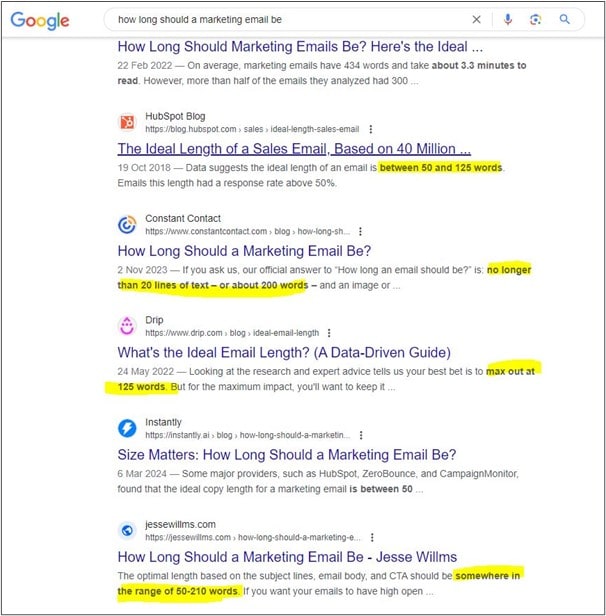
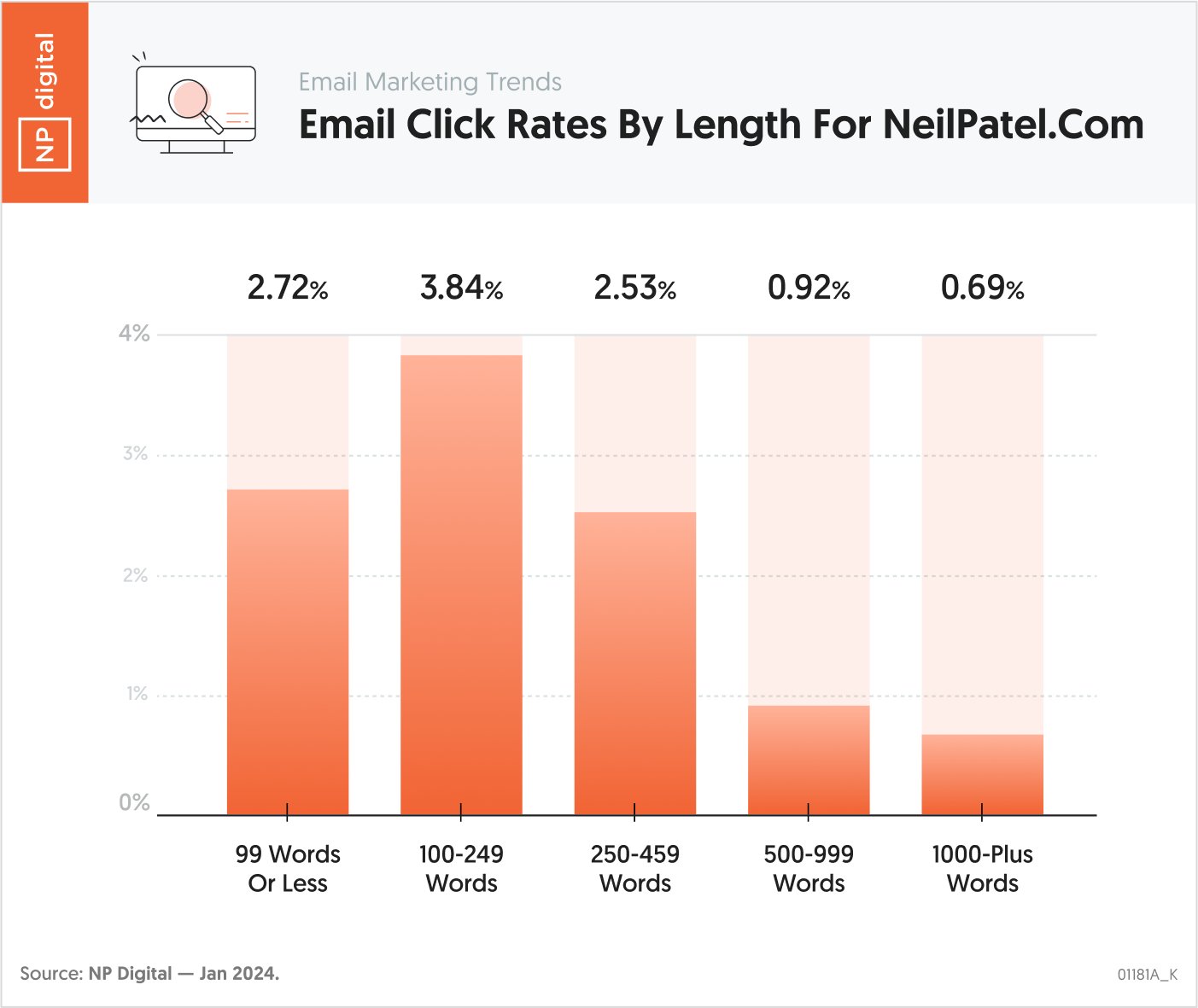
Studies suggest that emails with 50-125 words receive higher response rates. This range keeps your message concise but informative. It allows you to communicate your main points without overwhelming the reader.
Think about a recent email that grabbed your attention. Was it succinct yet compelling? Aim for that sweet spot when crafting your emails.
Tips For Achieving The Right Word Count
- Prioritize your message: Focus on your main point. Cut out any fluff that doesn’t serve your purpose.
- Use bullet points: Break down complex information. This makes your email easier to digest.
- Engage your reader: Ask a question or offer a solution. This invites your reader to think and respond.
Consider your audience’s needs and preferences. What information do they seek? Deliver that in a concise manner.
Do Shorter Emails Lead To Higher Engagement?
Shorter emails can often lead to higher engagement rates. They respect your reader’s time and convey your message quickly. This is particularly important in today’s fast-paced digital world.
Reflect on an email that made you act immediately. Was it short and to the point? Short emails can be incredibly effective.
Word count can significantly influence your email marketing success. Craft your emails with precision and purpose, and watch your engagement soar. Are you ready to refine your email strategy?
Optimal Word Length For Subject Lines
Crafting the perfect subject line is crucial for email marketing success. A subject line can determine whether your email gets opened or ignored. The right word length plays a significant role in attracting attention. This guide will help you understand how many words are optimal for subject lines.
Understanding The Importance Of Word Count
Studies show that subject lines with fewer words perform better. Shorter subject lines grab attention quickly. They fit well on mobile screens, which are commonly used for reading emails. Think about how many emails you scroll through daily. A concise subject line stands out in an overcrowded inbox.
Ideal Word Length For Mobile Devices
Most people read emails on their phones. For mobile devices, aim for six to eight words. This length ensures the subject line fits on the screen without cutting off. It gives enough information to spark curiosity and encourage clicks. Remember, users decide within seconds whether to open an email.
Testing Different Lengths For Different Audiences
Audience preferences can vary. Testing different subject line lengths can help find what resonates best. Try a few variations and monitor open rates. Pay attention to which lengths your audience engages with more. Adjust your strategy based on these insights.
The Role Of Clarity And Relevance
While word count matters, clarity is key. A short subject line must also be clear and relevant. Ensure your message is straightforward and directly related to the email content. Relevance boosts engagement and reduces unsubscribes.
Short Vs Long Subject Lines
Choosing the right subject line length is key in email marketing. Subject lines can be short or long. Each has its own benefits. The choice can impact open rates. Understanding their advantages helps craft effective emails.
Benefits Of Short Subject Lines
Short subject lines grab attention quickly. They are easy to read and understand. Short lines fit well on mobile screens. This makes them accessible to more users. They create curiosity with fewer words. This can lead to higher open rates. Short lines are often more direct. They communicate the main idea without fluff.
Advantages Of Longer Subject Lines
Longer subject lines provide more detail. They can deliver a complete message. This is useful for complex topics. Longer lines allow for creativity. You can include humor or emotion. This can engage the reader more deeply. They also help in setting clear expectations. This transparency can build trust with your audience.
Credit: x.com
Psychological Impact Of Word Choice
Crafting marketing emails requires careful word choice. Every word impacts how readers feel. Short, clear words grab attention. They create trust and connection. Long words might confuse or lose interest. Choosing the right words makes your message more effective.
Understanding the psychological impact of word choice in marketing emails can significantly boost your email campaign’s effectiveness. How you phrase your message can influence your reader’s emotions, thoughts, and ultimately, their actions. By selecting the right words, you can create a strong connection with your audience, making your emails more persuasive and engaging.Emotional Triggers
Words can tap into emotions, making your readers feel excited, curious, or even a bit anxious. Imagine opening an email that says, “Discover the Secret to Effortless Success!” versus “Learn Our New Marketing Tips.” The first email sparks curiosity and a sense of urgency. You feel compelled to read more. Think about the emotions you want to evoke in your readers. Are you aiming to inspire, motivate, or perhaps comfort them? Choose words that align with these feelings to create a lasting impact.Cognitive Engagement
Engaging your reader’s mind goes beyond just catching their attention. It involves making them think, question, and reflect on your message. Consider using questions in your email like, “Have you ever wondered why some emails grab your attention instantly?” This prompts readers to pause and think. Provide answers or solutions that add value to their thoughts. The more you engage their cognitive processes, the more memorable your message becomes. Think of ways to involve them actively, perhaps through polls or interactive content. This transforms a passive reading experience into an engaging dialogue.Choosing the right words can be the difference between an email that gets ignored and one that drives action. Next time you’re crafting a message, ask yourself: What emotion do I want to evoke? How can I make my reader think? By focusing on emotional triggers and cognitive engagement, your emails can resonate on a deeper level, encouraging your audience to take the desired action.Impact Of Word Length On Different Audiences
Crafting the right word length in marketing emails is essential for engaging different audiences effectively. Short, concise emails can capture attention and convey messages quickly. Longer emails might offer more detail but risk losing reader interest. Balancing word count helps maintain reader engagement and improves message delivery.
Crafting the perfect marketing email is not just about what you say but also how many words you use. The word length can significantly impact how different audiences perceive your message. Understanding your audience’s preferences can make or break your email marketing strategy.Age Demographics
Younger audiences, like millennials and Gen Z, often prefer concise emails. They are accustomed to quick bursts of information, thanks to social media. Short, snappy emails can grab their attention and keep them engaged.On the other hand, older audiences may appreciate more detailed emails. They often value in-depth information and context. A slightly longer email might be more effective in conveying your message to them.Consider your own experiences. Have you ever skipped reading an email because it seemed too long? Or perhaps you appreciated an email that got straight to the point? Your age might have influenced that reaction.Industry Variations
Different industries have different standards for email word length. A tech-savvy audience might prefer brief, bullet-pointed updates. This format allows them to quickly digest the technical information they value.In contrast, industries like healthcare or finance might require more detailed communication. These fields often deal with complex information that needs thorough explanation. Longer emails can ensure clarity and build trust with your audience.Think about your industry. How do you usually communicate with your audience? Tailoring your email length to fit industry norms can enhance your message’s effectiveness.Have you considered the impact of word length on your email campaigns? Adjusting your word count according to your audience’s preferences could boost your engagement rates.Tools For Analyzing Email Performance
Understanding how your marketing emails perform is crucial. Various tools can help analyze the effectiveness of your emails. These tools offer insights into user behavior, engagement, and conversion rates. They help optimize content and improve future campaigns.
A/b Testing
A/B testing is a powerful method for email optimization. It involves sending two versions of an email to different groups. One version tests against the other to see which performs better. You can test subject lines, content, or layout. This helps identify what attracts your audience most. A/B testing improves engagement and conversion rates.
Analytics Platforms
Analytics platforms provide detailed reports on email performance. They track open rates, click rates, and conversions. These platforms show how recipients interact with your emails. You can discover what content resonates best. Analytics help refine strategies for better results. They offer insights into audience preferences and behaviors.
Case Studies Of Successful Email Campaigns
Exploring successful email campaigns reveals key insights into effective word count strategies. Short, concise emails often perform better, capturing attention quickly. Case studies show that clarity and brevity in messaging boost engagement and conversion rates, making them more effective.
When it comes to email marketing, success often hinges on the details. Case studies of successful email campaigns offer invaluable insights into what works and what doesn’t. By examining real-world examples, you can learn strategies to boost your own campaigns. Let’s dive into some notable campaigns and uncover the secrets behind their triumphs.High Open Rates Examples
A high open rate is often the first indicator of a successful email campaign. Take the example of a renowned online bookstore that personalized email subject lines with the recipient’s name. This simple tweak increased their open rates by 30%. Another brand, a popular fitness company, used urgency by including a deadline in their subject line, which resulted in an impressive open rate jump of 20%.These examples highlight the power of personalization and urgency. They show how minor adjustments can lead to significant improvements.Lessons Learned
Successful email campaigns teach us that every detail matters. The bookstore’s success underlines the importance of personalization. It reminds you to make your emails feel like they’re speaking directly to each reader.The fitness company’s results emphasize the effectiveness of urgency. By setting deadlines, you can motivate your audience to take immediate action.Ask yourself: Are your email subject lines engaging enough? Are you using personal touches or creating a sense of urgency? Learning from these campaigns can inspire you to experiment and find what resonates best with your audience.By understanding what worked for others, you can craft your own path to email marketing success.
Credit: www.zerobounce.net
Tips For Crafting Effective Emails
Crafting effective marketing emails requires careful attention to detail. An email’s impact depends on its structure, tone, and content. Each aspect plays a crucial role in engaging recipients and driving action. Let’s explore key tips for crafting emails that stand out.
Choosing The Right Word Count
The word count in marketing emails affects engagement. Shorter emails often perform better. Aim for 50 to 125 words. This keeps readers interested without overwhelming them. Concise messages convey urgency and clarity. Use precise language to maintain focus.
Balancing Content And Brevity
Striking a balance between content and brevity is essential. Avoid cluttering your email with excessive details. Highlight key points and benefits clearly. Use bullet points or lists for easy reading. Ensure every sentence adds value to the reader.
Each word should serve a purpose. Avoid filler content that dilutes the message. Keep sentences short and to the point. This enhances readability and comprehension for non-native readers.
Frequently Asked Questions
How Many Words Should A Marketing Email Be?
A marketing email should typically be between 50 to 125 words. This length keeps it concise and engaging. Focus on delivering a clear message with a strong call-to-action. Make sure your content is relevant and valuable to the reader, encouraging them to take the desired action.
What Is The 80/20 Rule In Email Marketing?
The 80/20 rule in email marketing suggests focusing 80% on valuable content and 20% on promotions. This approach enhances engagement, builds trust, and reduces unsubscribes, optimizing campaign effectiveness. Prioritize recipient interests and needs to maintain a balanced strategy for successful email marketing.
Is 500 Words Too Long For An Email?
A 500-word email can be too long for most readers. Aim for concise, clear communication. Keep emails under 200 words if possible. Long emails may lose the reader’s attention and reduce engagement. Focus on essential information to make your message effective and easily digestible.
Conclusion
Crafting the right email length matters. Short and sweet grabs attention. Too long? Readers lose interest. Find a balance that keeps readers engaged. Test different lengths. See what works best for your audience. Keep content clear and concise. Focus on delivering value.
Use simple words to communicate. Encourage action without overwhelming. Remember, quality beats quantity. Engage your audience with meaningful messages. They’ll appreciate it. This boosts your marketing success. Stay consistent in your approach. Your efforts will pay off. Happy emailing!


