Imagine opening your inbox and finding an email that grabs your attention immediately. The colors, the words, and the images all work together to make you want to click and explore more.
That’s the power of a well-designed marketing email. When done right, marketing emails can boost your business and connect you with your audience on a personal level. But how can you create such impactful emails? You might wonder if there’s a secret formula to engaging your readers and driving action.
Luckily, there are proven strategies that can help you design emails that not only catch the eye but also compel your readers to act. This article will guide you step-by-step, showing you how to craft emails that resonate with your audience and make them eager to engage with your brand. Dive in, and discover the art of creating emails that truly work.
Crafting The Subject Line
Crafting an engaging subject line is crucial for email marketing success. It grabs attention and encourages recipients to open your emails. Keep it concise, compelling, and relevant to the content inside.
Crafting the perfect subject line is crucial in email marketing. It’s the first thing your readers see. A captivating subject line can make all the difference. It can draw your audience in or send your email to the trash. Designing effective subject lines requires a thoughtful approach. Understanding your audience and their preferences helps. Let’s delve into the importance and tips for creating compelling subject lines.Importance Of First Impressions
Subject lines are your email’s first impression. They set the tone for your message. A strong subject line grabs attention immediately. It encourages recipients to open your email. A weak subject line can lead to low open rates. First impressions matter in email marketing. They shape your audience’s perception of your brand. A memorable subject line builds curiosity.Tips For Creating Compelling Subject Lines
Start with clarity. Make your subject line straightforward. Avoid confusing or long phrases. Keep it short and concise. Use powerful words that evoke emotion. Words like “discover,” “exclusive,” or “limited” can intrigue readers. Personalize your subject line. Include the recipient’s name if possible. A personalized touch increases engagement. Test different subject lines. Analyze which ones perform best. Use A/B testing to find your winning formula. Always keep your audience in mind. Tailor subject lines to their interests. Create a sense of urgency. Phrases like “last chance” or “act now” can drive action. Avoid spammy words. Words like “free” or “win” can trigger spam filters. Aim for authenticity. Your subject line should reflect your brand voice. Make it relevant to the email content. Consistency builds trust with your audience.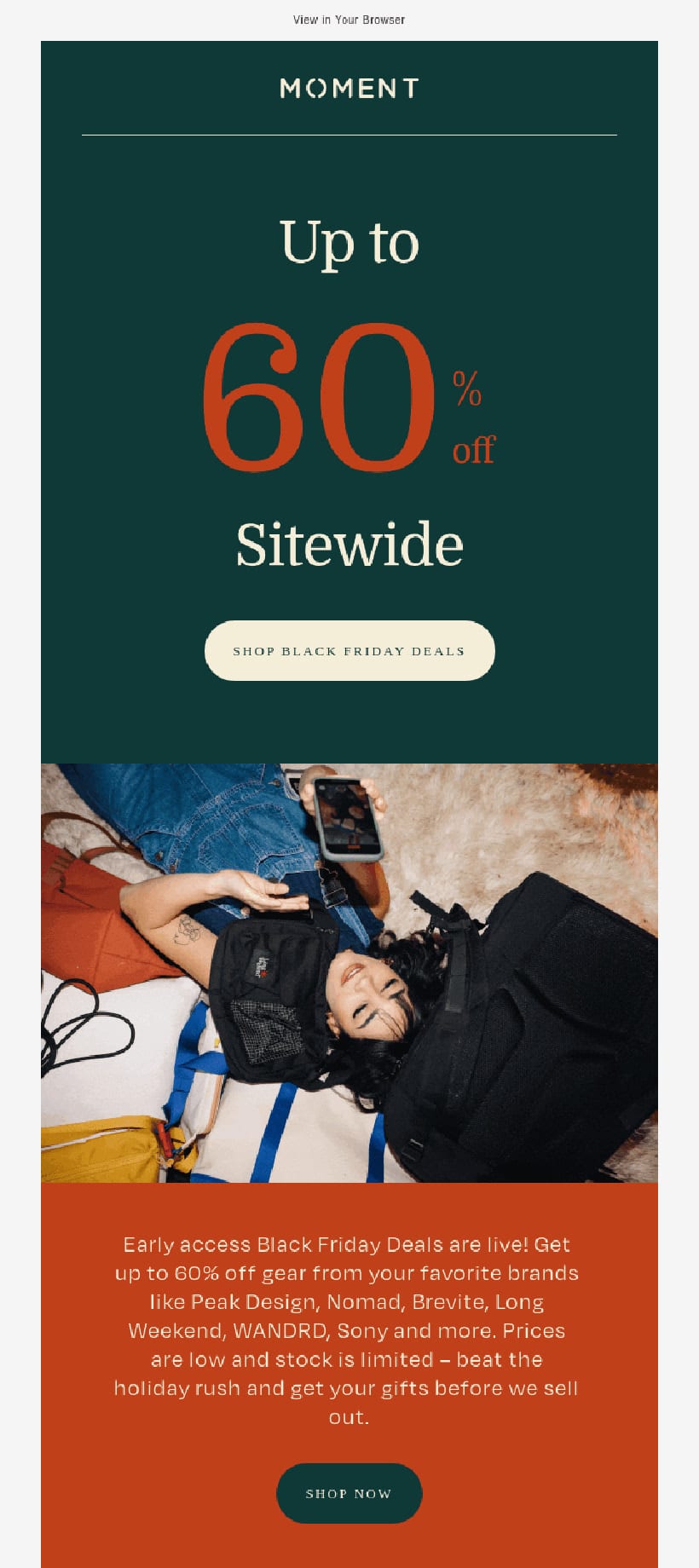
Credit: designmodo.com
Personalization Techniques
Personalization in marketing emails boosts engagement and conversion rates. Tailoring content to individual preferences makes recipients feel valued. This approach enhances user experience. Let’s explore effective personalization techniques to improve your email marketing strategy.
Using Recipient Data Effectively
Collect recipient data from previous interactions and purchases. This information helps tailor messages to individual needs. Use names, purchase history, and preferences. Include personalized product recommendations based on past buying patterns. Leverage location data for relevant offers. Timing is crucial. Send emails when recipients are most active. Analyze engagement metrics regularly for insights.
Segmenting Your Email List
Divide your email list into smaller groups. Group recipients by interests, demographics, and behavior. This allows for targeted messaging. Create segments based on age, gender, or location. Tailor content to match each segment’s preferences. Send specific offers to frequent buyers. Engage inactive users with personalized incentives. Continually update segments for accuracy. This approach boosts engagement and conversion rates.
Designing Visual Appeal
Creating marketing emails with visual appeal is crucial for engagement. The design should catch the reader’s eye immediately. A well-designed email grabs attention and encourages action. Let’s dive into key elements that enhance visual appeal.
Color Schemes And Branding
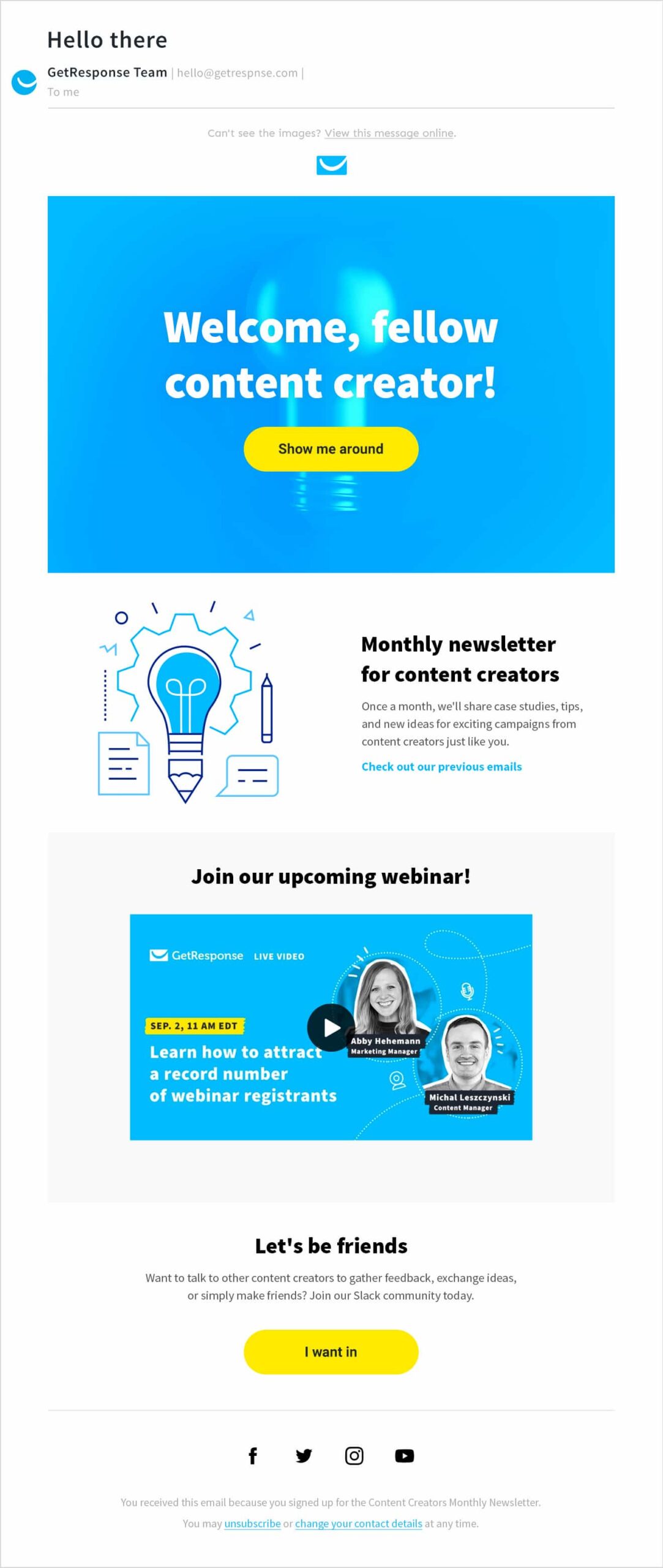
Your color scheme should reflect your brand. Consistent use of colors builds recognition. Choose colors that align with your brand identity. They should also be pleasing to the eye. Avoid using too many colors. Stick to two or three. This keeps the design clean and professional.
Incorporating Images And Graphics
Images and graphics play a vital role. They break up text and add interest. Choose high-quality images relevant to your message. Graphics should enhance understanding, not distract. Infographics can be a powerful tool. They convey complex information simply. Always ensure images are optimized for fast loading.
Credit: www.getresponse.com
Writing Engaging Content
Marketing emails stand out with engaging content. This captures the reader’s interest. It creates a connection. It can drive action. To craft content that resonates, focus on your tone, style, and message. These elements influence how your email is received.
Tone And Style Considerations
The tone of your email sets the mood. It’s the personality of your message. Choose a tone that fits your brand. Friendly? Professional? Casual? The style should match your audience’s expectations. Use short sentences. Avoid jargon. Write like you speak to a friend. This makes your content relatable. It keeps your audience engaged.
Creating Value-driven Messages
Your readers seek value. Each message should offer something beneficial. Share tips. Provide insights. Offer solutions to problems. This builds trust with your audience. It encourages them to act. Focus on their needs and interests. Keep your content clear and focused. Avoid unnecessary information. Make every word count.
Call To Action Strategies
Crafting effective marketing emails involves clear call to action strategies. Use concise, direct language to guide readers. Encourage clicks with engaging, actionable words.
Designing marketing emails effectively requires strong call to action (CTA) strategies. CTAs are the bridge between your message and the audience’s action. A well-crafted CTA can boost engagement and conversion rates. Let’s explore some strategies to enhance your CTAs.Crafting Effective Ctas
Craft simple and clear CTAs. Use action words like “Shop Now” or “Learn More”. Ensure the CTA aligns with the email content. Tailor the language to your audience’s needs. Personalization can increase click-through rates. Test different wording to see what resonates best.Placement And Frequency
Place the CTA where it’s easily visible. Consider the top, middle, and bottom of the email. Multiple placements can remind readers of the action. Avoid overcrowding the email with too many CTAs. One to three CTAs is usually effective. Consistent placement helps build user expectations.Testing And Optimization
Craft effective marketing emails through careful testing and optimization. Experiment with different subject lines and content to see what works best. Analyze results to improve engagement and conversions continuously.
Testing and optimizing your marketing emails is crucial for achieving the best possible results. It’s not just about sending an email and hoping for the best. Instead, it’s about systematically improving each element to boost engagement and conversion rates. It’s like being a detective, searching for clues on what resonates with your audience. Personal experience has taught me that even small tweaks can lead to significant improvements. Have you ever wondered why some emails get opened while others don’t? Let’s dive into the techniques to help you find out.A/b Testing Methods
A/B testing is your best friend when designing marketing emails. It involves sending two versions of an email to different segments of your audience.Imagine testing two subject lines. You send Subject Line A to 50% of your list and Subject Line B to the other 50%. You then compare which one gets more opens.Try this with various elements, such as images, call-to-action buttons, or even the email layout. This method helps you understand what your audience prefers.Analyzing Engagement Metrics
Once your A/B tests are complete, it’s time to analyze the engagement metrics. These metrics include open rates, click-through rates, and conversion rates.Create a simple table listing these metrics for both versions of your test. Which version performed better? This data guides your next steps.Ask yourself: Are your emails achieving the goals you set? If not, tweak and test again. Metrics tell a story about your audience’s preferences, but are you listening?By focusing on testing and optimization, you ensure your marketing emails are not just delivered but are powerful tools for engagement and conversion.Compliance And Best Practices
Crafting marketing emails involves understanding compliance and best practices. Ensure clear subject lines to grab attention. Use engaging content to maintain interest. Personalize messages for better connection. Follow legal guidelines to avoid penalties. Regular testing improves effectiveness. Always respect privacy to build trust.
Creating marketing emails that resonate with your audience requires more than just compelling content and eye-catching design. Compliance and best practices are crucial for ensuring that your emails are not only effective but also legally sound and trustworthy. By understanding the rules and maintaining the trust of your subscribers, you can enhance your email marketing strategy significantly.Understanding Legal Requirements
When designing marketing emails, it’s vital to be aware of legal requirements like the CAN-SPAM Act or GDPR. These regulations are not just bureaucratic hoops; they protect consumer rights and ensure fair play.Consider this: a few years ago, I received an email from a brand I admired, but it lacked an easy unsubscribe option. It felt intrusive, and I quickly lost interest in their offerings. Such simple compliance oversights can harm your brand reputation.So, always include a visible unsubscribe link and respect privacy laws. This shows your commitment to respecting your subscribers’ choices, which can positively impact your brand image.Maintaining Subscriber Trust
Trust is the backbone of any successful marketing strategy. If your subscribers feel that their information is misused, they will disengage.Transparency is key. Inform your subscribers about what types of emails they will receive and how frequently. This sets clear expectations and prevents your emails from being marked as spam.Think about a time when you received a misleading email subject line. Did it make you eager to open future emails from that sender? Probably not. Consistent honesty in your email marketing will encourage trust and long-term engagement.To further build trust, personalize your emails. Address your subscribers by their first name and tailor content to their interests. This not only enhances the user experience but also fosters a sense of connection between you and your audience.Incorporating these compliance and trust-building practices in your email design might seem tedious, but they are essential. Are you willing to risk losing your subscribers’ trust for a quick marketing trick?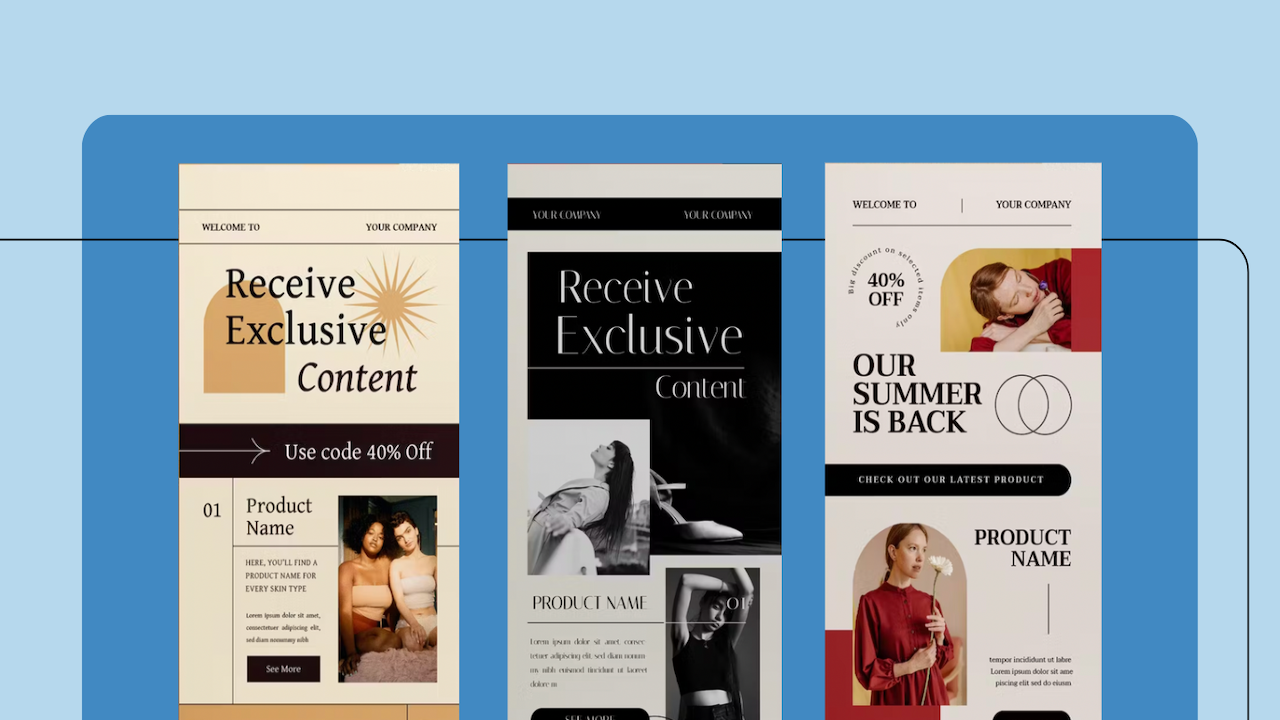
Credit: www.eastshoremarketing.com
Frequently Asked Questions
How To Make A Good Marketing Email?
Craft a compelling subject line to grab attention. Personalize content for relevance. Keep it concise and focused. Include a clear call-to-action. Use visually appealing design and mobile-friendly formatting.
What Are The 5 T’s Of Email Marketing?
The 5 T’s of email marketing are Targeting, Timing, Template, Testing, and Tracking. Target your audience effectively. Send emails at optimal times. Use appealing templates. Test different elements for best results. Track performance metrics to refine strategies.
What Are The 4 P’s Of Email Marketing?
The 4 P’s of email marketing are Personalization, Permission, Promotion, and Performance. Personalization involves tailoring content to recipients. Permission requires obtaining consent to send emails. Promotion focuses on delivering valuable offers. Performance measures the success and impact of email campaigns.
Conclusion
Crafting effective marketing emails doesn’t need to be complicated. Focus on simplicity and clarity. Engage your audience with relatable content. Personalize messages for a stronger connection. Use attention-grabbing subject lines to increase open rates. Keep content concise. Avoid jargon. Visual elements should support the message, not distract.
Test different formats to find what resonates best. Regularly update your strategy. Monitor feedback for continuous improvement. Remember, the goal is communication, not confusion. With these steps, your emails can reach more people effectively. Success lies in understanding your audience and meeting their needs.