Are you struggling to craft emails that actually convert prospects into customers? You’re not alone.
Writing effective sales marketing emails can be a daunting task, but it doesn’t have to be. Imagine hitting “send” and watching your email resonate with your audience, driving engagement and boosting your sales like never before. In this blog post, we’ll unlock the secrets to writing powerful sales emails that capture attention and compel action.
Get ready to transform your email marketing strategy and see real results. Keep reading, and let’s turn your emails into a powerful sales tool!
Crafting Compelling Subject Lines
Crafting compelling subject lines can boost email open rates in sales marketing. Use clear and engaging language. Focus on the reader’s needs and interests. Keep it short and relevant.
Crafting compelling subject lines is crucial in sales marketing emails. They are the gateway to your message, often determining whether your email is opened or ignored. A well-crafted subject line captures attention, piques curiosity, and encourages action, setting the stage for a successful marketing campaign.Use Attention-grabbing Words
Imagine you’re scanning your inbox, and you see a subject line that reads, “Unmissable Offer Inside!” Words like “unmissable,” “exclusive,” and “limited-time” immediately catch the eye. They create urgency and intrigue. Think of words that make you stop and think, “I need to check this out.” You want your audience to feel the same way.Use power words that promise value, spark curiosity, or evoke emotion. Test different combinations to see what resonates with your audience.Keep It Short And Sweet
You have a few seconds to capture attention, so make every word count. Aim for a subject line that is concise and to the point. A good rule of thumb is to keep it under 50 characters.Long subject lines can get truncated, especially on mobile devices. You want your message to be clear without the recipient needing to open the email to understand what it’s about.Think about how you react to subject lines that ramble on. A brief, direct message stands out in a crowded inbox.Personalization Techniques
Personalization can make a huge difference in engagement rates. Use the recipient’s name or reference their past interactions with your brand. For example, “John, your exclusive discount is waiting!” feels more tailored and relevant than a generic offer.Consider segmenting your email list based on customer behavior or preferences. Craft subject lines that speak directly to their interests or needs.Ask yourself, how can you make your emails feel more like a conversation and less like a broadcast? Personalization bridges that gap, making your emails feel personal and inviting.In crafting subject lines, remember to experiment and analyze what works best for your audience. What grabs your attention might not work for everyone. Stay adaptable and keep refining your approach.
Credit: www.mailpoet.com
Structuring Your Email Content
Structuring your email content is key for effective sales marketing. A well-structured email can lead to higher engagement and conversions. Focus on clarity and a logical flow. This will help your reader understand your message quickly.
Start With A Strong Opening
The opening sets the tone for your email. Grab attention right away. Use a friendly greeting. Mention the recipient’s name if possible. Introduce the purpose of your email clearly. This helps the reader know what to expect. A compelling opening can make them want to read more.
Highlight Key Benefits
Focus on what the recipient gains. Clearly list the benefits of your product or service. Use bullet points for easy reading. Show how your offer solves their problems. Make it relatable to their needs. Keep it simple and to the point.
Include A Persuasive Call To Action
End with a strong call to action. Guide your reader on what to do next. Use clear and direct language. “Click here to learn more” or “Contact us today” are effective. Make it easy for them to take action. Ensure the call to action stands out visually.
Utilizing Personalization
Crafting sales emails involves tailoring messages to fit the recipient’s needs. Personal touches can make emails more engaging. This approach increases the chances of positive responses.
Utilizing personalization in sales marketing emails can significantly boost engagement. Personalization makes recipients feel valued. It creates a connection. Crafting emails with a personal touch increases the chances of a response. Understanding your audience is key. It allows you to tailor your content effectively.Segment Your Audience
Divide your audience into smaller groups. Each group should share similar characteristics. This process is called segmentation. It helps in targeting specific needs. Use demographics, purchase history, or interests for segmentation. This makes your emails more relevant. Relevance increases the likelihood of engagement.Tailor Messages To Individual Needs
Customize your emails for each segment. Address the specific needs of each group. Use their name in the email. Mention past purchases or interactions. This shows that you care about them. Personal touches make your emails stand out. People appreciate being recognized. It encourages them to engage with your content.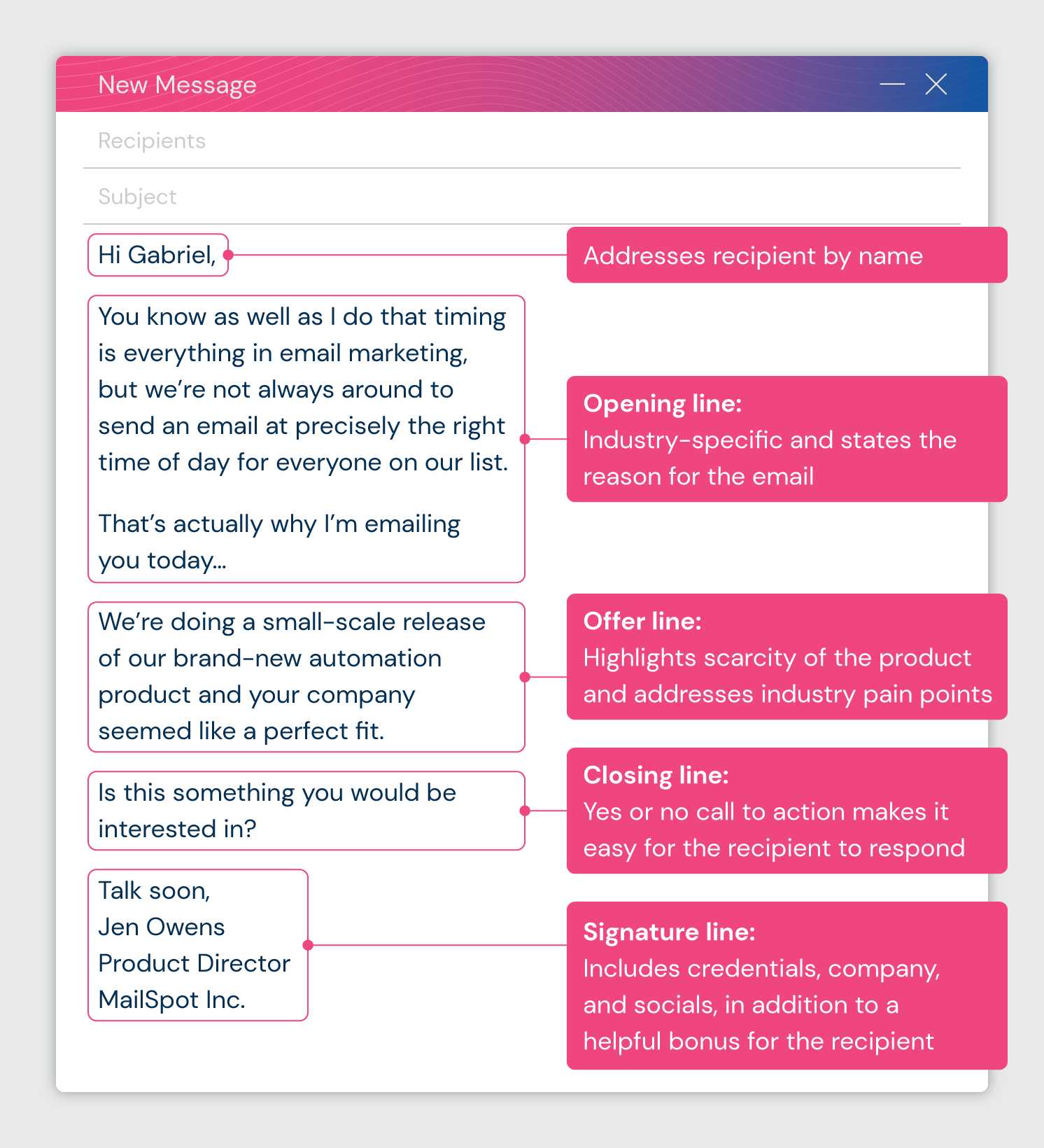
Credit: mailshake.com
Leveraging Visual Elements
Visual elements make sales marketing emails more engaging and effective. Images catch attention and convey messages quickly. Charts simplify complex information and increase understanding.
In the fast-paced world of sales marketing, writing emails that captivate and convert is crucial. One powerful way to enhance your emails is by leveraging visual elements. Visuals can break the monotony of text and grab your reader’s attention almost instantly. They can make your email not just another message in the inbox, but a memorable experience. So, how can you effectively use visuals in your sales emails? Let’s dive into some practical tips and examples.Incorporate Eye-catching Graphics
Adding graphics to your sales emails can dramatically improve engagement. Think about your own experiences—how often does a striking image catch your eye over a plain text? Use this to your advantage.Design graphics that are relevant to your message. If you’re promoting a discount, a vibrant graphic showcasing the offer can be more effective than words alone.Ensure that the graphics are high-quality and optimized for email. Large files can slow down loading times, frustrating your audience.Remember, the goal is to enhance your message, not overwhelm it. Balance is key.Use Videos To Engage
Videos are another powerful tool in your email marketing arsenal. They can convey complex information quickly and in an engaging manner. A short video can often communicate what several paragraphs of text cannot.Consider embedding a video that demonstrates your product in action. This can provide a more dynamic experience than static images or text descriptions.Adding a personal touch with a video message from your team can also build a stronger connection with your audience. It shows there are real people behind the brand, fostering trust.Keep the videos short and to the point. Attention spans are limited, and you want your audience to watch the entire video.Have you tried using videos in your emails yet? If not, it might be time to experiment and see how your audience responds.Optimizing For Mobile Devices
Optimizing your sales marketing emails for mobile devices is crucial. People read emails on their phones more than ever. A mobile-friendly design ensures your message is clear and accessible. Consider the small screen size. Make sure your emails are easy to read on any device. This approach can improve engagement and increase sales.
Ensure Mobile-friendly Design
Design with mobile users in mind. Use a single-column layout. It simplifies the reading experience. Keep text concise and to the point. Use larger fonts for better visibility. Choose images that load quickly. Avoid large file sizes. Ensure buttons and links are easy to tap. This improves navigation.
Prioritize responsive design. Your email should adapt to various screen sizes. This enhances the user experience. A responsive design ensures clarity on phones and tablets. It prevents users from zooming in to read. Use simple layouts that adjust automatically. This keeps your content looking good.
Test Across Different Platforms
Testing is vital. Email apps vary in how they display content. Check your email on multiple platforms. This reveals any formatting issues. Use tools to preview your design. They help ensure consistency in appearance.
Test on both iOS and Android. These systems have different display settings. Testing on multiple devices helps catch errors. It ensures your email looks great everywhere. A well-tested email boosts engagement. It shows your attention to detail and professionalism.
A/b Testing For Better Results
Boost email sales by using A/B testing to discover what works best. Test different subject lines, tones, and calls to action. Small changes can lead to better engagement and more conversions.
A/B testing is a powerful tool in sales marketing emails that can significantly boost your results. By comparing two different versions of an email, you can identify which one performs better. This process helps you refine your strategies and improve engagement rates.Experiment With Different Templates
Start by creating two email templates. Change only one element between the two, like the subject line, call-to-action, or image. This way, you can pinpoint what impacts engagement.Consider using different tones or styles. One email might have a casual tone, while the other is more formal. See which resonates better with your audience.Personal experiences can be revealing. I once tested a playful versus a straightforward email template. The playful one surprisingly outperformed the other by 20% in click-through rates.Analyze And Apply Findings
After sending out your A/B test emails, carefully track the results. Use metrics like open rates, click-through rates, and conversion rates. These numbers will show you which email was more effective.Reflect on why one template worked better. Was it the subject line, the design, or perhaps the timing of the email? Use these insights to enhance future emails.Apply what you learn to your next campaigns. If a particular style or element consistently wins, make it your standard. Yet, always stay open to new tests; consumer preferences can change.Have you ever thought about how a small tweak could change your email’s success? A/B testing is your way to find out. Keep experimenting, analyzing, and applying to achieve the best results for your sales marketing emails.Building A Consistent Brand Voice
Crafting emails for sales marketing needs a consistent brand voice. Consistency ensures your brand is recognizable and trustworthy. A consistent voice helps build familiarity with your audience. It makes your brand memorable and credible.
Each email should reflect your brand’s personality. This helps reinforce your brand’s identity. Consistency is key in establishing a strong brand presence.
Maintain Tone Across Emails
Maintain the same tone in all your emails. This helps create a uniform brand experience. Whether formal or casual, keep it consistent. Your audience should feel the same vibe in every message.
A consistent tone shows professionalism. It builds trust and reliability. Avoid drastic changes in tone. This might confuse or alienate your audience.
Align Messaging With Brand Values
Your email content should align with your brand values. This strengthens your brand’s message. It ensures your audience understands your brand’s mission.
Highlight what your brand stands for. Communicate these values clearly in your emails. This helps your audience connect with your brand emotionally.
Consistency in messaging reinforces your brand’s identity. It makes your brand stand out and remain relevant.
Timing And Frequency Strategies
Crafting effective sales marketing emails requires strategic timing and frequency. These two factors significantly impact your email’s success. Sending too often can annoy recipients. Sending too rarely may lead to missed opportunities. Finding the right balance is key to achieving your sales goals.
Determine Optimal Send Times
Finding the best time to send emails improves open rates. Analyze your audience’s habits. Are they morning people or night owls? Use this information to schedule your emails. Consider your audience’s time zones. Sending emails at the right time increases the chance of them being read. A/B testing is a valuable tool. Test different times and compare results. Identify trends and adjust your strategy accordingly.
Balance Between Frequent And Infrequent Emails
Maintaining a balance in email frequency is crucial. Too many emails can overwhelm recipients. They may unsubscribe or mark your emails as spam. Too few emails can lead to disengagement. You risk losing the connection with your audience. Find a rhythm that keeps your audience engaged. Consider their preferences and feedback. Segment your audience based on engagement levels. Tailor your email frequency to each segment. This personalization can boost your campaign’s effectiveness.
Analyzing Performance Metrics
Analyzing performance metrics is crucial in refining your sales marketing emails. Understanding how your emails are performing can guide you to make necessary adjustments, ensuring that your efforts are not in vain. By focusing on specific metrics, you can gain insights into what works and what needs improvement.
Monitor Open And Click Rates
Open and click rates are the pulse of your email campaigns. They show the initial interest and engagement levels of your audience. Are your subject lines enticing enough? A low open rate could signal that they need tweaking.
Once opened, do your readers click on your links? A high click rate suggests your content is compelling. If not, consider revisiting your call-to-action or email design. Try A/B testing different elements to see what resonates.
Evaluate Conversion Rates
Conversion rates tell you how many recipients took the desired action after clicking through your email. Did they sign up for a webinar, download a resource, or make a purchase? This metric is crucial because it reflects the effectiveness of your email in driving action.
Ask yourself: Are your emails clear about what you want the reader to do? If conversion rates are low, you might need to simplify the action steps or offer more enticing incentives. Use this data to optimize future campaigns.
In my experience, a campaign with high open rates but low conversion rates often indicates that the content isn’t aligning with the audience’s needs. It’s a learning opportunity that can steer your strategy towards more targeted messaging.
Ultimately, analyzing these metrics allows you to refine and craft emails that not only capture attention but also drive results. What insights have you gained from your email metrics? Consider diving deeper into your analytics to uncover trends that can boost your success.

Credit: www.mailpoet.com
Frequently Asked Questions
How Do You Write A Good Sales Email?
Start with a compelling subject line to grab attention. Address the recipient by name for personalization. Clearly state the value or benefit your product offers. Include a strong call-to-action to guide the reader. Keep the email concise and focused on solving the recipient’s problem.
How Do You Write A Good Marketing Email?
Craft a compelling subject line to grab attention. Personalize the content to engage recipients. Highlight benefits clearly and include a strong call-to-action. Ensure mobile-friendly design and concise, value-driven content. Test and analyze performance for continuous improvement.
How Do You Write An Email To Sell A Product?
Craft a compelling subject line. Start with a personalized greeting. Highlight the product’s benefits and unique features. Include a clear call-to-action. Close with a friendly sign-off.
Conclusion
Crafting effective sales emails requires focus and clarity. Start with a catchy subject line. Make it relevant to the recipient. Keep your message concise and to the point. Use simple words and clear sentences. Personalize each email to build connection.
Highlight key benefits. Include a call-to-action that is easy to follow. Proofread before sending to avoid errors. Practice and adjust based on feedback. With these tips, your emails will engage more readers. And drive better results for your sales efforts.
Happy emailing!