
Are you feeling overwhelmed by the endless possibilities of email marketing? You’re not alone.
With so many strategies out there, it can be challenging to figure out what’s truly effective. Imagine having a clear roadmap that guides you through the best email marketing strategies, designed to boost engagement and grow your business. Picture the satisfaction of seeing your open rates soar and your subscribers eagerly anticipating your next message.
You’ll discover tried-and-true tactics that can transform your email marketing efforts. Whether you’re a seasoned marketer or just starting out, these strategies will help you connect with your audience in meaningful ways. Ready to unlock the secrets of successful email marketing? Let’s dive in and explore how you can optimize your campaigns for maximum impact.

Credit: www.scoreapp.com
Crafting Compelling Subject Lines
Crafting compelling subject lines boosts email open rates. Engaging and clear messages capture attention quickly. This strategy enhances email marketing success.
Crafting compelling subject lines is crucial for email marketing success. The subject line is the first thing recipients see. It determines if they open the email. A well-crafted subject line grabs attention. It increases open rates. Let’s explore strategies to create effective subject lines.Using Personalization
Personalization makes subject lines more appealing. Use the recipient’s name. Mention their location or recent activity. Personal touches create a connection. They make the email feel tailored. Personalization increases the likelihood of opening the email. It shows that you know your audience. It adds a touch of familiarity. This builds trust and engagement.Incorporating Urgency
Urgency encourages quick action. Use words like “today,” “limited time,” or “last chance.” These phrases create a sense of urgency. They push the recipient to act fast. Urgency makes the offer feel exclusive. It implies that they might miss out. This tactic taps into the fear of missing out. Urgency motivates prompt responses.Segmenting Your Audience
Dividing your audience into smaller groups helps tailor your email content. This approach boosts engagement and conversion rates. Personalizing messages ensures your audience feels valued and understood.
Segmenting Your Audience is a key email marketing strategy. It helps tailor messages to specific groups. This increases engagement and conversion rates. By dividing your audience into smaller segments, you can send more relevant content. This approach ensures your emails resonate with readers. Let’s explore two effective segmentation methods.Behavior-based Segmentation
Behavior-based segmentation divides your audience by their actions. Track what your subscribers do on your website. Notice their clicks, purchases, and even the pages they visit. This data lets you craft personalized emails. For instance, if a user often browses shoes, send shoe-related offers. This targeted approach increases the chance of engagement. It makes subscribers feel understood and valued.Demographic Segmentation
Demographic segmentation focuses on basic subscriber details. Age, gender, location, and income are key factors. Knowing these helps tailor your message. For example, a young audience might prefer trendy content. While older subscribers may appreciate classic styles. Location-based content is also powerful. Share local events or regional promotions. This makes your emails more relevant and personal.Optimizing Email Content
Crafting engaging subject lines boosts open rates. Personalizing content increases reader connection. Clear calls-to-action drive responses.
Optimizing email content is crucial for successful email marketing. Have you ever wondered why some emails catch your attention while others go unnoticed? It often boils down to how well the content is optimized. Effective email content not only captures attention but also drives engagement and results. Let’s dive into some key strategies that can elevate your email marketing game.Clear And Concise Messaging
Your message should be straightforward and easy to understand. Think about the last time you received a long-winded email—did you read it all or just skim through it?Focus on delivering your main point in the first few sentences. This ensures your readers grasp the essential information quickly. Use bullet points to break down complex details and make your message digestible.Avoid jargon and overly technical terms, especially if your audience might not be familiar with them. Speak directly to your readers as if you were having a conversation. This builds a connection and keeps them engaged.Visual Elements And Design
Visuals can make your emails more appealing and effective. A well-designed email can capture attention faster than a wall of text. Consider adding images that complement your message and resonate with your audience.Use colors that align with your brand but ensure they are not overwhelming. Your design should guide your readers’ eyes to the most important parts of your email.Think about your personal experience with emails that have too many images or flashy designs. Did they distract you from the main message? Balance is key.Make sure your email is mobile-friendly. With many people checking emails on their phones, a responsive design is non-negotiable. Test your emails on different devices to see how they appear and make adjustments if needed.By focusing on clear messaging and appealing design, you can create emails that not only look good but also deliver results. What strategies have you found effective in your own email marketing?
Credit: www.techadv.com
Timing And Frequency
Timing and frequency play crucial roles in email marketing success. Sending emails at the right time can boost open rates and engagement. Too many emails might annoy subscribers. Too few and they might forget you. Finding the right balance is key to maintaining a healthy relationship with your audience.
Best Times To Send
Choosing the best time to send emails can be tricky. Studies show that mid-week days like Tuesday and Thursday often work well. These days, people are more likely to check their inboxes. Sending emails early in the morning or around lunchtime can capture attention. People usually check their emails during these times.
Remember, your audience’s habits might differ. Test different days and times to find what works best. Use tools and analytics to track open rates. Adjust your strategy based on this data.
Finding The Right Balance
Finding the right frequency is crucial. Too many emails can lead to unsubscribes. Not enough, and you may lose interest. Start by sending one email per week. This frequency keeps your brand in their mind. Monitor engagement rates closely. If open rates drop, consider reducing frequency.
Segment your audience to tailor your approach. Some groups might prefer more frequent updates. Others may engage better with less frequent emails. This strategy helps cater to different preferences. It ensures you maintain a strong connection with your subscribers.
Incorporating Automation
Automating emails saves time and ensures consistent communication. Use personalized content to engage subscribers. Schedule emails based on customer behavior for better results.
Incorporating automation into your email marketing strategy can be a game-changer, allowing you to engage with your audience more efficiently and effectively. Automation doesn’t just save time; it ensures your emails are timely, relevant, and personalized. Have you ever wondered why some businesses seem to have a seamless communication flow with their customers? The secret often lies in automated email sequences, like a welcome series or abandoned cart emails.Welcome Series
A welcome series is a crucial first step in building a relationship with your new subscribers. When someone signs up for your newsletter, they’re interested in what you have to offer. A well-crafted welcome series can nurture that interest.Consider sending a series of three to five emails over the first week. The first email can thank them for subscribing and introduce your brand. Subsequent emails might highlight your best content, share exclusive offers, or provide insights into your products or services.Using automation ensures these emails are sent at the right time, without you having to lift a finger. This immediate connection can enhance engagement and set the tone for a long-term relationship.Abandoned Cart Emails
Abandoned cart emails are a powerful tool to recover potentially lost sales. Ever left items in an online cart, only to be reminded later by a timely email? That’s the magic of automation at work.When a customer adds items to their cart but doesn’t complete the purchase, an automated email can nudge them to return. These emails often include a gentle reminder of what they left behind, sometimes coupled with a small incentive like a discount or free shipping.Timing is key here. Set up your system to send the first reminder within a few hours of the cart being abandoned. A follow-up a day or two later can further increase the chances of conversion. By automating this process, you’re maximizing your chances of recovering sales while providing a helpful nudge to your customers.Automation in email marketing isn’t just a techy buzzword—it’s a practical tool that, when used thoughtfully, can transform your customer interactions. Are you ready to embrace automation and see the difference it can make?A/b Testing Strategies
A/B testing helps find the best email marketing strategies. Different email versions show what works well. Discover which emails get more clicks and interest.
A/B testing is a powerful tool in email marketing that allows you to make informed decisions by comparing two versions of your emails. It’s like having a crystal ball to see which approach resonates best with your audience. By experimenting with different elements, you can boost engagement and conversions. But how do you effectively utilize A/B testing in your email campaigns? Let’s dive into some strategies that can transform your results.Subject Line Testing
The subject line is your first impression. It determines whether your email will be opened or ignored. Test different subject lines to see what captures attention.Consider trying out questions versus statements. For example, “Are You Ready for Summer?” versus “Get Ready for Summer”. Notice how each conveys a different tone and urgency.You can also experiment with length. Does a short, punchy line work better, or do your subscribers prefer more detailed descriptions? Analyze the open rates to find out.Content Variations
Once your email is opened, the content must deliver. Test different versions of your email body to see what keeps your audience engaged.Try varying the structure. Does a bullet-point list perform better than a narrative format? Or maybe a personal story keeps readers hooked longer than straightforward information.Consider the impact of visuals. Do images enhance your message, or do they distract? Test emails with and without visuals to measure the effectiveness.Reflect on the last email you received that made you click through. What was different about it? Use that insight to create your own content variations.A/B testing is not just about numbers; it’s about understanding what your audience values. What small changes could make a big difference in your campaigns?Ensuring Mobile Compatibility
Optimizing email marketing for mobile devices is crucial. Mobile-friendly designs increase engagement and readability. Ensure emails are responsive and load quickly on phones.
Ensuring your emails are mobile-friendly is no longer optional; it’s essential. With more than half of email views coming from mobile devices, neglecting mobile compatibility can cost you engagement and conversions. Imagine opening an email that looks cluttered and hard to read on your phone—would you bother scrolling through it? Probably not. To capture and maintain your audience’s attention, your emails must look great on any screen size.###Responsive Design
Responsive design is a game-changer in email marketing. It automatically adjusts your email layout based on the device’s screen size. This means your content will look great whether it’s viewed on a smartphone, tablet, or desktop.Remember that time you received an email where the text was too small to read on your phone? You likely deleted it without a second thought. Avoid this pitfall by ensuring your emails are easy to read and navigate on mobile devices.Use a responsive email template. They simplify the process and ensure consistency across all devices. Responsive design can significantly improve your click-through rates and user satisfaction.###Simple Layouts
When it comes to mobile emails, simplicity is key. A clean, straightforward layout enhances readability and encourages engagement. Overloading your email with images and text can overwhelm the reader.Think back to a time when an email felt like a puzzle, with too many elements to focus on. Did it make you eager to respond or click through? Probably not. Aim for a design that’s easy on the eyes and quick to digest.Use bullet points and short paragraphs. These elements make your content scannable and mobile-friendly. A simple layout ensures that your message is clear, even on smaller screens.By focusing on responsive design and simple layouts, you set the stage for an effective email marketing strategy. Are your emails ready to impress your mobile audience?Analyzing Metrics And Performance
Understanding metrics is key to successful email marketing. Metrics reveal how your audience interacts with your emails. They help you improve your strategy. Analyzing these numbers can lead to better results and higher engagement.
Open Rates And Click Rates
Open rates show how many recipients open your email. A higher rate means your subject line is effective. Use engaging and relevant subject lines. This encourages more people to open your emails. Click rates measure how many clicked on links within the email. A good click rate means your content is engaging. Ensure your links are visible and enticing.
Conversion Tracking
Conversion tracking is vital for measuring success. It shows how many recipients completed a desired action. This could be a purchase or signing up for a newsletter. Use tools to track these conversions. This information helps refine your strategies. It also aids in understanding what works best for your audience.
Building Engagement And Trust
Building engagement and trust is key in email marketing. It helps create strong relationships with your audience. When subscribers trust you, they are more likely to open your emails. They also interact more with your content. This increases the chances of conversions. Let’s explore effective strategies for building engagement and trust.
Personalized Offers
Personalized offers make subscribers feel special. Use customer data to understand their preferences. Send tailored content that matches their interests. For example, recommend products based on past purchases. Personalized subject lines can also grab attention. It makes your emails stand out in a crowded inbox.
Segmentation is another effective technique. Divide your audience based on demographics or behavior. This allows for more targeted communication. Personalized emails can lead to higher open rates. They can also increase click-through rates and conversions.
Consistent Branding
Consistent branding creates a strong identity. It makes your emails recognizable. Use the same colors and fonts as your website. This reinforces your brand image. Include your logo in every email. It builds trust and familiarity with your audience.
Your tone and voice should match your brand. Keep it consistent across all emails. It helps in maintaining a strong connection. Consistent branding can also improve credibility. Subscribers are more likely to trust a familiar brand. This consistency aids in building long-term relationships.
Avoiding Common Pitfalls
In email marketing, pitfalls can derail your efforts. Recognizing these common mistakes keeps your campaigns on track. Many marketers struggle with spam filters and poor list quality. Addressing these issues ensures your emails reach the right audience.
Preventing Spam Filters
Emails often end up in spam folders. Avoid words like “free,” “win,” or “click here.” These trigger spam filters. Keep your subject lines clear and relevant. Personalize emails to build trust. Use reputable email service providers. They have built-in tools to improve deliverability. Monitor your email frequency. Too many emails can annoy recipients. This can lead to spam complaints.
Maintaining List Quality
A clean email list is vital. Regularly update your list to remove inactive users. Ensure your subscribers opted in. This boosts engagement rates. Use double opt-in methods. They confirm subscriber interest. Segment your email list. Tailor content to specific audience groups. This increases open rates. Monitor bounce rates. High bounce rates harm your sender reputation. Use tools to verify email addresses. Ensure your list stays fresh and engaged.
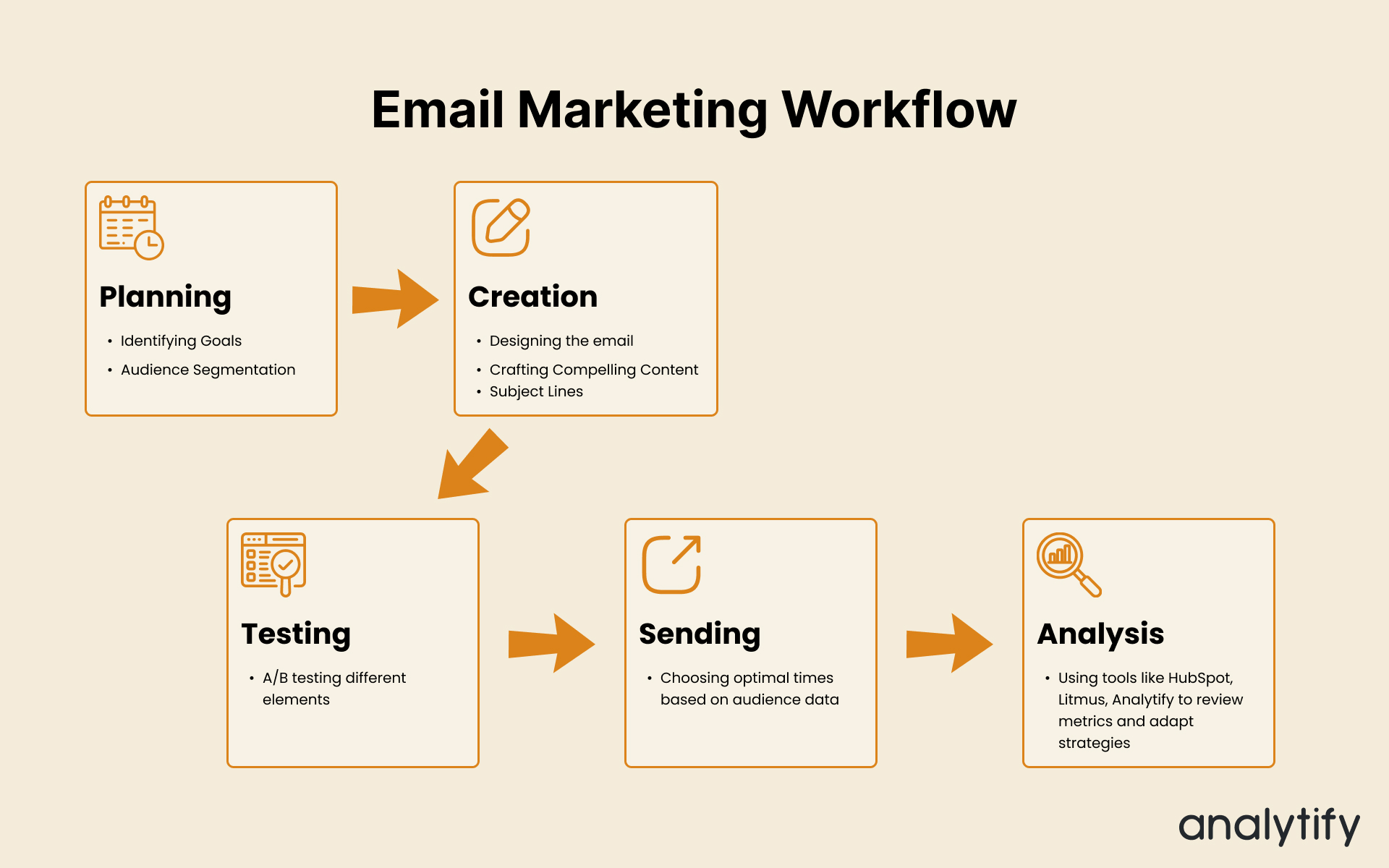
Credit: analytify.io
Frequently Asked Questions
What Is The Best Email Marketing Strategy?
The best email marketing strategy includes personalized content, clear calls to action, and regular engagement. Segment your audience for targeted campaigns. Optimize for mobile devices and track performance metrics to refine your approach. Ensure compliance with privacy regulations for trust and effectiveness.
What Are The 5 T’s Of Email Marketing?
The 5 T’s of email marketing are Targeting, Timing, Template, Testing, and Tracking. Targeting focuses on the right audience. Timing ensures emails are sent at optimal times. Template involves designing an appealing format. Testing checks email performance. Tracking analyzes results for future improvements.
What Is The 80 20 Rule In Email Marketing?
The 80 20 rule in email marketing suggests focusing 80% of efforts on audience engagement and 20% on promotions. Prioritize content that builds relationships and provides value, while limiting sales pitches. This balance enhances open rates and ensures subscribers remain interested in your emails.
What Are The 4 P’s Of Email Marketing?
The 4 P’s of email marketing are: Personalization, ensuring content resonates; Permission, obtaining consent; Promotion, effectively presenting offers; and Performance, analyzing metrics for optimization. These elements help create engaging and successful email campaigns, driving better customer interaction and results.
Conclusion
Email marketing strategies are key to growing your business. Focus on building genuine connections with your audience. Personalize messages to increase engagement. Test different approaches to find what works best. Keep content clear and concise. Use catchy subject lines to grab attention.
Always analyze results for improvements. Stay updated with trends to stay competitive. Consistency in communication builds trust. Remember, your subscribers are valuable. Treat them with respect. Make them feel special with exclusive offers. Email marketing is about relationship building. Use these strategies wisely.
Success will follow. Your efforts will pay off in the long run.


