
Are you looking to boost your business’s online presence and connect directly with your audience? Email marketing might just be the game-changer you need.
Imagine reaching your customers right in their inbox, with personalized messages that capture their attention. Sounds promising, right? Understanding the process of email marketing can open doors to new opportunities for your brand. It’s not just about sending emails; it’s about crafting a strategy that resonates with your audience and drives results.
From building your subscriber list to analyzing your campaign performance, each step is crucial for success. Dive into this article and discover how you can leverage email marketing to engage your audience effectively. Whether you’re a beginner or looking to refine your strategy, you’ll find practical insights that can transform your approach to email marketing. Let’s explore how to turn your email campaigns into powerful tools for growth.

Credit: www.cakemail.com
Email Marketing Basics
Email marketing involves sending targeted messages to a list of subscribers. The process starts with building an email list. Next, create engaging content that meets the interests of your audience. Finally, track and analyze results to improve future campaigns.
Email marketing is a powerful tool that has the potential to transform how you connect with your audience. At its core, it involves sending emails to a group of people who have expressed interest in your business. This basic yet effective method can help you build relationships, boost sales, and keep your brand at the forefront of your audience’s mind.###Definition And Purpose
Email marketing is the practice of sending targeted messages to a group of people via email. Its main purpose is to connect with your audience in a personalized way, aiming to convert them into loyal customers. Whether you’re announcing a new product or sharing a newsletter, the goal is to engage and inform.###Benefits For Businesses
Why should businesses embrace email marketing? For starters, it provides a direct line to your customers. Unlike social media, where your posts might get lost in a sea of content, emails land right in your subscriber’s inbox, increasing the chances they’ll see your message.Email marketing is also cost-effective. Compared to traditional advertising, you spend less while reaching more people. Imagine sending a single email and getting instant feedback from hundreds or thousands of potential customers.Tracking is another significant advantage. You can easily monitor open rates, click-through rates, and conversions. This data allows you to refine your strategy and focus on what works best for your audience.Think about the last time you received an email that made you take action. What was it about that email? By understanding the basics of email marketing, you can create similarly compelling campaigns that resonate with your audience.Building An Email List
Building an email list is essential for effective email marketing. It connects you directly with your audience. A strong list helps increase engagement and conversions. Start by understanding your audience’s needs. Then, offer them value through your emails. This process involves strategic planning and execution.
Opt-in Strategies
Opt-in strategies are vital for growing your email list. Encourage users to subscribe voluntarily. Use sign-up forms on your website. Place them in visible areas like the homepage. Offer incentives for signing up. Free resources or discounts work well. Make your forms short and simple. Ask for only essential information. This increases the likelihood of sign-ups.
Segmenting Subscribers
Segmenting subscribers enhances your email marketing efforts. It involves grouping your audience based on specific criteria. Consider factors like age, location, or interests. Segmentation allows for targeted messaging. It ensures that content is relevant to each group. Tailor your emails to match their preferences. This leads to higher engagement and improved results.
Crafting Effective Emails
Creating effective emails involves several steps. Start with building a targeted email list. Design engaging content that resonates with your audience. Schedule emails at optimal times. Track their performance to refine future strategies.
Crafting effective emails is a key component of successful email marketing. It’s the art of connecting with your audience in a personal and meaningful way. By focusing on crafting emails that resonate, you can boost engagement and drive results.Subject Lines And Content
Your subject line is the gateway to your email. It’s the first thing your reader sees and often determines whether they’ll open your message. Keep it short and intriguing. A subject line like “Unlock Exclusive Benefits Today” can pique curiosity and encourage opens.The content of your email should deliver on the promise of the subject line. Be clear and concise. Use bullet points to highlight key information. Make sure the content is relevant to your audience’s needs and interests.Personalization Techniques
Personalization makes your emails feel unique and tailored. Use the recipient’s name in the greeting for a personal touch. “Hi Alex, check out your special offer!” feels more engaging than a generic greeting.Segment your email list to send targeted content. If you know someone recently purchased a product, suggest complementary items. This can increase the likelihood of further engagement.Ask yourself: How can you make your email feel like a conversation? Encourage replies by posing a question or inviting feedback. This interaction can build a stronger connection with your audience.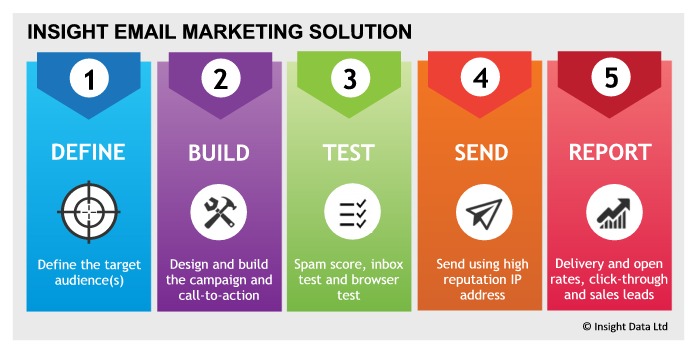
Credit: www.insightdata.co.uk
Designing Email Templates
Crafting email templates involves a clear process in email marketing. It starts with identifying target audience needs. Then, design visually appealing layouts that match brand identity. Finally, incorporate compelling call-to-action buttons to engage recipients effectively.
Designing email templates is a crucial step in the email marketing process. It’s where creativity meets functionality to capture your audience’s attention. A well-designed template not only looks good but also enhances the overall effectiveness of your email campaigns.Visual Appeal
The visual appeal of an email template is your first chance to make a strong impression. Bright colors and bold fonts can grab attention, but balance is key. A cluttered design can confuse recipients, so keep it clean and organized.Images can tell a story faster than words. Use high-quality visuals that relate to your message. This helps in making your emails more relatable and memorable.Consistency in branding is important. Use your brand’s colors and logo to ensure your emails are instantly recognizable. Have you ever received an email and known the sender just by the design? That’s the power of consistent branding.Responsive Design
With the growing number of mobile users, responsive design isn’t optional; it’s essential. An email that looks great on a computer might not translate well on a smartphone. Ensuring your emails are mobile-friendly can significantly boost engagement.Think about font size and button placement. Small text or buttons can frustrate mobile users. Design with fingers in mind, making sure that buttons are easy to tap.Test your templates on various devices. What looks good on an iPhone might look different on an Android. By testing, you ensure a seamless experience for all users, enhancing the chances of your message being received positively.Creating email templates that are visually appealing and responsive can transform your email marketing efforts. It’s about capturing attention and making it easy for your readers to engage, no matter where they are. Are your email templates ready to make that impact?
Automation And Scheduling
Email marketing has evolved into a powerful tool for businesses. Automation and scheduling play a crucial role in its effectiveness. These aspects ensure timely delivery and personalized experiences for subscribers. Implementing automation streamlines tasks and enhances engagement. Scheduling helps maintain a consistent presence in your audience’s inbox.
Email Campaign Automation
Email campaign automation simplifies repetitive tasks. It allows marketers to set triggers based on user behavior. Sending a welcome email after sign-up can be automated. Automation ensures that emails reach the right person at the right time. This reduces manual work and enhances customer interaction.
Timing And Frequency
Choosing the right timing is vital for email marketing success. Sending emails when subscribers are most active increases open rates. Analyze data to understand your audience’s habits. Frequency also matters. Sending too many emails can lead to unsubscribes. Aim for a balance that keeps your audience engaged but not overwhelmed.
Analyzing Campaign Performance
Email marketing is an essential tool for businesses to engage with their audience, drive sales, and build brand loyalty. Once you’ve crafted and sent out your email campaigns, the next critical step is analyzing the performance of these campaigns. Understanding how your emails perform helps you refine your strategy, ensuring your future campaigns are more effective and impactful.
Metrics To Track
Tracking the right metrics is crucial for evaluating your email marketing success. Key metrics include open rates, click-through rates, and conversion rates. Open rates tell you how many recipients opened your email, while click-through rates show how many engaged with your content by clicking on links. Monitoring conversion rates helps you see the percentage of recipients who completed a desired action, like making a purchase or signing up for a newsletter.
Other important metrics are bounce rates and unsubscribe rates. A high bounce rate indicates issues with your email list, such as outdated or incorrect addresses. Unsubscribe rates can signal if your content isn’t resonating with your audience, prompting a review of your messaging strategy.
Interpreting Data
Data interpretation is not just about numbers; it’s about understanding what they mean for your business. Look beyond the metrics to find patterns and trends. For example, if you notice a spike in open rates on a particular day or time, consider scheduling future emails around that period.
Ask yourself questions like: Are certain types of content driving higher engagement? Do subject lines with specific keywords perform better? Analyzing these aspects helps you make informed decisions, tailoring your strategy to what works best for your audience.
Remember, effective email marketing is an ongoing process of learning and adapting. The insights you gain from analyzing performance can guide you in optimizing your campaigns, ensuring they deliver value both to your business and your subscribers.
Ensuring Compliance
Email marketing involves crafting messages, building a subscriber list, and sending campaigns. Compliance ensures these emails follow regulations. It protects sender reputation and respects recipient privacy.
Email marketing remains a powerful tool for businesses. But, ensuring compliance is crucial. Non-compliance can lead to severe penalties. Understanding the regulations helps maintain trust with your audience. Following best practices protects both sender and recipient.Regulations And Standards
Email marketing operates under strict regulations. The CAN-SPAM Act in the US sets the rules. It mandates clear guidelines for commercial emails. The EU has the GDPR, which is more stringent. It focuses on data protection and privacy. These regulations require clear consent from recipients. Marketers must provide easy opt-out options. Ignoring these can lead to hefty fines.Best Practices For Privacy
Respecting privacy builds trust with your audience. Always collect minimal personal data. Make your privacy policy easily accessible. Explain how you use collected information. Be transparent about data sharing with third parties. Regularly update your privacy practices. Secure your email lists with encryption. Train your team on data protection protocols. Prioritize user consent and preferences in every campaign.
Credit: www.benchmarkemail.com
Adapting To Trends
Email marketing evolves. Trends shift. Marketers must adapt to stay effective. Understanding emerging technologies and changing consumer behavior is crucial. These factors influence how emails are crafted and delivered. Let’s explore how these trends shape email marketing.
Emerging Technologies
Technology in email marketing is dynamic. Automation tools streamline processes. They save time and enhance precision. Artificial intelligence helps personalize content. It analyzes data quickly. This leads to more tailored messages. Machine learning predicts customer preferences. It refines targeting strategies. Interactive emails engage users. Features like embedded videos and sliders capture attention. These advancements make emails more appealing.
Changing Consumer Behavior
Consumer habits shift rapidly. People check emails on mobile devices. Emails must be mobile-friendly. Shorter attention spans mean concise messages work best. Personalization is key. Generic emails fail to connect. Consumers prefer relevant content. Privacy concerns are growing. Users want control over data. Transparent practices build trust. Email marketing must respect these preferences.
Frequently Asked Questions
What Is The Email Marketing Process?
The email marketing process involves building a targeted list, creating engaging content, scheduling campaigns, analyzing results, and optimizing strategies. Focus on personalization and segmenting audiences to improve engagement. Regularly test subject lines, call-to-action, and design to maximize effectiveness. Monitor metrics like open rates and conversions for ongoing improvement.
What Are The 4 Ps Of Email Marketing?
The 4 Ps of email marketing are: Personalization, Permission, Performance, and Promotion. Personalization tailors content to individuals. Permission ensures consent for communication. Performance measures the success of campaigns. Promotion involves strategic offers to engage subscribers.
What Are The 5 T’s Of Email Marketing?
The 5 T’s of email marketing are Targeting, Timing, Testing, Tracking, and Trust. Targeting focuses on audience segmentation. Timing ensures emails are sent at optimal times. Testing involves experimenting with different strategies. Tracking monitors email performance. Trust builds credibility with your subscribers.
What Is The Rule Of 7 In Email Marketing?
The rule of 7 in email marketing suggests prospects need to see a message seven times before taking action. This repetition builds familiarity, trust, and increases the likelihood of engagement or purchase. Consistent, relevant communication is key to converting leads into customers effectively.
Conclusion
Email marketing is a powerful tool for businesses. It connects you with your audience effectively. Start with building a quality email list. Next, craft engaging content that speaks to your audience. Personalization is key. Send emails at the right time to ensure higher engagement.
Always track and analyze your results. This helps you improve future campaigns. Remember to stay compliant with regulations. Respect your subscribers’ privacy. Email marketing is a journey. With the right strategy, it can yield great results. Keep refining your approach.
Success comes with patience and persistence.


