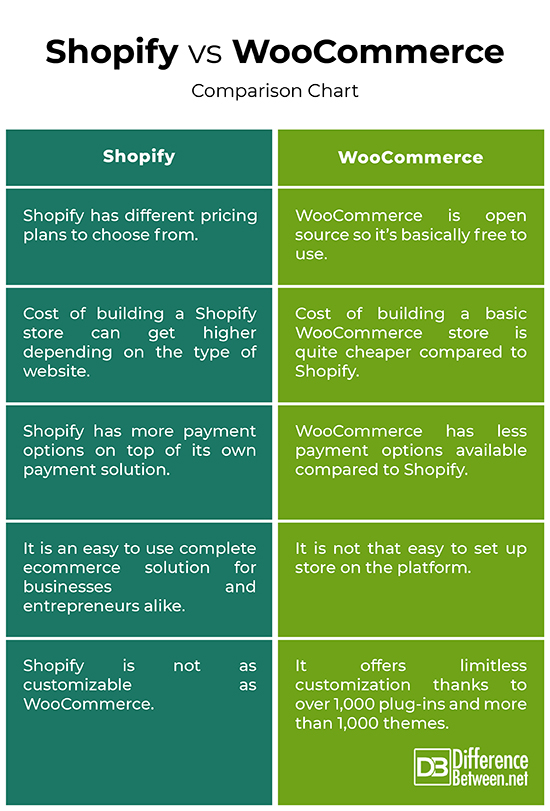
Shopify is a hosted e-commerce platform with built-in features. WooCommerce is a WordPress plugin that requires a separate hosting service.
Shopify and WooCommerce are popular e-commerce solutions, each catering to different business needs. Shopify offers an all-in-one, user-friendly platform with hosting included. WooCommerce, a WordPress plugin, provides greater customization but needs external hosting. Shopify suits those seeking simplicity and ease of use.
WooCommerce appeals to those wanting flexibility and control. Both platforms support online selling but differ in setup and maintenance complexity. Choosing between Shopify and WooCommerce depends on your technical skills, budget, and specific business requirements. Each has its strengths, making them suitable for various types of online stores.
Shopify Vs. Woocommerce: An Introduction
Choosing the right platform for your online store is crucial. Shopify and WooCommerce are two popular options. Both have unique features and benefits. This post will help you understand their differences. We’ll explore their histories and core functionalities.
Brief History Of Shopify
Shopify was founded in 2006 by Tobias Lütke, Daniel Weinand, and Scott Lake. They initially wanted to open an online snowboard store. They couldn’t find a good e-commerce platform. So, they built their own.
Shopify has grown a lot since then. It now supports over 1.7 million businesses worldwide. The platform is known for its ease of use and reliability. It’s a hosted solution, meaning Shopify handles the technical stuff.
Brief History Of Woocommerce
WooCommerce was launched in 2011 by WooThemes. It quickly became popular. WooCommerce is a plugin for WordPress. It allows users to turn their WordPress site into an online store. WooCommerce is open-source and highly customizable.
Automattic, the company behind WordPress, acquired WooThemes in 2015. WooCommerce powers over 5 million websites now. Many users love its flexibility and extensive range of plugins.
| Feature | Shopify | WooCommerce |
|---|---|---|
| Founded | 2006 | 2011 |
| Type | Hosted | Open-source |
| Parent Company | Shopify Inc. | Automattic |
| Ease of Use | Very high | Moderate |
| Customization | Limited | Extensive |
Understanding their history helps you see their evolution. Shopify focuses on simplicity and reliability. WooCommerce offers flexibility and customization. Each has its strengths. Your choice depends on your needs and preferences.
Core Features Compared
Comparing Shopify and WooCommerce can help you pick the best platform. Both platforms offer unique features tailored to different needs. Let’s dive into the core features of Shopify and WooCommerce.
Ease Of Use And Setup
Shopify is known for its simplicity. It offers an easy setup process. You can get started in minutes. The platform includes a step-by-step guide. No coding skills are needed. You can launch your store quickly.
WooCommerce requires more effort to set up. It’s a plugin for WordPress. You need to install WordPress first. Then, you install and configure WooCommerce. Some technical knowledge might be needed. Beginners may find it challenging.
Customization Capabilities
Both platforms offer customization options. Let’s compare them:
| Feature | Shopify | WooCommerce |
|---|---|---|
| Themes | Many free and premium themes | Thousands of themes |
| Plugins and Apps | Over 4,000 apps in the Shopify App Store | Over 50,000 plugins in the WordPress repository |
| Code Access | Limited access to HTML/CSS | Full access to PHP, HTML, CSS, and JS |
Shopify offers a variety of themes, both free and paid. You can customize the look and feel of your store. Use the drag-and-drop builder for easy changes. The platform provides limited access to code, making it beginner-friendly.
WooCommerce shines in customization. You have full control over your website. Choose from thousands of themes. Access to code allows for extensive modifications. It’s ideal for those who need a tailor-made solution.
Design Flexibility And Themes
Design Flexibility and Themes play a crucial role in how your online store looks and functions. Both Shopify and WooCommerce offer unique solutions for design customization, catering to different user needs. Understanding their differences helps you decide which platform best suits your business.
Theme Variety In Shopify
Shopify provides a range of premium and free themes. These themes are designed by professionals and cater to various industries. Shopify’s themes are highly customizable, allowing users to adjust colors, fonts, and layouts.
Here are some key features of Shopify themes:
- Over 70 pre-designed themes
- Responsive design for mobile and desktop
- Regular updates and professional support
- Built-in SEO features
Shopify themes are user-friendly and do not require coding skills. This makes it easy for beginners to create a beautiful store.
Theme Variety In Woocommerce
WooCommerce offers a vast array of themes and design options. Since it is built on WordPress, you have access to thousands of themes.
Key features of WooCommerce themes include:
- Unlimited design possibilities
- Integration with popular page builders
- Customizable templates and layouts
- Access to a large community of developers
WooCommerce themes often require some coding knowledge. This gives advanced users more control over their store’s design.
| Feature | Shopify | WooCommerce |
|---|---|---|
| Theme Variety | 70+ Themes | Thousands of Themes |
| Customization | User-Friendly | Advanced Control |
| Support | Professional | Community-Based |
E-commerce Tools And Functionalities
Choosing the right e-commerce platform can make or break your online store. Both Shopify and WooCommerce offer unique tools and functionalities. These tools can help you manage your store efficiently. Let’s dive into the built-in features of each platform.
Built-in Features In Shopify
Shopify offers a wide range of built-in features. These features are designed to streamline your e-commerce experience. Here are some key built-in tools in Shopify:
- Payment Gateways: Shopify supports over 100 payment gateways.
- Shipping Options: Easily set up shipping rates and methods.
- Inventory Management: Track your stock levels effortlessly.
- Abandoned Cart Recovery: Automatically send emails to recover lost sales.
- SEO Tools: Built-in tools to optimize your site for search engines.
Built-in Features In Woocommerce
WooCommerce is a flexible, open-source platform. It offers robust features through plugins and extensions. Here are some key built-in tools in WooCommerce:
- Payment Integration: Supports major payment gateways like PayPal and Stripe.
- Shipping Calculations: Real-time shipping rates from carriers like UPS and FedEx.
- Inventory Management: Advanced stock management capabilities.
- Customizable Checkout: Tailor the checkout process to suit your needs.
- SEO Optimization: Leverage WordPress plugins for advanced SEO features.
Both platforms offer distinct advantages. Choosing between Shopify and WooCommerce depends on your specific needs and goals.
Pricing And Expenses
Understanding the cost implications of Shopify and WooCommerce is crucial. Each platform has its unique pricing structure and associated expenses. This section breaks down the cost elements of both to help you make an informed decision.
Shopify Pricing Structure
Shopify offers straightforward pricing plans. You can choose from three main plans: Basic, Shopify, and Advanced. Each plan includes hosting, security, and customer support.
| Plan | Monthly Cost | Key Features |
|---|---|---|
| Basic Shopify | $29 | Online store, unlimited products, 24/7 support |
| Shopify | $79 | Professional reports, gift cards |
| Advanced Shopify | $299 | Advanced report builder, third-party shipping rates |
Each plan also involves transaction fees. These fees vary with the plan you select. You also need to pay for additional apps and themes.
Woocommerce Pricing Structure
WooCommerce is a free plugin for WordPress. But, there are costs for domain, hosting, and SSL certificates. These are essential for running your store.
- Domain: $10-$20 per year
- Hosting: $5-$25 per month
- SSL Certificates: $0-$100 per year
You might also need to purchase premium themes and plugins. Their cost ranges based on functionality and provider. WooCommerce gives more flexibility in choosing what to pay for. But this can lead to variable expenses.
Both Shopify and WooCommerce offer unique pricing models. Shopify has fixed plans with predictable costs. WooCommerce, being modular, can vary based on your needs.
Credit: www.quora.com
Security And Reliability
Choosing an eCommerce platform involves many factors. Two key factors are security and reliability. Your online store must protect customer data and ensure smooth operation. Let’s explore how Shopify and WooCommerce address these crucial aspects.
Security Measures In Shopify
Shopify is a hosted platform, meaning it manages security for you. The platform includes built-in SSL certificates. This ensures all data between your store and your customers is encrypted.
Shopify also offers PCI-DSS compliance. This is essential for handling credit card information. The platform undergoes regular security audits. This helps to identify and fix vulnerabilities quickly.
Another key feature is two-factor authentication (2FA). This adds an extra layer of security to your account. Shopify’s dedicated security team monitors the platform 24/7. They work to keep your store safe from threats.
Security Measures In Woocommerce
WooCommerce is a plugin for WordPress. It requires you to manage your own security. You need to install an SSL certificate on your server. This ensures data encryption between your store and customers.
Achieving PCI-DSS compliance with WooCommerce involves more steps. You need to follow guidelines and install necessary plugins. Regular updates to WordPress, WooCommerce, and plugins are crucial. This ensures your store remains secure against new threats.
Using security plugins like Wordfence enhances your store’s safety. These plugins offer features like firewall protection and malware scanning. You can also enable two-factor authentication (2FA) for added security.
Comparison Table: Shopify Vs Woocommerce Security Features
| Feature | Shopify | WooCommerce |
|---|---|---|
| SSL Certificate | Built-in | Self-install |
| PCI-DSS Compliance | Built-in | Requires setup |
| Regular Security Audits | Yes | No |
| Two-Factor Authentication | Yes | Via plugins |
Both Shopify and WooCommerce offer robust security measures. Shopify handles most of the work for you. WooCommerce gives you more control but requires more effort.
Support And Community
Understanding the difference between Shopify and WooCommerce support systems is crucial. Both platforms offer unique support structures. Knowing these can help you make an informed choice.
Customer Support In Shopify
Shopify provides 24/7 customer support. Their support channels include:
- Live chat
- Email support
- Phone support
Shopify also has a comprehensive Help Center with guides and tutorials. The platform’s community forums are active. Users can find answers to common issues easily. Shopify Experts are available for hire. They provide professional help for complex tasks.
Customer Support In Woocommerce
WooCommerce relies on community-driven support. Users can access support through:
- Official WooCommerce forums
- WordPress community forums
For more detailed support, users can purchase extensions. Each extension often comes with its own support. WooCommerce also offers documentation and guides. These resources cover a wide range of topics. Third-party developers and agencies can offer support too.
| Support Feature | Shopify | WooCommerce |
|---|---|---|
| 24/7 Support | Yes | No |
| Live Chat | Yes | No |
| Email Support | Yes | Varies |
| Community Forums | Yes | Yes |
| Professional Help Available | Yes | Yes |
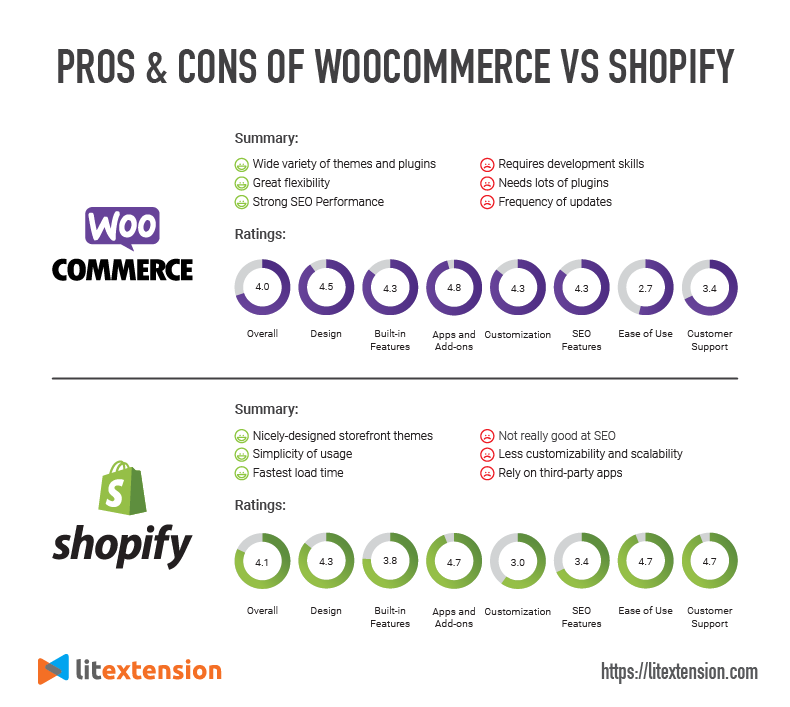
Credit: litextension.com
Scalability And Growth
Choosing the right platform for your e-commerce store is crucial. Both Shopify and WooCommerce offer unique benefits. Understanding scalability and growth is essential. It helps you plan for the future. This section explores how both platforms support growth.
Growing With Shopify
Shopify is a hosted solution. It handles server management and security. This makes it easy to scale. Businesses can upgrade plans as they grow. Shopify offers multiple pricing tiers:
- Basic Shopify
- Shopify
- Advanced Shopify
- Shopify Plus
Each plan offers more features and higher limits. Shopify Plus is great for enterprise-level businesses. It provides dedicated support and advanced features. Scaling with Shopify is smooth. The platform handles increased traffic and transactions effortlessly. Automatic updates ensure your store remains secure and fast.
Growing With Woocommerce
WooCommerce is a plugin for WordPress. It offers more flexibility. Businesses can choose their hosting provider. This allows for customization to meet specific needs. Scaling WooCommerce involves:
- Upgrading hosting plans
- Optimizing site performance
- Utilizing caching solutions
- Employing Content Delivery Networks (CDN)
WooCommerce can handle large stores with the right setup. You must manage updates and security. This can be more challenging but offers greater control. Plugins and themes can enhance functionality. WooCommerce provides a robust and flexible growth path.
| Aspect | Shopify | WooCommerce |
|---|---|---|
| Hosting | Hosted | Self-hosted |
| Scalability | Easy with plan upgrades | Requires technical management |
| Flexibility | Limited to Shopify ecosystem | Highly customizable |
| Security | Handled by Shopify | Managed by store owner |
Pros And Cons
Choosing between Shopify and WooCommerce can be challenging. Both platforms offer unique benefits and drawbacks. Understanding these pros and cons can help you make the best decision for your e-commerce needs.
Advantages Of Shopify
Shopify is a hosted platform, making it easy to set up and manage. Here are some key benefits:
- Ease of Use: Shopify’s interface is user-friendly and intuitive.
- Customer Support: 24/7 support is available through chat, email, and phone.
- Security: Shopify takes care of security updates and issues.
- Speed: Fast loading times and optimized performance.
Advantages Of Woocommerce
WooCommerce is a plugin for WordPress, providing flexibility and customization. Its advantages include:
- Customization: Complete control over design and functionality.
- Cost: The plugin is free; you only pay for hosting and extensions.
- SEO: WordPress is known for its SEO capabilities.
- Community: Large community for support and troubleshooting.
Limitations Of Shopify
Shopify also has some downsides to consider. These include:
- Cost: Monthly subscription fees can add up.
- Customization: Limited customization compared to WooCommerce.
- Transaction Fees: Additional fees if not using Shopify Payments.
- SEO: Less control over SEO compared to WordPress.
Limitations Of Woocommerce
WooCommerce has its own set of limitations. Consider these points:
- Complexity: Requires technical skills to set up and manage.
- Maintenance: You are responsible for updates and security.
- Speed: Site speed depends on your hosting provider.
- Cost: Extensions can become costly over time.
Real-world Usage Scenarios
Choosing between Shopify and WooCommerce can be challenging. Each platform shines in different scenarios. Understanding these can help you decide. Here, we break down the ideal scenarios for each.
Ideal Scenarios For Shopify
Shopify is perfect for users who need simplicity. It’s a hosted platform, meaning Shopify handles all the technical details. This is ideal for:
- Small Business Owners: Those who want to focus on sales without technical worries.
- Startups: Quick setup and easy scalability make it great for new businesses.
- Non-tech Savvy Users: Easy to use with an intuitive interface and plenty of support.
Shopify offers various pricing plans. These plans cater to different business needs.
| Plan | Best For |
|---|---|
| Basic Shopify | New e-commerce businesses |
| Shopify | Growing businesses |
| Advanced Shopify | Large-scale enterprises |
Ideal Scenarios For Woocommerce
WooCommerce excels for those who need customization. It’s an open-source plugin for WordPress. This means you have total control. Ideal scenarios include:
- Established Websites: Already have a WordPress site? Adding WooCommerce is seamless.
- Developers and Designers: Those who want to customize every aspect of their store.
- Cost-Conscious Businesses: WooCommerce is free, though some extensions may cost extra.
WooCommerce offers a flexible and scalable solution. It’s perfect for those who want complete control.
| Aspect | Benefit |
|---|---|
| Customization | Endless possibilities with plugins and themes |
| Cost | Free core plugin with optional paid extensions |
| Control | Full control over site data and hosting |
Making The Decision: Which To Choose?
Choosing between Shopify and WooCommerce can be challenging. Both platforms offer unique features and benefits. Your decision should align with your business needs and goals.
Factors To Consider
Several factors come into play when deciding between Shopify and WooCommerce:
- Ease of Use: Shopify is user-friendly and requires minimal technical skills. WooCommerce, on the other hand, requires some technical knowledge.
- Cost: Shopify has set pricing plans, while WooCommerce is free but has additional costs like hosting and extensions.
- Customization: WooCommerce offers more customization options. Shopify has limitations but provides a range of themes and apps.
- Scalability: Shopify is easier to scale. WooCommerce can handle large stores but may need more technical management.
- Support: Shopify provides 24/7 support. WooCommerce relies on community support and documentation.
Recommendations Based On Business Needs
Your choice depends on your business requirements:
| Business Type | Recommended Platform | Reason |
|---|---|---|
| Small Business | Shopify | Easy to set up and use |
| Large Business | WooCommerce | More customization and control |
| Technical Expertise | WooCommerce | Requires technical skills |
| No Technical Skills | Shopify | User-friendly interface |
Consider your business size, budget, and technical expertise. This will help you decide whether Shopify or WooCommerce is the best fit.
Future Of E-commerce Platforms
The e-commerce industry constantly evolves with new technologies and trends. Shopify and WooCommerce are leading platforms in this space. Both are adapting to these changes to offer better services.
Trends Affecting Shopify And Woocommerce
Many trends are shaping the future of Shopify and WooCommerce. Here are a few key trends:
- Artificial Intelligence (AI): AI helps automate customer service and personalize shopping experiences.
- Mobile Commerce: More people shop via mobile devices, making mobile optimization crucial.
- Voice Search: Voice search is becoming more popular, requiring platforms to adapt.
- Sustainability: Consumers prefer eco-friendly products and practices.
- Augmented Reality (AR): AR helps customers visualize products before purchasing.
Predictions For The E-commerce Landscape
The e-commerce landscape will change significantly in the coming years. Here are some predictions:
- Increased AI Integration: AI will be more deeply integrated into e-commerce platforms.
- Expansion of Mobile Commerce: Mobile commerce will dominate online shopping.
- Rise of Subscription Services: More businesses will offer subscription-based models.
- Enhanced Customer Experiences: Personalized and immersive shopping experiences will become standard.
- Greater Focus on Sustainability: E-commerce platforms will emphasize sustainable practices.
Both Shopify and WooCommerce are well-positioned to adapt to these changes. They are continually evolving to meet new demands and trends in the e-commerce industry.
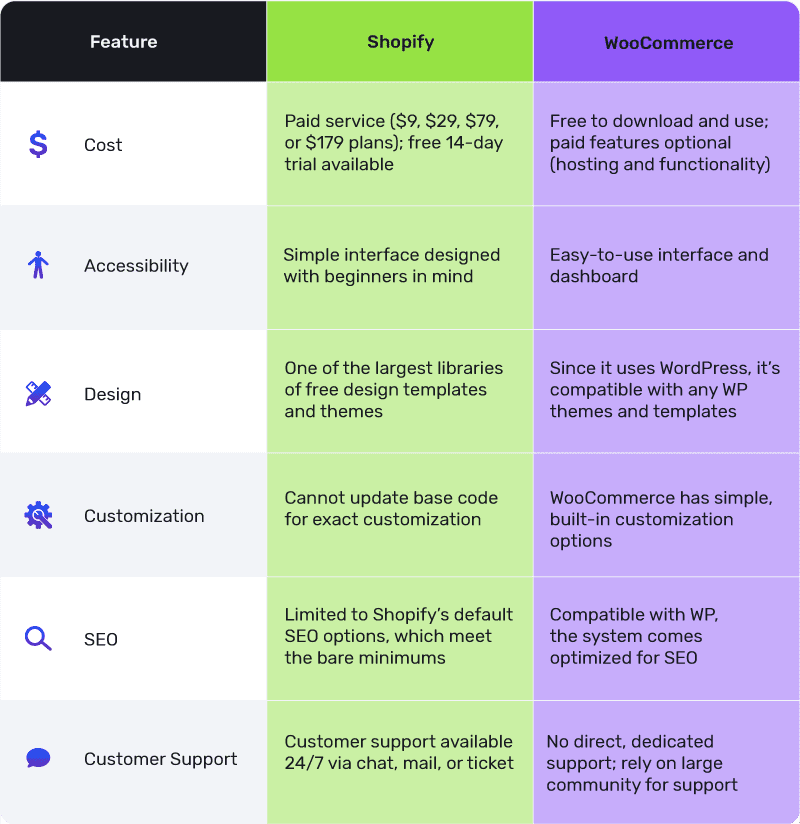
Credit: www.bolt.com
Frequently Asked Questions
What Is Shopify?
Shopify is an all-in-one eCommerce platform. It offers tools for creating and managing online stores. It provides hosting, security, and payment solutions.
What Is Woocommerce?
WooCommerce is a WordPress plugin. It turns a WordPress site into an online store. It is customizable and open-source.
Which Is Easier To Use, Shopify Or Woocommerce?
Shopify is generally easier to use. It has a user-friendly interface. WooCommerce requires more setup and technical knowledge.
Can I Customize My Store With Shopify And Woocommerce?
Yes, both platforms offer customization. Shopify has themes and apps. WooCommerce offers extensive plugins and themes for customization.
Conclusion
Choosing between Shopify and WooCommerce depends on your business needs. Shopify offers simplicity and support. WooCommerce provides flexibility and customization. Both platforms have their strengths. Assess your requirements carefully. This ensures you select the best platform for your online store.
Happy selling!